
Johnson & Johnson Advances the Standard of Calcium Modification with Global Launch of Shockwave™ C2 Aero Coronary IVL Catheter
Johnson & Johnson (NYSE: JNJ) announced the global launch of the Shockwave C2 Aero Coronary IVL Catheter, a next-generation intravascular lithotripsy device for treating calcified coronary artery disease.




- Next-generation intravascular lithotripsy (IVL) catheter resets physicians’ expectations by addressing unmet needs in deliverability, lesion crossing and balloon repositioning
- Shockwave C2 Aero enables clinicians to extend Shockwave IVL’s clinically-validated mechanism of action to a broader spectrum of calcified coronary lesions
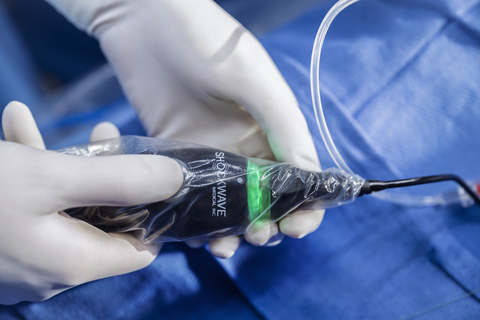
Shockwave C2 Aero, a next generation coronary IVL catheter addresses unmet needs in deliverability, lesion crossing, and balloon repositioning.
CAD is the leading cause of death globally, affecting an estimated 315 million people worldwide and approximately 1 in 20 adults over the age of 20 in the
“Shockwave C2 Aero makes it easier to navigate tortuous coronary anatomy without relying on additional upfront ancillary devices. That enhanced deliverability and efficiency can change IVL use and expand its role in treatment algorithms,” said Margaret McEntegart, M.D., Ph.D., Director of Complex Percutaneous Coronary Intervention Program at Columbia University Medical Center/New York-Presbyterian Hospital.7 “By continuing to address real unmet physician needs like deliverability, crossability and repositioning, Johnson & Johnson is pushing expectations for what the technology can achieve in complex PCI procedures.”
Shockwave C2 Aero provides physicians with greater flexibility and efficiency in treatment strategy by:1
- Enhancing deliverability through tight, tortuous arteries via more flexible shaft, balloon and marker bands. 1
- Easing entry and crossing of dense calcified deposits with its tapered tip and new hydrophilic coating. 2
- Allowing repositioning within the coronary anatomy to treat additional lesions due to the new balloon material designed for more compact deflation. 3
“In earlier iterations of the technology, physicians often had to rely on additional ancillary devices to achieve optimal positioning, and treatment was generally limited to a distal-to-proximal approach in coronary lesions,” said Benjamin Honton, M.D., Interventional Cardiologist at Clinique Pasteur,
Shockwave C2 Aero has a working length of 138 centimeters and features two emitters encased in an integrated balloon that fire simultaneously up to 120 pulses, delivering up to 240 Shockwaves. Each Shockwave pulse creates ultrasonic acoustic pressure waves that pass through soft tissue and crack hardened calcium in place, helping to re-establish blood flow in the blocked artery.
“We’re redefining standards for coronary IVL with more efficient and predictable overall procedures in challenging cases when it matters most,” said Isaac Zacharias, President, Shockwave Medical, MedTech, Johnson & Johnson. “As others prepare to enter the coronary IVL market, Johnson & Johnson is raising the bar with our fifth-generation platform built on years of physician feedback, sustained R&D advancements and robust clinical validation of our unique mechanism of action that reinforce our IVL leadership.”
Shockwave C2 Aero is now available in
About Shockwave Medical
Shockwave Medical Inc., part of Johnson & Johnson, is a leader in the development and commercialization of innovative products that are transforming the treatment of cardiovascular disease. Its first-of-its-kind Intravascular Lithotripsy (IVL) technology has transformed the treatment of atherosclerotic cardiovascular disease by safely using ultrasonic acoustic pressure waves to disrupt challenging calcified plaque, resulting in significantly improved patient outcomes. Its Reducer technology, which is under clinical investigation in
About Cardiovascular Solutions from Johnson & Johnson
Across Johnson & Johnson, we are tackling the world’s most complex and pervasive health challenges. Through a cardiovascular portfolio that provides healthcare professionals with advanced mapping and navigation, miniaturized tech, and precise ablation, we are addressing conditions with significant unmet needs such as heart failure, coronary artery disease, stroke, and atrial fibrillation. We are the global leaders in heart recovery, circulatory restoration and the treatment of heart rhythm disorders, as well as an emerging leader in neurovascular care, committed to taking on two of the leading causes of death worldwide in heart failure and stroke.
About Johnson & Johnson
At Johnson & Johnson, we believe health is everything. Our strength in healthcare innovation empowers us to build a world where complex diseases are prevented, treated, and cured, where treatments are smarter and less invasive, and solutions are personal. Through our expertise in Innovative Medicine and MedTech, we are uniquely positioned to innovate across the full spectrum of healthcare solutions today to deliver the breakthroughs of tomorrow and profoundly impact health for humanity. Learn more about our MedTech sector’s global scale and deep expertise in cardiovascular, orthopaedics, surgery and vision solutions at https://www.jnjmedtech.com/en-US/. Follow us at @JNJMedTech and on LinkedIn. Shockwave Medical, Inc. is a Johnson & Johnson company.
Cautions Concerning Forward-Looking Statements
This press release contains “forward-looking statements” as defined in the Private Securities Litigation Reform Act of 1995 related to Shockwave C2 Aero Coronary IVL Catheter. The reader is cautioned not to rely on these forward-looking statements. These statements are based on current expectations of future events. If underlying assumptions prove inaccurate or known or unknown risks or uncertainties materialize, actual results could vary materially from the expectations and projections of Johnson & Johnson. Risks and uncertainties include, but are not limited to: competition, including technological advances, new products and patents attained by competitors; uncertainty of commercial success for new products; the ability of the company to successfully execute strategic plans; impact of business combinations and divestitures; challenges to patents; changes in behavior and spending patterns or financial distress of purchasers of health care products and services; and global health care reforms and trends toward health care cost containment. A further list and descriptions of these risks, uncertainties and other factors can be found in Johnson & Johnson’s most recent Annual Report on Form 10-K, including in the sections captioned “Cautionary Note Regarding Forward-Looking Statements” and “Item 1A. Risk Factors,” and in Johnson & Johnson’s subsequent Quarterly Reports on Form 10-Q and other filings with the Securities and Exchange Commission. Copies of these filings are available online at www.sec.gov, www.jnj.com, www.investor.jnj.com or on request from Johnson & Johnson. Johnson & Johnson does not undertake to update any forward-looking statement as a result of new information or future events or developments.
| ______________________________ |
| 1 Compared to Shockwave C2+ in simulated use bench testing. Based on feedback from physicians who participated in the Limited Market Release Survey |
| 2 Designed with more tapered tip and new hydrophilic coating compared to Shockwave C2+ |
| 3 Designed with more flexible material compared to Shockwave C2+ |
4 Centers for Disease Control and Prevention. About Coronary Artery Disease (CAD). https://www.cdc.gov/heart-disease/about/coronary-artery-disease.html. Last Accessed: March 24, 2025. |
5 Centers for Disease Control and Prevention. Heart Disease Facts. https://www.cdc.gov/heart-disease/data-research/facts-stats/index.html. Last Accessed: March 24, 2025. |
6 https://www.jacc.org/doi/10.1016/S0735 |
| 7 Dr. Margaret McEntegart is a paid consultant for Shockwave Medical. She has not been compensated in connection with this press release. |
| 8 Dr. Benjamin Honton is a paid consultant for Shockwave Medical. He has not been compensated in connection with this press release. |
View source version on businesswire.com: https://www.businesswire.com/news/home/20260512562027/en/
Media Contact:
Rachael Jarnagin
rjarnagi@its.jnj.com
Erin Farley
efarley1@its.jnj.com
Investor Contact:
Investor-relations@its.jnj.com
Source: Johnson & Johnson