
Kura Oncology And Kyowa Kirin Report Encouraging Long-Term Results for Ziftomenib / 7+3 Combination In Newly Diagnosed AML
Kura Oncology (Nasdaq: KURA) and Kyowa Kirin reported long-term Phase 1/2 KOMET-007 data for ziftomenib + 7+3 in newly diagnosed NPM1-m and KMT2A-r AML.
Rhea-AI Summary
Kura Oncology (Nasdaq: KURA) and Kyowa Kirin reported long-term Phase 1/2 KOMET-007 data for ziftomenib + 7+3 in newly diagnosed NPM1-m and KMT2A-r AML.
12‑month OS was 94% for NPM1-m and 71% for KMT2A-r; CRc reached 96% and 90%, with high MRD negativity and a generally manageable safety profile supporting the ongoing Phase 3 KOMET-017 program.
Positive
- NPM1-m AML: 96% CRc and 98% ORR with ziftomenib + 7+3
- KMT2A-r AML: 90% CRc and 92% ORR with ziftomenib + 7+3
- NPM1-m AML: 12‑month overall survival rate of 94%
- KMT2A-r AML: 12‑month overall survival rate of 71%
- NPM1-m MRD negativity among CRc responders: 79% at <0.1% and 56% at <0.01%
- Median OS not reached in either cohort at up to 23.5 months follow-up
- Ziftomenib 600 mg + 7+3 showed no new or unexpected safety signals
- 60‑day mortality rate of 2% (1/49) in NPM1-m patients
Negative
- KOMET-007 is a single-arm Phase 1/2 trial without a randomized control arm
- Median follow-up of 17.6 months (NPM1-m) and 11.0 months (KMT2A-r) limits long-term outcome visibility
- Ziftomenib + 7+3 combination remains investigational and is not approved by any health authority
- Four patients (4%) experienced Grade 3 differentiation syndrome
- Three patients (3%) experienced Grade 3 QTc prolongation events, though none were assessed as ziftomenib-related
Details
News Market Reaction – KURA
On Jun 11, the day this news came out, KURA closed 2.07% above the previous close.
Data tracked by StockTitan Argus for the Jun 11 session.
Key Figures
- 12-month OS (NPM1-m)
- 94%
- Newly diagnosed NPM1-mutant AML in KOMET-007
- 12-month OS (KMT2A-r)
- 71%
- Newly diagnosed KMT2A-rearranged AML in KOMET-007
- CRc rate (NPM1-m)
- 96%
- Newly diagnosed NPM1-mutant AML with ziftomenib + 7+3
- CRc rate (KMT2A-r)
- 90%
- Newly diagnosed KMT2A-rearranged AML with ziftomenib + 7+3
- Trial size
- N=49
- KOMET-007 cohort at 600 mg ziftomenib
- Local MRD- CRc (NPM1-m)
- 85%
- Local CRc MRD-negativity rate in NPM1-mutant AML
- Central MRD- (NPM1-m)
- 79% (31/39)
- Marrow central MRD negativity at <0.1% in NPM1-m CRc responders
- 60-day mortality (NPM1-m)
- 2% (1/49)
- KOMET-007 NPM1-mutant cohort on ziftomenib + 7+3
Historical Context
-
New employee stock options granted under inducement plan at $9.04 exercise.
-
Preliminary darlifarnib + adagrasib data and new KRAS platform study plans.
-
Updated KOMET‑007 ziftomenib + venetoclax/azacitidine data in R/R NPM1‑mutant AML.
-
FIT‑001 trial showed strong KRAS G12C solid tumor activity with darlifarnib combo.
-
Announcement of participation in TD Cowen Oncology Innovation Summit webcast.
24h Move is the share-price change in the day after each event; other market factors may also have contributed.
Key Terms
aml medical
mrd medical
ngs medical
orr medical
os medical
qtc medical
7+3 medical
AI-generated analysis. How Rhea-AI works. Not financial advice.




– 12-month OS rate
–
– High rates of MRD negativity among NPM1-m AML responders assessed by both local assays and central testing –
– Median OS not reached in either NPM1-m or KMT2A-r population with median follow-up of 17.6 months and 11.0 months, respectively –
– 12-month survival rate, remission rates, MRD negativity, durability of CR and tolerability compare favorably to 7+3 precedents and strengthen confidence in ongoing KOMET-017 Phase 3 registrational study –
– Kura to host a virtual investor event tomorrow, June 12, 2026, at 8:00 a.m. ET / 5:00 a.m. PT –
SAN DIEGO and TOKYO, June 11, 2026 (GLOBE NEWSWIRE) -- Kura Oncology, Inc. (Nasdaq: KURA) and Kyowa Kirin Co., Ltd. (TSE: 4151, “Kyowa Kirin”) today announced encouraging long-term results from the Phase 1/2 KOMET-007 single-arm trial (NCT05735184) evaluating ziftomenib in combination with intensive chemotherapy, 7+3, in newly diagnosed NPM1-m or KMT2A-r AML. These results will be presented at the European Hematology Association 2026 Congress.
These data compare favorably to historical standard-of-care data with 7+3 alone:
| NPM1-m Patients | KOMET-0071 | Historical 7+3 Benchmark | |
| CR Age ≤ 65 years Age > 65 years | |||
| CRc | 56 | ||
| CR MRD- (bone marrow) | |||
| 12-month OS rate | ~ 70 ~ 45 | ||
1KOMET-007 (N=49) at 600 mg ziftomenib; MRD neg < 10-4; 2Lachowiez et al., Blood Adv. 2020; 4(7): 1311–1320; 3Hernández-Sánchez et al., Leukemia. 2026; 40(2): 418-428; 4Othus et al. Leukemia. 2019; 33(2):371-378; 5Othman et al., Blood. 2024; 144(7):714-728, including Supplemental Material; 6Recher et al., Leukemia. 2022; 36(4): 913-922.
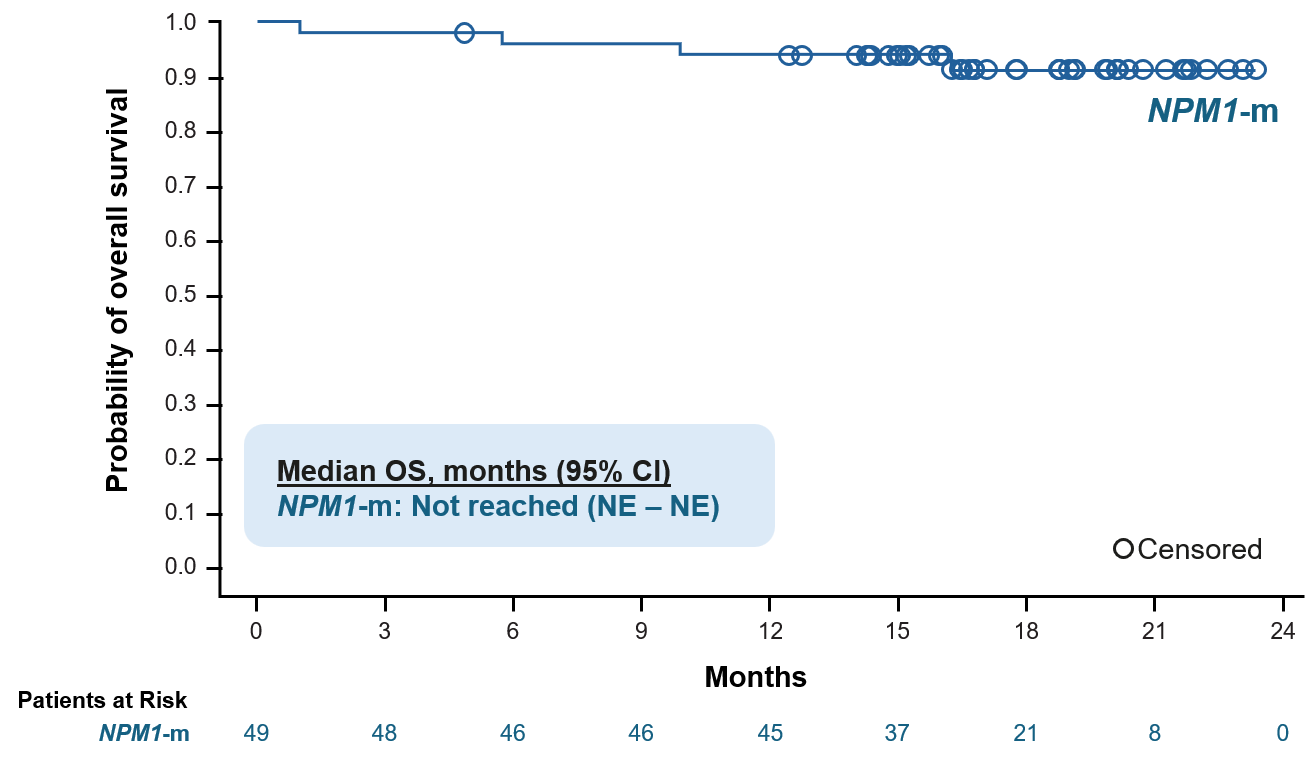
Overall Survival (OS) for NPM1-m Patient Subset in Single-Arm KOMET-007 Trial: Median OS Not Reached
KOMZIFTI™ (ziftomenib) is approved by the U.S. Food and Drug Administration (FDA) as monotherapy for adult patients with relapsed or refractory AML with a susceptible NPM1 mutation who have no satisfactory alternative treatment options. The use of ziftomenib in combination with 7+3 is investigational and has not been approved by any health authority.
“The updated results from the KOMET-007 trial provide important evidence supporting the safety and clinical activity of adding ziftomenib to intensive chemotherapy for patients with newly diagnosed NPM1-m and KMT2A-r AML,” said Amer Zeidan, M.B.B.S., M.H.S., Chief, Division of Hematologic Malignancies at Yale Cancer Center and Professor of Medicine at Yale School of Medicine, and the lead investigator for the registrational KOMET-017 program. “Across nearly 100 patients treated to date, composite remission rates reaching 90
As of the data cut-off on April 10, 2026:
High remission rates across both molecular subtypes
96% CRc and98% ORR in NPM1-m AML,90% CRc and92% ORR in KMT2A-r AML
Deep molecular responses, including marrow central MRD assessment
- Local CRc MRD-negativity rates were
85% in NPM1-m AML and82% in KMT2A-r AML - In NPM1-m AML, marrow central MRD negativity (10-4, NGS) among CRc responders was
79% (31/39) at the <0.1% threshold and56% (22/39) at the <0.01% threshold, with all CRc responders who achieved central MRD negativity doing so by Cycle 2
Durable responses and encouraging durability with extended follow-up
- After median follow-up of nearly 18 months (range 1.0-23.5) in NPM1-m AML and 11.0 months (range 0.9-21.9) in KMT2A-r AML, median duration of complete response was not reached for the NPM1-m AML cohort and was 12 months for the KMT2A-r AML cohort
- Median OS was not reached, with median follow-up of 17.6 months in NPM1-m and 11.0 in KMT2A-r, respectively
- NPM1-m:
94% OS rate at 12 months (range 1.0-23.5) - KMT2A-r:
71% OS rate at 12 months (range 0.9-21.9)
- NPM1-m:
- The majority of patients remained alive and continued on study at time of data cut-off:
- NPM1-m:
90% (44/49) - KMT2A-r:
62% (31/50)
- NPM1-m:
Consistent and manageable safety profile
- Ziftomenib 600 mg once-daily plus 7+3 was generally well tolerated, with no new or unexpected safety signals observed with longer follow-up
- Low rates of ziftomenib-related cytopenias and minimal additive myelosuppression were observed with this combination
- Ziftomenib 600 mg once-daily did not delay neutrophil or platelet count recovery
- No Grade 4 differentiation syndrome or QTc prolongation events were reported
- Four patients (
4% ) experienced Grade 3 differentiation syndrome; all cases successfully resolved with protocol-specified mitigation and three continued on ziftomenib treatment - Three patients (
3% ) experienced Grade 3 investigator-assessed QTc prolongation (all three on azole antifungals, fluoroquinolones, or other medications at time of assessment; one with ongoing hypokalemia and hypomagnesemia); none were assessed as ziftomenib-related and all QTc events successfully resolved with all patients continuing on ziftomenib treatment - 60-day mortality rate of
2% (1/49) in NPM1-m patients
“KOMET-007 has meaningfully strengthened the scientific and clinical foundation for KOMET-017 after ziftomenib was successfully integrated into intensive frontline therapy resulting in high remission rates, deep molecular clearance, encouraging durability and a favorable tolerability profile,” said Mollie Leoni, M.D., Chief Medical Officer of Kura Oncology. “These data increase our confidence in the ongoing registrational program and support the potential for ziftomenib to serve as a foundational menin inhibitor backbone in frontline AML. Importantly, as more patients in clinical trials receive ziftomenib earlier in the treatment course and remain on therapy for longer periods, we believe there may be an opportunity to extend the benefit of menin inhibition beyond induction and deepen its impact across the AML treatment continuum.”
“These data strongly support the continued study of ziftomenib as part of a frontline regime in newly diagnosed AML,” said Yoshifumi Torii, Ph.D., Chief Medical Officer of Kyowa Kirin. “We view the high remission rates, along with deep MRD negativity and encouraging durability, as particularly meaningful. Despite advances in treatment, AML remains associated with a high risk of relapse, underscoring the continued need for improved long-term treatment strategies. These results suggest that ziftomenib, when combined with standard therapy, has the potential to advance the current treatment paradigm. We look forward to further evaluating its clinical value through the ongoing Phase 3 KOMET-017 trial.”
The companies plan to publish these data in a peer-reviewed publication in the second half of 2026.
Copies of the presentation will be available on Kura’s website at www.kuraoncology.com/pipeline/publications following presentation at the meeting.
Virtual Investor Event
Kura will host a webcast and conference call on June 12, 2026, at 8:00 am ET / 5:00 am PT, featuring management and Amer Zeidan, M.B.B.S., M.H.S., Chief, Division of Hematologic Malignancies and Professor of Medicine at Yale School of Medicine, and the lead investigator for the registrational KOMET-017 study. The live webcast and replay will be available on the Company’s website at www.kuraoncology.com under the Investors tab in the Events and Presentations section.
Abbreviations
7+3 (cytarabine plus daunorubicin), AML (acute myeloid leukemia), CR (complete response), CRc (composite complete remission), KMT2A-r (KMT2A-rearranged), MRD (measurable residual disease), NGS (next-generation sequencing), NPM1-m (NPM1-mutant), ORR (objective response rate), OS (overall survival), QTc (corrected QT interval)
About Kura Oncology
Kura Oncology is a biopharmaceutical company committed to realizing the promise of precision medicines for the treatment of cancer. Kura’s pipeline of small molecule drug candidates is designed to target cancer signaling pathways and address high-need hematologic malignancies and solid tumors. Kura developed and is commercializing KOMZIFTI™ (ziftomenib), the FDA-approved once-daily, oral menin inhibitor for the treatment of adults with relapsed or refractory NPM1-mutated acute myeloid leukemia, and continues to pioneer advancements in menin inhibition and farnesyl transferase inhibition. For additional information, please visit the Kura website at https://kuraoncology.com/ and follow us on X and LinkedIn.
About Kyowa Kirin
Kyowa Kirin aims to discover and deliver novel medicines and treatments with life-changing value. As a Japan-based Global Specialty Pharmaceutical Company, Kyowa Kirin has invested in drug discovery and biotechnology innovation for more than 70 years and is currently working to engineer the next generation of antibodies and cell and gene therapies with the potential to help patients with high unmet medical needs, such as bone & mineral, intractable hematological diseases/hemato-oncology and rare diseases. A shared commitment to Kyowa Kirin’s values, to sustainable growth, and to making people smile unites Kyowa Kirin across the globe. You can learn more about the business of Kyowa Kirin at www.kyowakirin.com.
About Ziftomenib
Ziftomenib (marketed as KOMZIFTI™ in the U.S.) is a once-daily, oral menin inhibitor approved by the U.S. Food and Drug Administration for adult patients with relapsed or refractory acute myeloid leukemia (AML) with a susceptible NPM1 mutation who have no satisfactory alternative treatment options. Ziftomenib is being studied across the AML treatment continuum, including in combination studies in newly diagnosed and relapsed/refractory NPM1-mutated AML, KMT2A-rearranged AML, and FLT3-mutated AML. Ziftomenib is also being explored in additional oncology indications, including advanced gastrointestinal stromal tumors.
IMPORTANT SAFETY INFORMATION FOR KOMZIFTI FROM THE U.S. PRESCRIBING INFORMATION
Boxed WARNING: DIFFERENTIATION SYNDROME
Differentiation syndrome, which can be fatal, has occurred with KOMZIFTI. Signs and symptoms may include fever, joint pain, hypotension, hypoxia, dyspnea, rapid weight gain or peripheral edema, pleural or pericardial effusions, pulmonary infiltrates, acute kidney injury, and rashes. If differentiation syndrome is suspected, interrupt KOMZIFTI, and initiate oral or intravenous corticosteroids with hemodynamic and laboratory monitoring until symptom resolution; resume KOMZIFTI upon symptom improvement.
WARNINGS AND PRECAUTIONS
Differentiation Syndrome
KOMZIFTI can cause fatal or life-threatening differentiation syndrome (DS). DS is associated with rapid proliferation and differentiation of myeloid cells. Symptoms of DS, including those seen in patients treated with KOMZIFTI, may include fever, hypoxia, joint pain, hypotension, dyspnea, rapid weight gain or peripheral edema, pleural or pericardial effusions, acute kidney injury, and rashes.
In the clinical trial, DS occurred in 29 (
In the 112 patients with an NPM1 mutation, DS was observed with and without concomitant hyperleukocytosis, in as early as 3 days and up to 46 days after KOMZIFTI initiation. The median time to onset was 15 days. Two patients experienced more than one DS event. Treatment was interrupted and resumed in 15 (
Prior to starting treatment with KOMZIFTI, reduce the WBC counts to less than 25 x 10⁹/L. If DS is suspected, interrupt KOMZIFTI, initiate oral or intravenous corticosteroids (e.g., dexamethasone 10 mg every 12 hours) for a minimum of 3 days with hemodynamic and laboratory monitoring. Resume treatment with KOMZIFTI at the same dose level when signs and symptoms improve and are Grade 2 or lower. Taper corticosteroids over a minimum of 3 days after adequate control or resolution of symptoms. Symptoms of DS may recur with premature discontinuation of corticosteroid treatment.
QTc Interval Prolongation
KOMZIFTI can cause QTc interval prolongation. In the clinical trial, QTc interval prolongation was reported as an adverse reaction in
Correct electrolyte abnormalities, including hypokalemia and hypomagnesemia, prior to treatment with KOMZIFTI. Perform an ECG prior to initiation of treatment with KOMZIFTI, and do not initiate KOMZIFTI in patients with QTcF > 480 msec. Perform an ECG at least once weekly for the first four weeks on treatment, and at least monthly thereafter. Interrupt KOMZIFTI if the QTc interval is > 500 ms or the change from baseline is > 60 ms (Grade 3). In patients with congenital long QTc syndrome, congestive heart failure, electrolyte abnormalities, or those who are taking medications known to prolong the QTc interval, more frequent ECG monitoring may be necessary. Concomitant use of KOMZIFTI with drugs known to prolong the QTc interval may increase the risk of QTc interval prolongation, result in a greater increase in the QTc interval and adverse reactions associated with QTc interval prolongation, including Torsades de Pointes, other serious arrhythmias, and sudden death.
Embryo-Fetal Toxicity
Based on findings in animals and its mechanism of action, KOMZIFTI can cause embryo-fetal harm when administered to a pregnant woman. Advise pregnant women of the potential risk to the fetus. Advise females of reproductive potential to use effective contraception during treatment with KOMZIFTI and for 6 months after the last dose. Advise males with female partners of reproductive potential to use effective contraception during treatment with KOMZIFTI and for 3 months after the last dose.
ADVERSE REACTIONS
Fatal adverse reactions occurred in 4 (
Dosage interruption of KOMZIFTI due to an adverse reaction occurred in
Most common (≥
DRUG INTERACTIONS
Drug interactions may occur when KOMZIFTI is concomitantly used with:
- Strong or Moderate CYP3A4 Inhibitors: Monitor patients more frequently for KOMZIFTI-associated adverse reactions.
- Strong or Moderate CYP3A4 Inducers: Avoid concomitant use of KOMZIFTI.
- Gastric Acid Reducing Agents: Avoid concomitant use of KOMZIFTI with proton pump inhibitors (PPIs), H2 receptor antagonists (H2RAs), or locally acting antacids. If concomitant use with H2RAs or locally acting antacids cannot be avoided, modify KOMZIFTI administration time.
- Take KOMZIFTI 2 hours before or 10 hours after administration of an H2 receptor antagonist.
- Take KOMZIFTI 2 hours before or 2 hours after administration of a locally acting antacid.
- Drugs that Prolong the QTc Interval: Avoid concomitant use of KOMZIFTI. If concomitant use cannot be avoided, obtain ECGs when initiating, during concomitant use, and as clinically indicated. Interrupt KOMZIFTI if the QTc interval is > 500 ms or the change from baseline is > 60 ms.
USE IN SPECIFIC POPULATIONS
Pregnancy: Based on findings in animals and its mechanism of action, KOMZIFTI can cause embryo-fetal harm when administered to a pregnant woman. Advise pregnant women of the potential risk to a fetus. Verify pregnancy status in females of reproductive potential prior to starting KOMZIFTI.
Lactation: Because of the potential for adverse reactions in the breastfed child, advise women not to breastfeed during treatment with KOMZIFTI and for 2 weeks after the last dose.
Infertility: Based on findings in animals, KOMZIFTI may impair fertility in females and males of reproductive potential.
Please see full Prescribing Information, including Boxed WARNING.
Kura Forward-Looking Statements
This news release contains certain forward-looking statements that involve risks and uncertainties that could cause actual results to be materially different from historical results or from any future results expressed or implied by such forward-looking statements. Such forward-looking statements include statements regarding, among other things, ziftomenib’s therapeutic potential, including as a foundational backbone in frontline AML; the safety and clinical activity of adding ziftomenib to intensive chemotherapy for patients with newly diagnosed NPM1-m or KMT2A-r AML; the potential of ziftomenib plus intensive chemotherapy to extend the benefit of menin inhibition beyond induction, reduce reliance on transplant, and deepen ziftomenib’s impact across the AML treatment continuum; and Kura’s confidence in the Phase 3 KOMET-017 trials. Factors that may cause actual results to differ materially include the risk that compounds that appeared promising in early research or clinical trials do not demonstrate safety and/or efficacy in later preclinical studies or clinical trials, the risk that Kura may not obtain approval to market its product candidates, uncertainties associated with performing clinical trials, regulatory filings, and other interactions with regulatory bodies, risks associated with reliance on third parties to successfully conduct clinical trials, the risks associated with reliance on outside financing to meet capital requirements, the risk that the collaboration with Kyowa Kirin is unsuccessful, and other risks associated with the process of discovering, developing and commercializing drugs that are safe and effective for use as human therapeutics, and in the endeavor of building a business around such drugs. You are urged to consider statements that include the words “may,” “will,” “would,” “could,” “should,” “believes,” “estimates,” “projects,” “potential,” “expects,” “plans,” “anticipates,” “intends,” “continues,” “designed,” “goal,” or the negative of those words or other comparable words to be uncertain and forward-looking. For a further list and description of the risks and uncertainties the Company faces, please refer to the Company's periodic and other filings with the Securities and Exchange Commission, which are available at www.sec.gov. Such forward-looking statements are current only as of the date they are made, and Kura assumes no obligation to update any forward-looking statements, whether as a result of new information, future events or otherwise.
Kura Contact
Greg Mann (Investors and Media)
858-987-4046
gmann@kuraoncology.com
Kyowa Kirin Contacts
Ryohei Kawai (Investors)
Kyowa Kirin
ir@kyowakirin.com
Sachiko Kido (Media, Global)
Kyowa Kirin
media@kyowakirin.com
A photo accompanying this announcement is available at https://www.globenewswire.com/NewsRoom/AttachmentNg/330268d8-ff56-433d-a2f5-39bbbc75cff0

FAQ
AI-generated questions and answers. How Rhea-AI works. Not financial advice.