
morph Launches the World’s First Shapeshifting Soft Robotics Cells Platform to Bring Physical AI into Real-World Applications
morph launched a physically intelligent soft robotics cells platform that embeds sensing and adaptive control into deformable materials, enabling real‑time changes in shape and stiffness for safer human interaction.




Backed by 8VC, Pharrell Williams, Copper, Harvey Spevak of Equinox Group, Qubit Ventures, Valia Ventures, and Blue Lion
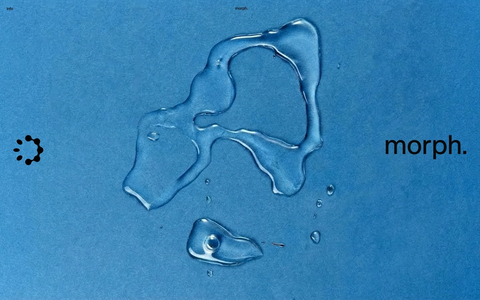
The company also announced that 8VC, Pharrell Williams, Copper, Harvey Spevak, Chairman of Equinox Group, Qubit Health Capital, Valia Ventures, Blue Lion have invested in morph.
Born from Clinical Experience, Built for Real Life
morph founder Dr. Jean Nehme, a former reconstructive surgeon, understands from operating on the human body the softness of biology and has modelled soft robotic cells on this. Furthermore, Jean also understands how small biomechanical inefficiencies compound over the years, quietly degrading mobility and impacting long-term health.
“We have designed and built a very rigid and static world, but since the beginning nature has shown us softness and dynamism,” said Dr. Jean Nehme, Founder of morph. “With our platform, we can build a new generation of products embedded with soft robotic cells that adapt in real time to support natural movement. We’re designing soft robotic cells to sit at the interface of human robotic interaction across multiple industries.”
Dr. Nehme founded morph with a global team of experts in design, AI, robotics, medicine, and manufacturing, chosen for their expertise in biology and movement. Previously, Dr. Nehme was founder and CEO of Digital Surgery, a pioneer in surgical AI and computer vision, data and analytics, and digital education and training. Medtronic (NYSE: MDT) acquired the company in 2020. Dr. Nehme has been building in AI since 2013, bringing a long-standing background in applying intelligence to high-stakes real-world environments. His track record combines surgeon-led precision with deep expertise in AI, positioning morph to bring soft robotic cells to consumers and industry partners.
Introducing Soft Robotics with Shapeshifting Cells: Designed for the Human Experience
Soft robotics is a class of robotics, built from flexible, deformable soft robotic cells. Unlike traditional rigid robotics built for industrial environments, soft robots are based on soft deformable materials, which means it can enable safer interaction with humans. morph further advances this category with soft robotic cells that shapeshift - modular robotic units made of synthetic materials that process environmental and user information and change their morphology to achieve specific objectives. These cells embed intelligence directly into materials, enabling products to sense, adapt, and respond to the body and the environment in real time. In other words, embodied AI is not just software that advises, it is intelligence built into physical systems that can take action through the product itself. Soft robotic cells can be configured into combinations across multiple product lines and generate data sets that enable richer human-physical world interactions.
morph is developing a pipeline of applications that embed their soft robotic cells, each designed to redefine its category by replacing static materials with adaptive systems. Their first applications will be built to fuel human performance, movement, and longevity. Initial applications will include athletic performance, injury prevention, and mobility support. Over time, the programmable platform will scale across categories, including healthcare, automotive, and industrial safety, positioning morph at the intersection of soft robotics and the rapidly expanding physical AI market, enabling a connected ecosystem of adaptive performance systems to improve human health. morph is partnering with multiple industrial partners at this stage. With morph’s B2B strategy, the goal is to operate as a software, design, and fabrication partner, working with industries and companies to enable them with soft robotics technology.
Inspired by the adaptability of octopuses, morph is accelerating the development of physical AI systems. morph’s modular platform empowers teams to program robotic cell behaviors, simulate real-world conditions, and rapidly iterate soft, deformable components built for direct human interaction. By integrating reinforcement learning with high-fidelity physics-based simulation, morph enables a faster translation from concept to product without sacrificing clinical rigor or safety. The result is a platform designed not only to advance robotics technically, but to make adaptive, responsive products more useful in everyday life.
About morph
morph is building the world’s first soft robotics platform. Driven by a worldwide team of experts in robotics, AI, medicine, design, and manufacturing, morph enables the creation of products that embed robotic cells. Initial product offerings will focus on human performance and longevity. To learn more, please visit www.morph.inc.
View source version on businesswire.com: https://www.businesswire.com/news/home/20260602211043/en/
Source: morph