
Responding more frequently to MiniMed Smart MDI alerts linked to better glucose outcomes for people with diabetes
The trial met its primary endpoint, while alert-response analyses linked greater engagement with better glucose outcomes.
Sentiment and the balance of points
Rhea-AI Sentiment reads the wording of the document, how positive or negative its language is on a 1 to 5 scale. The balance of points shown with the takes weighs what the document actually discloses, so the two can disagree, for example when a trial that missed its main goal is described in upbeat language.
Rhea-AI Summary
MiniMed (Nasdaq: MMED) presented clinical results linking more frequent responses to Smart MDI alerts with better glucose outcomes in type 1 diabetes.
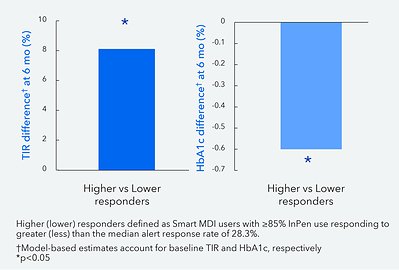
The six-month randomized trial included 143 people with HbA1c, a measure of average blood glucose, above 8%. Among Smart MDI users, higher responders had, on average, 8.1 percentage points more Time in Range, time within the target glucose range, and 0.6 percentage points lower HbA1c than lower responders. Responding to at least 28% of alerts was associated with improved HbA1c versus multiple daily injections plus continuous glucose monitoring alone.
The system met its primary endpoint, showing glucose outcomes no worse than the comparator. No severe hypoglycemia or diabetic ketoacidosis events were reported in the Smart MDI arm. A real-world analysis of more than 5,500 users found a 9.4 percentage-point Time in Range difference between higher and lower responders; HbA1c was not analyzed.
How this balance works
Rhea-AI gives every point it takes from this document a weight. Minor counts 1, Moderate 3 and Major 9, so one Major point outweighs several Minor ones. The bar adds up the weights on each side, and when neither side holds more than 65% of the total the balance reads Mixed.
It reads the document as published, with the same rules for every company, and it does not look at what the market expected or at how the stock traded, so a point can be objectively good on a day the stock falls.
Rhea-AI Sentiment measures something else, the tone of the wording.
Hollow bars mark forward-looking points. How the balance works
Positive
- Major pointSmart MDI met its primary endpoint, with glucose outcomes non-inferior to injections plus continuous glucose monitoring.
- Minor pointHigher alert responders averaged 8.1 percentage points more Time in Range than lower responders in the six-month trial.
- Minor pointHigher alert responders averaged 0.6 percentage points lower HbA1c than lower responders in the six-month trial.
- Minor pointResponses to at least 28% of alerts were associated with improved HbA1c versus injections plus continuous glucose monitoring alone.
- Minor pointSmart MDI's trial arm reported no severe hypoglycemia or diabetic ketoacidosis events.
2 minor points
- Minor pointReal-world analysis of more than 5,500 users found higher responders had 9.4 percentage points more Time in Range.
- Minor pointAn earlier study linked ~1 additional bolus per week to 2 additional hours of Time in Range.
Negative
- Minor point. Forward-looking: it has not happened yet and may not happen.Alert-response analyses have inherent limitations; extrapolation to new patients requires caution because results could differ significantly.
- Minor pointReal-world analysis did not analyze HbA1c, limiting the outcomes assessed in that dataset.
Key Figures
- Time in Range difference
- 8.1 percentage points
- Higher versus lower alert responders in the six-month randomized trial
- HbA1c difference
- 0.6 percentage points lower
- Higher versus lower alert responders in the six-month randomized trial
- Trial participants
- 143 people
- People with type 1 diabetes and HbA1c above 8%
- Real-world Time in Range difference
- 9.4 percentage points
- Higher versus lower responders in analysis of more than 5,500 users
- Alert-response threshold
- At least 28% of alerts
- Associated with improved HbA1c versus injections plus continuous glucose monitoring alone
- Severe hypoglycemia or diabetic ketoacidosis events
- 0 reported
- Smart MDI arm during the study
Key Terms
hba1c medical
continuous glucose monitoring medical
diabetic ketoacidosis medical
non-inferior technical
AI-generated analysis. How Rhea-AI works. Not financial advice.




Six-month randomized trial found 8.1 percentage points more Time in Range and 0.6 percentage points lower HbA1c among higher responders.
People who manage diabetes with multiple daily injections carry a large amount of the work in their heads. They monitor glucose, remember injections, calculate doses, and adjust around meals and daily life. Missed or delayed doses can affect glucose outcomes2. Research indicates that missing two insulin doses a week can increase HbA1c by
Pump therapy remains recommended for people with type 1 diabetes4, but not everyone wants or can access a pump. For people who choose multiple daily injections, the need is not more data alone. It is timely help that makes the next action easier to see and easier to take. Potentially achieving an additional
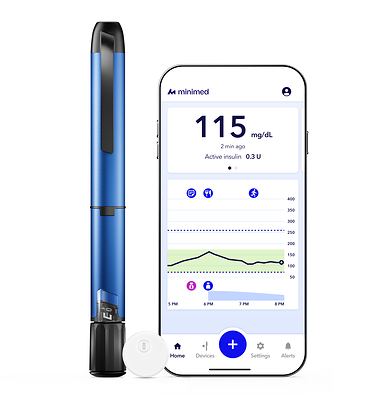
MiniMed's Smart MDI system connects the InPen™ smart insulin pen with a continuous glucose monitor through the MiniMed Go™ app. This smart pen system tracks doses, provides dose calculations, and sends missed-dose and high-glucose alerts alongside glucose insights. It brings those functions into one app instead of asking people to coordinate a pen, a glucose monitor, and dosing decisions separately.
"People managing diabetes with multiple daily injections are making insulin decisions all day, every day. MiniMed Go is designed to lighten that load by remembering, reminding, and recommending when it matters. The goal is to help them achieve better outcomes with less burden. That's the promise of the MiniMed Go smart MDI system," said Que Dallara, CEO of MiniMed.
The finding: Better outcomes for higher responders
- Smart MDI users with a higher response rate to alerts achieved, on average, 8.1 percentage points higher TIR and 0.6 percentage points lower HbA1c compared with lower responders.
- Additional real-world analysis of more than 5,500 users found a 9.4 percentage-point difference in Time in Range between higher and lower responders. HbA1c was not analyzed in the real-world dataset.
- In this study^, responding to at least
28% of missed-dose and high-glucose alerts was associated with improved HbA1c compared with multiple daily injections plus continuous glucose monitoring alone. - The Smart MDI system met the primary endpoint and was non-inferior to multiple daily injections plus continuous glucose monitoring in glycemic outcomes.
- No severe hypoglycemia or diabetic ketoacidosis events were reported in the Smart MDI arm during the study.
"These findings show a clear association between responding to Smart MDI alerts and better glucose outcomes. For people on multiple daily injections, that can mean more time in range with less day-to-day mental burden," said Prof. Laurent Crenier, MD, PhD, Head of the Endocrinology Department at HUB - Hôpital Erasme in
The results of the randomized controlled trial add to an existing study that showed that with only a minor increase in effort of ~1 additional bolus per week in response to a missed dose alert, users of MiniMed's Smart MDI system gained an additional 2 hours of Time in Range.* 6
Frequently Asked Questions
Q: What did the randomized controlled trial evaluate?
A: The six-month trial1 evaluated the effectiveness and safety of the MiniMed Smart MDI system compared with multiple daily injections plus continuous glucose monitoring in 143 people with type 1 diabetes and an HbA1c above
Q: What were the main findings of the Smart MDI randomized controlled trial?
A: Among Smart MDI users in the study ^1, those with higher alert-response rates achieved, on average, 8.1 percentage points more Time in Range and a 0.6 percentage-point lower HbA1c than users with lower response rates. Real-world data^ from more than 5,500 users showed a 9.4 percentage-point difference in Time in Range between higher and lower responders. HbA1c was not included for review in the real-world data.
Q: What do the results suggest about responding to Smart MDI alerts?
A: The findings1 show an association between more consistent responses to missed-bolus and high-glucose alerts and better glucose outcomes. In this study^, responding to ≥
Q: What is the MiniMed Go™ system?
A: The MiniMed Go™ system is a smart diabetes management solution that connects the InPen™ smart insulin pen with either the Simplera™ sensor or Instinct Go sensor, made by Abbott, through the single MiniMed Go™ app. This smart insulin pen system provides real-time glucose data, dose calculations, missed dose alerts, and actionable guidance, making MDI therapy easier and more connected compared to standalone CGM therapy.
Q: What is InPen™?
A: The InPen™ is a reusable smart insulin pen that uses Bluetooth® technology to send dose information to a mobile app. Offering dose calculations and tracking, InPen™ helps take some of the mental math out of diabetes management.
Q: What's the difference between the MiniMed Go™ Smart MDI system and the previous Medtronic Smart MDI system?
A: There are a few upgrades including a single unified mobile app experience, easier onboarding, support and self-training tools, new features and insulin settings. For healthcare professionals, new CareLink Clinic dedicated MDI reports turn patient data into clinical and behavioural insights.
Q: What is the difference between the MiniMed Go™ Smart MDI system and traditional pens or other connected pens for diabetes?
A: Unlike traditional insulin pens, which lack a proprietary app and the ability to track doses or provide decision support, smart insulin pen systems such as the MiniMed Go™ Smart MDI system, offers integration of real-time continuous glucose monitoring, a built-in dose calculator that simplifies dose decision-making, and smart dosing alerts to help people with their diabetes therapy adherence – the first and only Smart MDI system to offer an all in one mobile app.
About MiniMed
MiniMed is a global leader in insulin delivery, constantly advancing therapies that support people with diabetes in more than 80 countries. Our full-stack, integrated ecosystem, including our insulin delivery systems, CGMs, algorithms, and easy-to-use app experience, is designed to work seamlessly together, supported by white-glove, wrap-around service. For over 40 years, we've pioneered therapies people can rely on by anticipating needs, reducing burden, and helping make life with diabetes easier. Our mission is to make every day a better day for people with diabetes.
*N=127 users in lowest quartile TIR at month 1
† Proper settings, connectivity, and some manual logging required. See user guides for full details and important safety information.
^ Due to inherent analysis limitations, caution is advised when attempting to extrapolate these results to new patients. There could be significant differences.
The Bluetooth® word mark and logos are registered trademarks owned by Bluetooth SIG, Inc. and any use of such marks by Medtronic is under license.
- Crenier L, et al. The Smart MDI system in people with type 1 diabetes and high HbA1c: a randomized controlled trial demonstrating that response to alerts drives outcomes. Diabetes Obes Metab. 2026; in press.
- Hussain S, Asli ZOS, Yu JJ, et al. Improving Time-in-Range in Type 1 Diabetes: Projecting the Clinical and Cost Implications of Automated Insulin Delivery. Diabetes Technol Ther. 2026;28(3):206-218.
- Randlov, J, Poulsen, JU. How Much Do Forgotten Insulin Injections Matter to Hemoglobin A1c in People with Diabetes, J Diabetes Sci Technol. 2008; 2(2):229-235.
- American Diabetes Association Professional Practice Committee; Introduction and Methodology: Standards of Care in Diabetes—2025; Diabetes Care 2025;48(Supplement_1):S1–S5, https://doi.org/10.2337/dc25-SINT
- Shah VN, et al. Time in Range Is Associated with Incident Diabetic Retinopathy in Adults with Type 1 Diabetes: A Longitudinal Study. Diabetes Technol Ther. 2024 Apr;26(4):246-251. doi: 10.1089/dia.2023.0486. Epub 2024 Feb 13. PMID: 38133643.
- Cuesta M, et al. Impact of User Responses to Smart MDI Notifications: Insights From a Longitudinal Real-World Study of 2604 Smart MDI System Users. Diabetes Obes Metab. Published online June 4, 2026. doi:10.1111/dom.70947
Any forward-looking statements are subject to risks and uncertainties such as those described in MiniMed's periodic reports on file with the Securities and Exchange Commission. Actual results may differ materially from anticipated results.


 View original content to download multimedia:https://www.prnewswire.com/news-releases/responding-more-frequently-to-minimed-smart-mdi-alerts-linked-to-better-glucose-outcomes-for-people-with-diabetes-302898290.html
SOURCE MiniMed
FAQ
AI-generated questions and answers. How Rhea-AI works. Not financial advice.
What did MiniMed's six-month Smart MDI trial find?
Higher alert responders averaged 8.1 percentage points more Time in Range and 0.6 percentage points lower HbA1c than lower responders. The randomized trial included 143 people with type 1 diabetes and HbA1c above 8%. Smart MDI also met its primary endpoint of non-inferiority to multiple daily injections plus continuous glucose monitoring.
How frequently did MiniMed Smart MDI users need to respond to alerts for improved HbA1c?
Responding to at least 28% of missed-dose and high-glucose alerts was associated with improved HbA1c compared with multiple daily injections plus continuous glucose monitoring alone. This was an association observed in the study, rather than a guaranteed outcome for an individual user.
What limits the application of MiniMed's Smart MDI alert-response findings to new patients?
Inherent analysis limitations mean the findings should be extrapolated to new patients cautiously, because significant differences could occur. The results link alert responses with glucose outcomes but do not establish that every new patient will achieve the reported differences.
Which users were included in MiniMed's earlier study linking alert responses to two additional hours of Time in Range?
The earlier finding applied to 127 users in the lowest Time in Range quartile at month 1. With ~1 additional bolus, an insulin dose, per week in response to a missed-dose alert, these users gained an additional 2 hours of Time in Range.