
Measles Rare Pediatric Disease Drug Designation Application Filed for NV-387, PRV Provides for Strong Business Case, Says NanoViricides
NanoViricides (NYSE:NNVC) filed a Rare Pediatric Disease Drug (RPDD) designation application for NV-387 as a treatment for measles on April 7, 2026, to be considered alongside an earlier Orphan Drug application.
Sentiment and the balance of points
Rhea-AI Sentiment reads the wording of the document, how positive or negative its language is on a 1 to 5 scale. The balance of points shown with the takes weighs what the document actually discloses, so the two can disagree, for example when a trial that missed its main goal is described in upbeat language.
Rhea-AI Summary
NanoViricides (NYSE:NNVC) filed a Rare Pediatric Disease Drug (RPDD) designation application for NV-387 as a treatment for measles on April 7, 2026, to be considered alongside an earlier Orphan Drug application.
The company noted potential eligibility for a tradable Priority Review Voucher (PRV) worth roughly $160M if approved, and cited rising U.S. measles cases and pediatric incidence supporting the RPDD case.
Positive
- RPDD application filed for NV-387 as measles treatment (April 7, 2026)
- Potential PRV economic value referenced at approximately $160 million upon sale
- In vivo efficacy demonstrated against lethal measles in a humanized animal model
Negative
- Designation pending; RPDD not yet granted so benefits remain uncertain
- Clinical timeline uncertain—company cannot project an IND filing date due to external dependencies
Details
News Market Reaction – NNVC
On Apr 7, the day this news came out, NNVC closed 6.93% above the previous close.
Data tracked by StockTitan Argus for the Apr 7 session.
Key Figures
- Potential PRV sale
- $160 million
- Recent market value for Priority Review Vouchers cited in article
- US measles cases 2026
- 1,661 cases
- Laboratory-confirmed Measles cases in USA as of Apr 2, 2026
- US measles cases 2025
- 2,286 cases
- Total confirmed Measles cases in USA in 2025
- Hospitalization rate 2026
- 5%
- Measles hospitalization rate in 2026 cited from CDC
- Hospitalization rate 2025
- 11%
- Measles hospitalization rate in 2025 cited from CDC
- Pediatric share of cases
- 70%
- Share of Measles cases in 0–18-year-old subjects in USA
- Child deaths Bangladesh
- 100 deaths
- At least 100 child Measles deaths in Bangladesh in 2026
- Net loss (6 months)
- $4.0 million
- Net loss for six months ended Dec 31, 2025 (latest 10-Q)
Historical Context
-
Announcement of upcoming Phase II NV-387 MPox trial after ACOREP approval.
-
Completion of NV-387 Phase II oral gummies manufacturing and investor conference.
-
Filing for Orphan Drug Designation for NV-387 to treat MPox in US.
-
Orphan Drug Designation application for NV-387 to treat rising Measles cases.
-
Media interview detailing nanoviricide platform and NV-387 preclinical efficacy.
24h Move is the share-price change in the day after each event; other market factors may also have contributed.
Key Terms
rare pediatric disease drug regulatory
priority review voucher regulatory
orphan drug designation regulatory
office of orphan products development regulatory
nanomedicine medical
phase ii human clinical trials medical
orphan drugs regulatory
AI-generated analysis. How Rhea-AI works. Not financial advice.




SHELTON, CT / ACCESS Newswire / April 7, 2026 / NanoViricides, Inc., a publicly traded company (NYSE American:NNVC) (the "Company"), and a clinical stage, leading global pioneer in the development of broad-spectrum antivirals based on host-mimetic nanomedicine technology that viruses cannot escape, announced today that it has filed an application for "Rare Pediatric Disease Drug" Designation (RPDD) for NV-387 as a Treatment for Measles with the US FDA Office of Orphan Products Development (OOPD). This RPDD application is expected to be joined together with the Orphan Drug Designation application for NV-387 as a Treatment for Measles that the Company has filed in February, 2026.
NanoViricides will be eligible for a Priority Review Voucher (PRV) upon approval of the drug if NV-387 is designated as a Rare Pediatric Disease Drug. A PRV carries immediate economic value. It is a tradable instrument, and recently has generally fetched around
"NV-387 as an effective drug is expected to be an important tool to fight Measles resurgence in the USA and worldwide, when approved," said Anil R. Diwan, PhD, adding, "Treating a Measles patient with NV-387 would help with rapid recovery and eliminate the high morbidity and the rare post-Measles 'Immune Amnesia' effects."
"A Rare Pediatric Disease Drug Designation for NV-387 would help us tremendously in the mission of regulatory development and approval of NV-387 to treat Measles, by substantially boosting the potential economic benefits and the business case for this indication," said Meeta R. Vyas, CFO of the Company.
There is no drug for the treatment of Measles at present.
The Rare Pediatric Disease Priority Review Voucher program was re-authorized by the US Congress and signed into Law by President Trump on February 3, 2026, as part of the Consolidated Appropriations Act of 2026 [2].
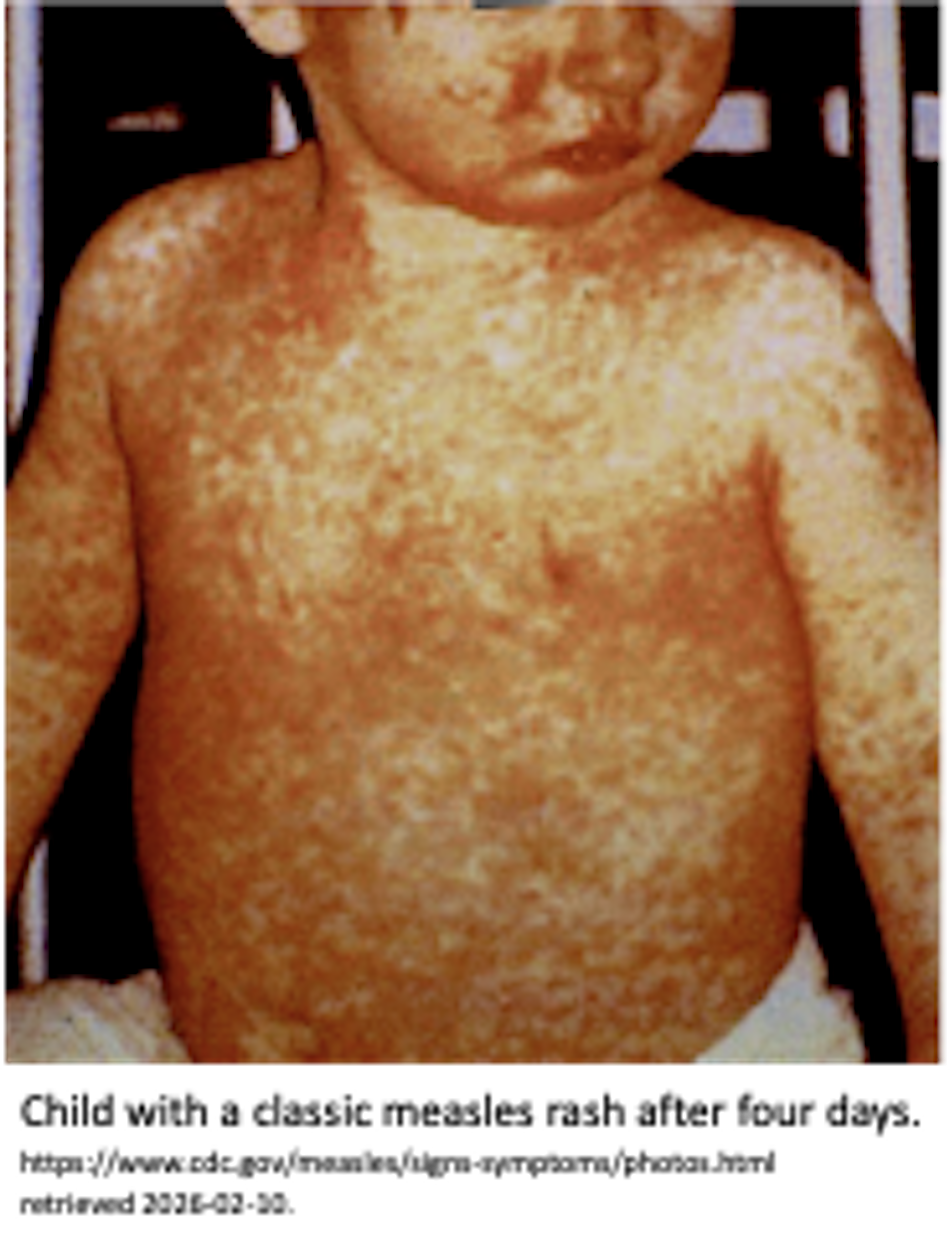
Measles cases have been rising in the USA, with 1,661 laboratory confirmed cases already reported, with occurrences across 33 states, with 17 new outbreaks, as of April 2, 2026, according to the CDC [3]. An additional 10 cases were reported to have occurred in international travelers visiting the USA. A total of 2,286 confirmed cases in 48 outbreaks were reported in 2025. The rate of hospitalization in 2026 has decreased to about
Measles is a rare disease in the USA, with annual incidence rates well below 200,000 cases. About
At least
Infants below 9 months of age are not eligible for routine vaccination. Recently, at least 100 child deaths due to Measles were reported in Bangladesh during 2026, with a large portion of them in infants, leading to a vaccination campaign relaxing this lower age limit [5].
NanoViricides employed the expert services of Only Orphans Cote, LLC, ("OOC") a regulatory consultant firm founded by Dr. Timothy Cote, for developing the RPDD application. Dr. Timothy Cote previously served as the Director of US FDA Office of Orphan Products Development (OOPD), and has intimate knowledge of the laws, rules, and regulations, governing orphan drugs, and the potential benefits to the Drug Sponsors.
There is no approved drug for the treatment of measles, although an effective vaccine exists and is generally given in a combination of 3 or 4 vaccines (MMR or MMRV) at one year of age providing lifelong immunity. Measles is a highly contagious disease. A population vaccination rate of more than
Only an effective treatment can help the patient and can avoid the potential severe disease scenarios such as encephalitis, neurological disabilities, and potential fatalities as well as immune amnesia that can result from severe disease.
In absence of a treatment, quarantining of all contacts of a case for at least 14 days is the public health approach at present to minimize spread. Vaccination is urged for contacts but any vaccine requires 2-3 weeks from administration to become effective. Also, Measles vaccine requires 2 doses spread apart in time for full effectiveness.
Quarantining causes significant disturbances in the society, in particular, causing significant loss of in-school days for children. A preventive NV-387 treatment of contacts would eliminate the need for quarantining, with a significant positive impact for children as well as economically.
NV-387 is the only drug candidate to our knowledge that has demonstrated strong in vivo activity against lethal infection with the Measles virus in a humanized animal model study.
Measles cases are rising across the Western world including several European countries and the UK, as well as the USA and Canada. Additionally Mexico and several other Central and South American countries have also been suffering from rising Measles outbreaks. Measles is endemic in the developing and less developed nations.
Thus, a drug for Measles is sorely needed for combating Measles worldwide.
NV-387 is an unusually broad-spectrum antiviral drug that has demonstrated strong effectiveness in relevant animal models of multiple human viral infections. These include RSV, COVID, Influenza, Mpox, Smallpox, and Measles.
Over
NanoViricides, Inc. (the "Company") (www.nanoviricides.com) is a publicly traded (NYSE-American, stock symbol NNVC) clinical stage company that is creating special purpose nanomaterials for antiviral therapy. The Company's novel nanoviricide ™ class of drug candidates and the nanoviricide ™ technology are based on intellectual property, technology and proprietary know-how of TheraCour Pharma, Inc. The Company has a Memorandum of Understanding with TheraCour for the development of drugs based on these technologies for all antiviral infections. The MoU does not include cancer and similar diseases that may have viral origin but require different kinds of treatments.
The Company has obtained broad, exclusive, sub-licensable, field licenses to drugs developed in several licensed fields from TheraCour Pharma, Inc. The Company's business model is based on licensing technology from TheraCour Pharma Inc. for specific application verticals of specific viruses, as established at its foundation in 2005.
Our lead drug candidate is NV-387, a broad-spectrum antiviral drug that we plan to develop as a treatment of RSV, COVID, Long COVID, Influenza, and other respiratory viral infections, as well as MPOX/Smallpox infections. Our other advanced drug candidate is NV-HHV-1 for the treatment of Shingles. The Company cannot project an exact date for filing an IND for any of its drugs because of dependence on a number of external collaborators and consultants. The Company is currently focused on advancing NV-387 into Phase II human clinical trials.
The Company is also developing drugs against a number of viral diseases including oral and genital Herpes, viral diseases of the eye including EKC and herpes keratitis, H1N1 swine flu, H5N1 bird flu, seasonal Influenza, HIV, Hepatitis C, Rabies, Dengue fever, and Ebola virus, among others. NanoViricides' platform technology and programs are based on the TheraCour ® nanomedicine technology of TheraCour, which TheraCour licenses from AllExcel. NanoViricides holds a worldwide exclusive perpetual license to this technology for several drugs with specific targeting mechanisms in perpetuity for the treatment of the following human viral diseases: Human Immunodeficiency Virus (HIV/AIDS), Hepatitis B Virus (HBV), Hepatitis C Virus (HCV), Rabies, Herpes Simplex Virus (HSV-1 and HSV-2), Varicella-Zoster Virus (VZV), Influenza and Asian Bird Flu Virus, Dengue viruses, Japanese Encephalitis virus, West Nile Virus, Ebola/Marburg viruses, and certain Coronaviruses. The Company intends to obtain a license for RSV, Poxviruses, and/or Enteroviruses if the initial research is successful. As is customary, the Company must state the risk factor that the path to typical drug development of any pharmaceutical product is extremely lengthy and requires substantial capital. As with any drug development efforts by any company, there can be no assurance at this time that any of the Company's pharmaceutical candidates would show sufficient effectiveness and safety for human clinical development. Further, there can be no assurance at this time that successful results against coronavirus in our lab will lead to successful clinical trials or a successful pharmaceutical product.
This press release contains forward-looking statements that reflect the Company's current expectation regarding future events. Actual events could differ materially and substantially from those projected herein and depend on a number of factors. Certain statements in this release, and other written or oral statements made by NanoViricides, Inc. are "forward-looking statements" within the meaning of Section 27A of the Securities Act of 1933 and Section 21E of the Securities Exchange Act of 1934. You should not place undue reliance on forward-looking statements since they involve known and unknown risks, uncertainties and other factors which are, in some cases, beyond the Company's control and which could, and likely will, materially affect actual results, levels of activity, performance or achievements. The Company assumes no obligation to publicly update or revise these forward-looking statements for any reason, or to update the reasons actual results could differ materially from those anticipated in these forward-looking statements, even if new information becomes available in the future. Important factors that could cause actual results to differ materially from the company's expectations include, but are not limited to, those factors that are disclosed under the heading "Risk Factors" and elsewhere in documents filed by the company from time to time with the United States Securities and Exchange Commission and other regulatory authorities. Although it is not possible to predict or identify all such factors, they may include the following: demonstration and proof of principle in preclinical trials that a nanoviricide is safe and effective; successful development of our product candidates; our ability to seek and obtain regulatory approvals, including with respect to the indications we are seeking; the successful commercialization of our product candidates; and market acceptance of our products.
The phrases "safety", "effectiveness" and equivalent phrases as used in this press release refer to research findings including clinical trials as the customary research usage and do not indicate evaluation of safety or effectiveness by the US FDA.
FDA refers to US Food and Drug Administration. IND application refers to "Investigational New Drug" application. cGMP refers to current Good Manufacturing Practices. CMC refers to "Chemistry, Manufacture, and Controls". CHMP refers to the Committee for Medicinal Products for Human Use, which is the European Medicines Agency's (EMA) committee responsible for human medicines. API stands for "Active Pharmaceutical Ingredient". WHO is the World Health Organization. R&D refers to Research and Development.
Contact:
NanoViricides, Inc.
info@nanoviricides.com
Public Relations Contact:
ir@nanoviricides.com
[3] https://www.cdc.gov/measles/data-research/index.html
[4] https://www.cdc.gov/measles/php/toolkit/index.html
[5] https://www.foxnews.com/health/least-46-children-dead-amid-measles-outbreak-virus-spreads-globally ; https://www.bbc.com/news/articles/cevkz2z7dm8o
SOURCE: NanoViricides
View the original press release on ACCESS Newswire
FAQ
AI-generated questions and answers. How Rhea-AI works. Not financial advice.