
Newell Brands Opens Atlanta Design Center to Accelerate Brand Building Through Consumer-Led Design and Innovation
Newell centralizes advanced design, prototyping and UX research in Atlanta to support consumer-led innovation and attract creative talent.




Designed to strengthen Newell's brands, the new collaborative hub brings together design communications, creative development, and advanced technology capabilities to create more meaningful consumer experiences.
Key Summary
-
Newell Brands has opened its new Design Center, a nearly 37,000-square-foot investment across two locations in
Atlanta . - The facility integrates industrial design, brand design, advanced visualization, digital prototyping, AI-enabled capabilities, and dedicated consumer UX research environments.
- Design is positioned as a strategic enterprise capability with designers co-located alongside brand marketing, consumer insights, innovation, and R&D teams.
- The Design Center is a proof point of Newell's broader transformation, as the company invests in the capabilities, talent, and modern ways of working that strive to strengthen the brands through innovation and design communications.
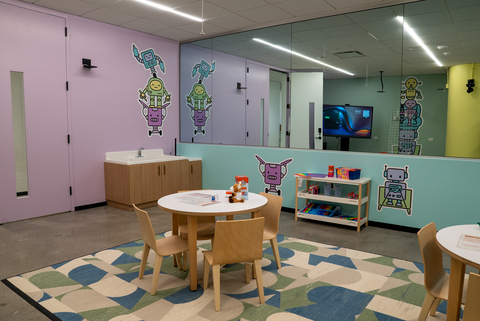
The Kids UX Lab at Newell Brands' new Atlanta Design Center in
The Design Center comprises two distinct facilities: the Queen Tower at Concourse Office Park, located at Newell's
"Design has the power to shape how consumers experience our brands and products," said Nick Hammitt, Chief Marketing Officer at Newell Brands. "The Design Center is a significant investment in the company's future. By bringing together design, consumer insights, brand teams, R&D, and innovation partners, we are creating stronger connections between our consumers and brands and how we bring products to market."
A Hub for Advanced Design Capabilities
The Design Center brings together a comprehensive set of capabilities under one roof, including industrial and brand design, advanced digital visualization, physical prototyping, and AI-enhancements. These tools help teams explore more possibilities, prototype faster, and make smarter creative and commercial decisions.
A key feature of the facility is a set of dedicated user experience research environments that allow cross-functional teams to observe how real consumers interact with products:
- Kitchen UX Lab: A research environment that replicates a real-world kitchen for consumers who like to cook and create.
- Kids UX Lab: A specialized research space designed to create a comfortable, engaging environment involving parents, caregivers, and children interacting with our products.
"The Design Center is about bringing together talent and collaboration in one place and building the next chapter of design at Newell Brands," said Brian Rice, Vice President, Global Head of Design at Newell Brands. "Our goal is a design capability that helps our brands innovate with greater clarity, speed, and impact. We are building a place where great designers do work that truly matters."
Proof Point of Newell's Broader Transformation
The Design Center is a tangible expression of Newell Brands' broader transformation, reflecting investments in front-end capabilities and talent that help the company's brands win with consumers and retail customers. Co-locating design near leadership and business partners enables designers to engage earlier and more frequently, creating a multiplier effect across the portfolio.
Growing Hub for Design and Creative Talent
Locating the Design Center at Newell's
As consumer expectations continue to evolve, Newell Brands believes design will play an increasingly important role in shaping products, experiences, and brand connections. The Design Center establishes the foundation for that future, enabling teams to be in service of the company's purpose of delighting consumers by lighting up everyday moments.
About Newell Brands
Newell Brands (NASDAQ: NWL) is a leading global consumer goods company with a strong portfolio of well-known brands, including Rubbermaid®, Sharpie®, Graco®, Coleman®, Rubbermaid Commercial Products®, Yankee Candle®, Paper Mate®, FoodSaver®, DYMO®, EXPO®, Elmer's®, Oster®, NUK®, Spontex® and Campingaz®. Newell Brands is focused on delighting consumers by lighting up everyday moments.
View source version on businesswire.com: https://www.businesswire.com/news/home/20260915240543/en/
Investors:
Joanne Freiberger
SVP, Investor Relations & Chief Communications Officer
+1 (727) 947-0891
joanne.freiberger@newellco.com
Media:
Danielle Clark
Director, External Communications
+1 (404) 783-0419
danielle.clark@newellco.com
Source: Newell Brands