
Onterris Showcases Affordable And Proven PFAS Treatment Technology During EPA Administrator Lee Zeldin Visit
Drinking-water resin systems have been sold in North Carolina and Maine, with additional deployment planned in Ohio.
Sentiment and the balance of points
Rhea-AI Sentiment reads the wording of the document, how positive or negative its language is on a 1 to 5 scale. The balance of points shown with the takes weighs what the document actually discloses, so the two can disagree, for example when a trial that missed its main goal is described in upbeat language.




The Onterris patented PFAS treatment and regeneration technology expands access to drinking water across the world
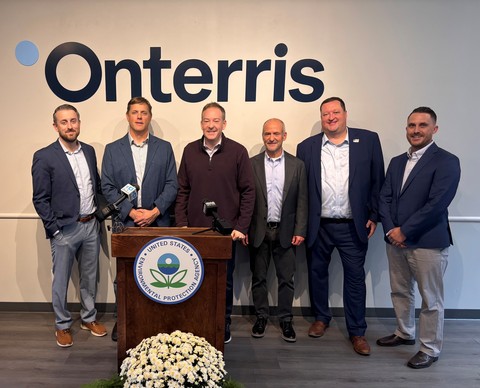
EPA Administrator Lee Zeldin visits The Onterris Treatment Technology team in
The visit focused on one of the most consequential challenges facing drinking water systems nationwide: protecting public health while managing the cost and complexity of meeting new water-quality requirements. The Onterris Treatment Technologies division presented its proven, patented solutions designed to scale from small and rural communities to large metropolitan systems, along with the Company’s work for civilian and defense agencies across the
Central to the presentation was SORBIX™ RePURE, the Onterris regenerable ion exchange technology that uses specialized resins to capture PFAS from water. Rather than disposing of treatment media after use and buying new replacement media, the Onterris regenerable ion exchange process removes and concentrates PFAS so the resin can be regenerated and returned for reuse. The resin cleaning solution is also reclaimed and purified for reuse. The overall process uses multiple concentration stages to dramatically reduce the volume of PFAS waste and ultimately improve safety and quality while reducing costs.
During the visit, the Onterris team demonstrated how the technology addresses PFOA and PFOS, as well as other forms of PFAS, while reducing the volume of waste generated through treatment. The discussion also explored how innovative treatment approaches can help expand access to effective PFAS remediation while addressing the cost and operational challenges facing water systems.
The visit provided an opportunity for EPA leadership to see the technology firsthand and learn more about its potential application for drinking water systems across the country.
“We have an opportunity to apply our innovation to one of the country’s most important water challenges,” said Steve Woodard, Chief Innovation Officer of Onterris. “Regeneration changes the treatment model. Instead of continually purchasing, removing and disposing of treatment media, our technology captures PFAS, concentrates the waste and allows the resin to be reused. That can substantially reduce waste and long-term operating costs, helping utilities protect drinking water while reducing the burden on ratepayers.”
“The goal is straightforward: clean drinking water, strong public health protection and responsible use of public dollars,” said Andy Bishop, Executive Vice President of Treatment Technologies at Onterris. “We know how to treat PFAS. The current opportunity is to make proven solutions more accessible and affordable at the scale America needs.”
“PFAS is not a single-market challenge, and drinking water is only one part of the equation,” said Vijay Manthripragada, President and Chief Executive Officer of Onterris. “Our technologies can be applied across a range of water matrices, from landfill leachate and industrial process water to wastewater and drinking water, helping address PFAS at multiple points before it reaches communities. That versatility is increasingly important as customers navigate federal requirements and state standards that may be more stringent. We see a significant opportunity to scale proven solutions across these markets while advancing the ultimate goal: reducing the pathways through which PFAS can contaminate drinking water.”
Regenerable Ion Exchange Technology and Other PFAS Solutions
Onterris has been treating PFAS-impacted water since 2013. Today, the company has deployed more than 350 treatment systems across the world, including PFAS projects at 34 US federal facilities, and holds a broad portfolio of patents covering technologies that address complex environmental challenges.
The Onterris regeneration technology can achieve an approximately 80-million-to-one reduction in waste volume while substantially reducing operating costs compared with replacing and disposing of single-use ion exchange media. Already deployed globally for groundwater, fire-training-area water, industrial process water and stormwater, Onterris is now advancing the platform for drinking water.
Affordability is increasingly important as water systems prepare to meet federal PFAS requirements, particularly as utilities balance treatment implementation and infrastructure investment with the cost ultimately borne by ratepayers. To help address those barriers, Onterris is investing in
Onterris will continue working with EPA drinking water leadership, public agencies and utilities to advance cost-effective PFAS treatment solutions for communities across the country.
About Onterris
Onterris is a global environmental solutions company partnering with organizations to solve complex challenges where environmental pressures, regulatory expectations and operational risks intersect. Guided by our mission to advance the way of life without compromising the integrity of our environment, we believe environmental responsibility and human progress are fundamentally connected. Our scientists, engineers, field teams and consultants apply systems thinking that unite science, data and practical expertise to deliver solutions that strengthen our clients’ resilience, mitigate risk and help protect the air, water and soil that sustain communities, while uncovering responsible paths forward for planet and progress. For more information, visit Onterris.com.
View source version on businesswire.com: https://www.businesswire.com/news/home/20261006184117/en/
Investor Relations:
Adrianne Griffin
Senior Vice President, Investor Relations & Treasury
(949) 988-3383
ir@onterris.com
Media Relations:
Lauren Dowling
Senior Vice President, Marketing & Communications
(214) 514-9809
pr@onterris.com
Source: Onterris, Inc.