
Onyx Gold Drills 166.0 Meters of 0.7 g/t Gold at Argus Main and Extends Argus Trend to 2.6 Kilometers with New Gold Intercepts at Big Break and JM
New gold-bearing targets lie beyond the previously outlined approximately 1.4-kilometer Argus footprint, with intervening ground still requiring follow-up.
Sentiment and the balance of points
Rhea-AI Sentiment reads the wording of the document, how positive or negative its language is on a 1 to 5 scale. The balance of points shown with the takes weighs what the document actually discloses, so the two can disagree, for example when a trial that missed its main goal is described in upbeat language.
Rhea-AI Summary
Onyx Gold (ONXGF) reported new drill results extending identified gold mineralization across an approximately 2.6-kilometer trend at Munro-Croesus, Ontario. Argus Main hole MC26-343 returned 0.7 grams per tonne gold over 166.0 meters, including 1.6 grams per tonne over 21.7 meters. First-pass drilling at Big Break returned 0.6 grams per tonne over 22.0 meters and 0.9 grams per tonne over 11.0 meters. At JM, results included 18.8 grams per tonne over 2.3 meters and 1.4 grams per tonne over 10.4 meters.
Big Break and JM are separate targets, with intervening ground requiring follow-up. Approximately 100,000 meters of the fully funded 110,000-meter program are complete; results cover 146 of 264 completed holes. Four rigs remain active. With approximately $9 million in cash, Onyx anticipates completing the program by year-end. Approximately 4 kilometers of its approximately 8-kilometer prospective Pipestone corridor have been drill tested.
How this balance works
Rhea-AI gives every point it takes from this document a weight. Minor counts 1, Moderate 3 and Major 9, so one Major point outweighs several Minor ones. The bar adds up the weights on each side, and when neither side holds more than 65% of the total the balance reads Mixed.
It reads the document as published, with the same rules for every company, and it does not look at what the market expected or at how the stock traded, so a point can be objectively good on a day the stock falls.
Rhea-AI Sentiment measures something else, the tone of the wording.
Hollow bars mark forward-looking points. How the balance works
Positive
- Moderate pointExploration program is fully funded, with approximately $9 million in cash.
- Minor pointArgus Main MC26-343 returned 0.7 grams per tonne gold over 166.0 meters, containing multiple higher-grade intervals.
- Minor pointArgus Main MC26-311-EXT returned 0.7 grams per tonne gold over 20.7 meters.
- Minor pointBig Break MC26-291 returned 0.6 grams per tonne gold over 22.0 meters.
- Minor pointBig Break MC26-295 returned 0.9 grams per tonne gold over 11.0 meters.
6 minor points
- Minor pointJM MC26-350 returned 18.8 grams per tonne gold over 2.3 meters, including 25.1 over 1.2 meters.
- Minor pointJM MC26-330A returned 1.4 grams per tonne gold over 10.4 meters.
- Minor pointGold-bearing locations now span approximately 2.6 kilometers, beyond the previously outlined approximately 1.4-kilometer Argus footprint.
- Minor pointArgus Main remains open along strike and at depth after testing to approximately 400 meters vertically.
- Minor point. Forward-looking: it has not happened yet and may not happen.Onyx anticipates completing its 110,000-meter program by year-end; approximately 91% is complete.
- Minor point. Forward-looking: it has not happened yet and may not happen.Onyx plans further drilling to expand Argus Main and North and evaluate additional corridor targets.
Negative
- Minor pointBig Break and JM remain separate early-stage targets, with extensive intervening ground requiring follow-up.
- Minor pointBig Break's inferred fault geometry remains unconfirmed and requires additional geological work.
- Minor pointBig Break and JM/JM Variolitics tables include drill holes with no significant assays.
AI-generated analysis. How Rhea-AI works. Not financial advice.


Vancouver, British Columbia--(Newsfile Corp. - October 26, 2026) - Onyx Gold Corp. (TSXV: ONYX) (OTCQX: ONXGF) ("Onyx" or the "Company") is pleased to report assay results from 31 additional drill holes at the Argus Gold System ("Argus") and along the Pipestone Fault corridor at its
Drilling has now encountered gold at multiple locations across an approximately 2.6-kilometer trend at Argus. In addition to more strong results from Argus Main, first-pass drilling at Big Break, 700 meters southeast of Argus Main, and JM, a further 500 meters southeast, have identified new gold-bearing areas beyond the approximately 1.4-kilometer Argus Gold System footprint previously outlined. These are separate mineralized targets, with extensive ground between them still requiring follow-up.
Highlights
- Argus Main - Drill hole MC26-343 intersected 0.7 g/t gold ("Au") over 166.0 meters ("m"), including 1.6 g/t Au over 21.7 m and 2.2 g/t Au over 9.9 m, reinforcing the scale of mineralization and potential for higher-grade zones.
- Big Break - First-pass drilling approximately 700 m southeast of Argus Main returned
0.6 g/t Au over 22.0 m in MC26-291 and 0.9 g/t Au over 11.0 m in MC26-295, testing a structurally disrupted magnetic-low anomaly within the same favourable volcanic sequence hosting Argus.
- JM - MC26-350 returned 18.8 g/t Au over 2.3 m, including 25.1 g/t Au over 1.2 m; MC26-330A returned 1.4 g/t Au over 10.4 m. Both holes were drilled in the JM area, approximately 1.2 km southeast of Argus Main.
- Gold mineralization has now been identified at multiple locations along an approximately 2.6 km trend associated with the Pipestone Fault, supporting further exploration for additional zones. Onyx controls approximately 8 km of prospective strike, of which approximately 4 km has been drill tested. This leaves significant portions of the corridor available for target generation and first-pass testing.
- Significant drill results remain to be reported - Approximately
91% of the 110,000 m program is complete, but results have been released for only 146 of 264 completed holes (55% ). Four rigs remain active, with approximately 10,000 m of drilling remaining.
"These results are expanding our view of the broader discovery potential at Munro-Croesus, well beyond the original Argus discovery area," said Brock Colterjohn, President and CEO of Onyx Gold. "At Argus Main, we continue to intersect broad zones of gold mineralization containing multiple higher-grade intervals. What is particularly encouraging is that first-pass drilling at Big Break and JM has now identified gold up to 1.2 kilometers southeast of Argus Main, within the same favourable volcanic sequence. While these new areas are still at an early stage, the results suggest that the geological conditions associated with gold mineralization at Argus may be repeated elsewhere along the Pipestone corridor. With approximately eight kilometers of prospective strike under Onyx control, we have a significant opportunity to apply our evolving geological model to a much larger area. Our focus remains on expanding the established Argus zones while systematically exploring for additional gold-bearing centres along the trend."
Discussion of Argus Gold System and Pipestone Drill Results
Argus Main Drill Results
Three (3) drill holes reported today are part of the ongoing test of the plunging higher-grade zone on the eastern margin of Argus Main and following up on recent strong drilling results including 1.7 g/t Au over 67.0 m, including 13.2 g/t Au over 6.0 m, in drill hole MC26-340 (see Company news release dated August 19). The drilling is part of the Company's overall strategy to define and expand the known zones at Argus Main and Argus North (See Figures 1/2/3). Highlights include:
- MC26-343: 0.7 g/t Au over 166.0 m, including
- 1.6 g/t Au over 21.7 m, including
- 5.8 g/t Au over 3.0 m, and including
- 1.6 g/t Au over 21.7 m, including
- 1.3 g/t Au over 20.7 m, including
- 5.4 g/t Au over 2.9 m, and including
- 2.2 g/t Au over 9.9 m, including
- 5.6 g/t Au over 2.9 m, including
- 12.9 g/t Au over 0.7 m
- 5.6 g/t Au over 2.9 m, including
- MC26-311EXT: 0.7 g/t Au over 20.7 m, including
- 1.2 g/t Au over 10.0 m, including
- 2.0 g/t Au over 4.0 m
- 1.2 g/t Au over 10.0 m, including
Argus Main has been tested from near surface to approximately 400 m vertical depth and remains open along strike and at depth. The mineralized zone displays characteristics also observed at Argus North, including variolitic to pillowed mafic volcanic host rocks, albite-carbonate-silica alteration, fracturing and localized crackle brecciation accompanied by fine-grained pyrite. The multiple higher-grade intervals in MC26-343 reinforce the importance of defining structural controls and potential plunging zones within the broader mineralized envelope.
Big Break Drill Results
Big Break is located approximately 700 m southeast of Argus Main, where magnetic data indicate a possible northeast-trending break within the favourable mafic volcanic package. (Figures 1 and 2). The setting was selected because the coincidence of favourable host rocks, structural complexity and a magnetic-low response resembles geological features being investigated at Argus North. The inferred fault geometry remains to be confirmed by additional geological work.
Twelve holes are reported from first-pass drilling at Big Break. Several returned gold-bearing intervals that warrant follow-up testing, including:
- MC26-291: 0.6 g/t Au over 22.0 m, including
- 1.4 g/t Au over 5.0 m
- MC26-295: 0.9 g/t Au over 11.0 m, including
- 4.6 g/t Au over 2.0 m
JM and JM Variolitics Drill Results
JM is approximately 500 m southeast of Big Break near the upper contact of the same favourable volcanic sequence. The historic JM showing occurs in variolitic volcanic rocks with silicification, sericite and iron-carbonate alteration, accompanied by pyrite and arsenopyrite. Historical surface sampling returned up to 15.0 g/t Au in waste rock and 11.0 g/t Au from a pit wall.
The current program tested a different location south of the historic showing where new geological and magnetic information suggest an interpreted northeast-trending structure. The objective was to assess whether the combination of favourable host stratigraphy and structurally prepared rocks associated with Argus could occur farther southeast along the Pipestone corridor.
Twelve (12) drill holes are reported today with highlights including:
- MC26-350: 18.8 g/t Au over 2.3 m, associated with a lamprophyre dike cutting mafic variolitic basalt, including
- 25.2 g/t Au over 1.2 m
- MC26-330A: 1.4 g/t Au over 10.4 m, including
- 2.0 g/t Au over 5.4 m, including
- 6.0 g/t Au over 0.7 m
- 2.0 g/t Au over 5.4 m, including
Complete significant assay results are provided in Table 1 and shown in Figures 1/2/3.
Updated collar coordinates for all drill holes reported to date can be found on the Company's website here.
The Argus-Pipestone Trend - A Larger Gold Discovery Opportunity
The Argus Gold System is an emerging, large-scale gold system comprising multiple zones of mineralization immediately north of the regional Pipestone Fault. The currently recognized zones include Argus Main, Argus North and Argus West, with additional exploration targets including Big Break and JM currently being drill tested across the broader structural Pipestone and Argus Fault corridors. Drilling to date has demonstrated gold mineralization across approximately 2.6 km of strike and more than 700 m vertically.
At Argus North and Argus Main, drilling has defined broad zones of disseminated gold mineralization containing steeply plunging, higher-grade zones associated with northeast-trending structures and favourable volcanic stratigraphy. These higher-grade zones appear to have a periodicity along the broader mineralized trend, providing a geological framework for targeting additional zones across the Argus Gold System.
Onyx controls approximately 8 km of prospective strike along the Pipestone Fault corridor. Only 4 km (
Elsewhere at Munro-Croesus, the separate interpreted Argus Fault corridor extends for approximately 16 km, including the sediment-hosted Flipper area approximately 3 km south of Argus (see Company news release dated October 5, 2026). The two corridors create distinct opportunities to explore for additional gold-bearing centres across the Property.
The strategy is to advance the established Argus mineralized zones while systematically evaluating Big Break, JM and other prospective structural intersections along the Pipestone and Argus Fault corridors. Mapping, magnetic interpretation, targeted step-outs and drill fences will be used to refine the orientation of mineralization, establish whether better-grade zones repeat, and rank the next tests along the corridor. The pace and priority of future drilling will be guided by additional geological and assay results.
Update on 2026 Exploration Program
The Company continues to execute its fully funded 110,000 m exploration program at Munro-Croesus, with 264 drill holes totalling approximately 100,000 m (
Assays have been released for 146 drill holes, representing approximately
Drilling will continue on two fronts: (1) expanding the established Argus Main and North zones, including higher-grade plunging targets; and (2) defining the orientation, extent and potential repetitions of gold mineralization at Big Break, JM and additional structural targets along the Pipestone corridor. Geological mapping, high-resolution magnetics and targeted drill fences will guide priorities, with step-out programs adjusted as new results are received.
The Company anticipates completing the 110,000 m program by year-end and is fully funded with approximately
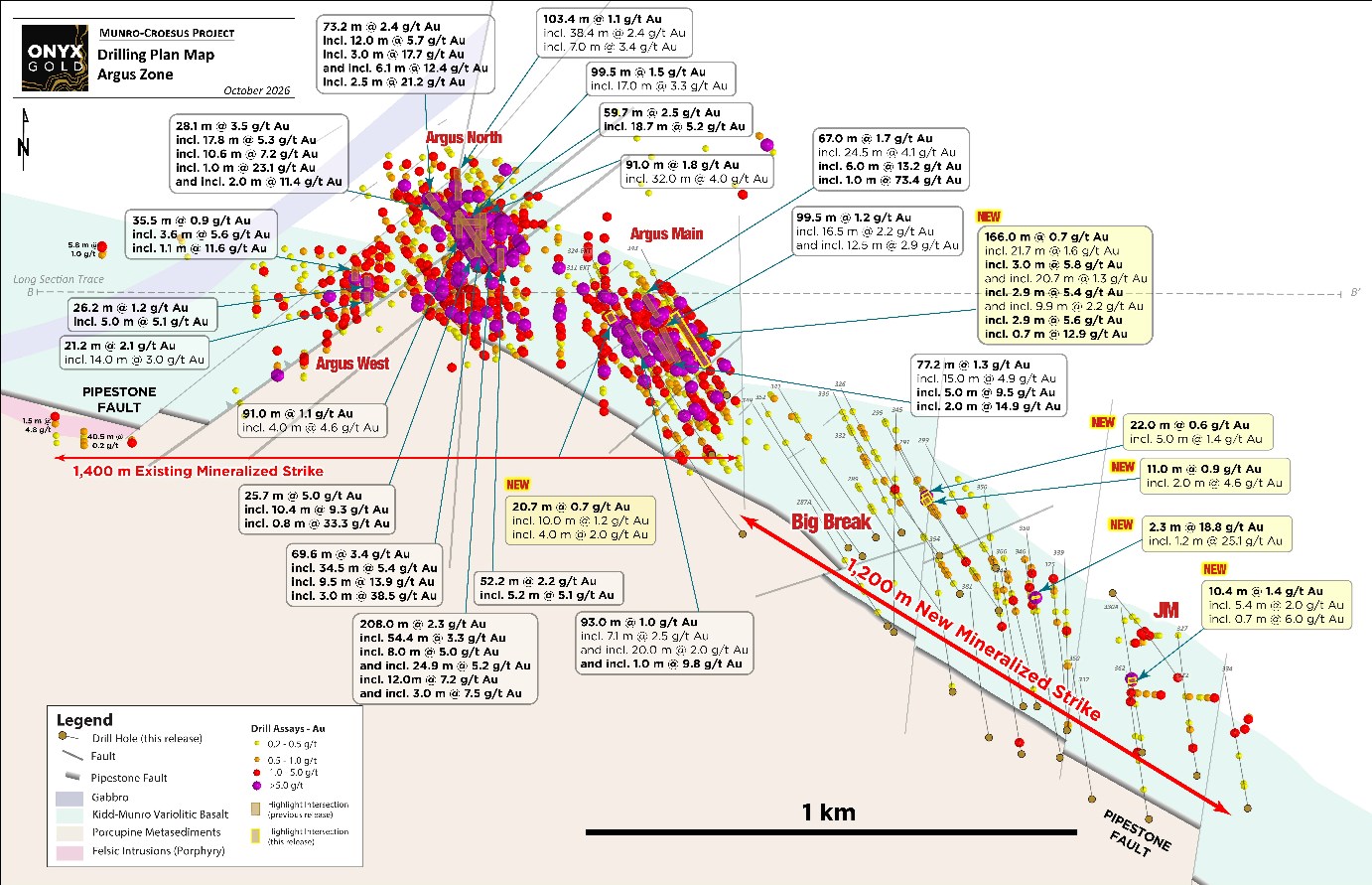
Figure 1 - Plan Map of Argus Zone Drill Results
To view an enhanced version of this graphic, please visit:
https://images.newsfilecorp.com/files/9800/320856_622e5be80457e819_001full.jpg
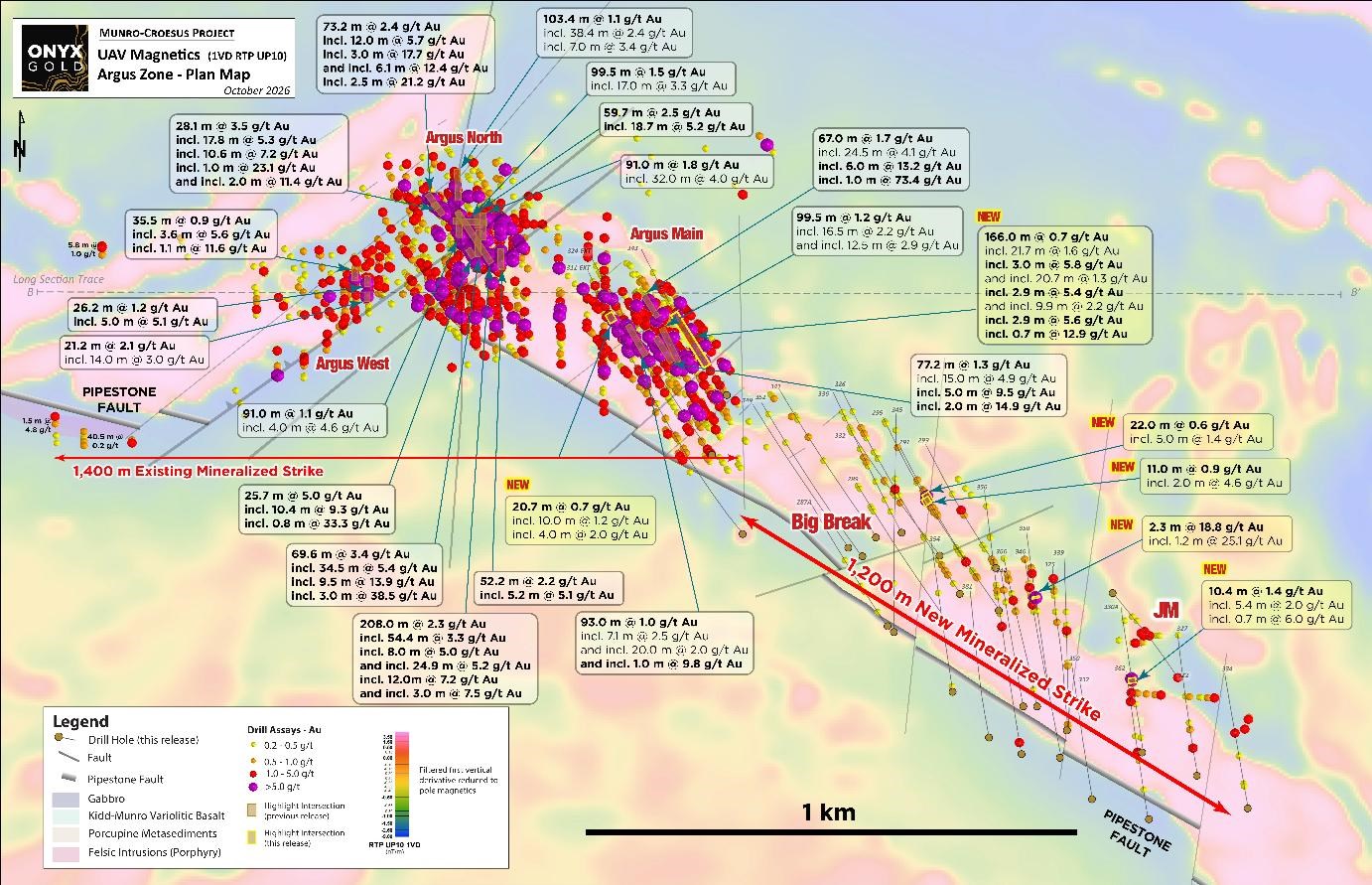
Figure 2 - High-resolution UAV Magnetics Highlighting the Pipestone Fault Corridor with Recent Argus Drill Results
To view an enhanced version of this graphic, please visit:
https://images.newsfilecorp.com/files/9800/320856_622e5be80457e819_002full.jpg
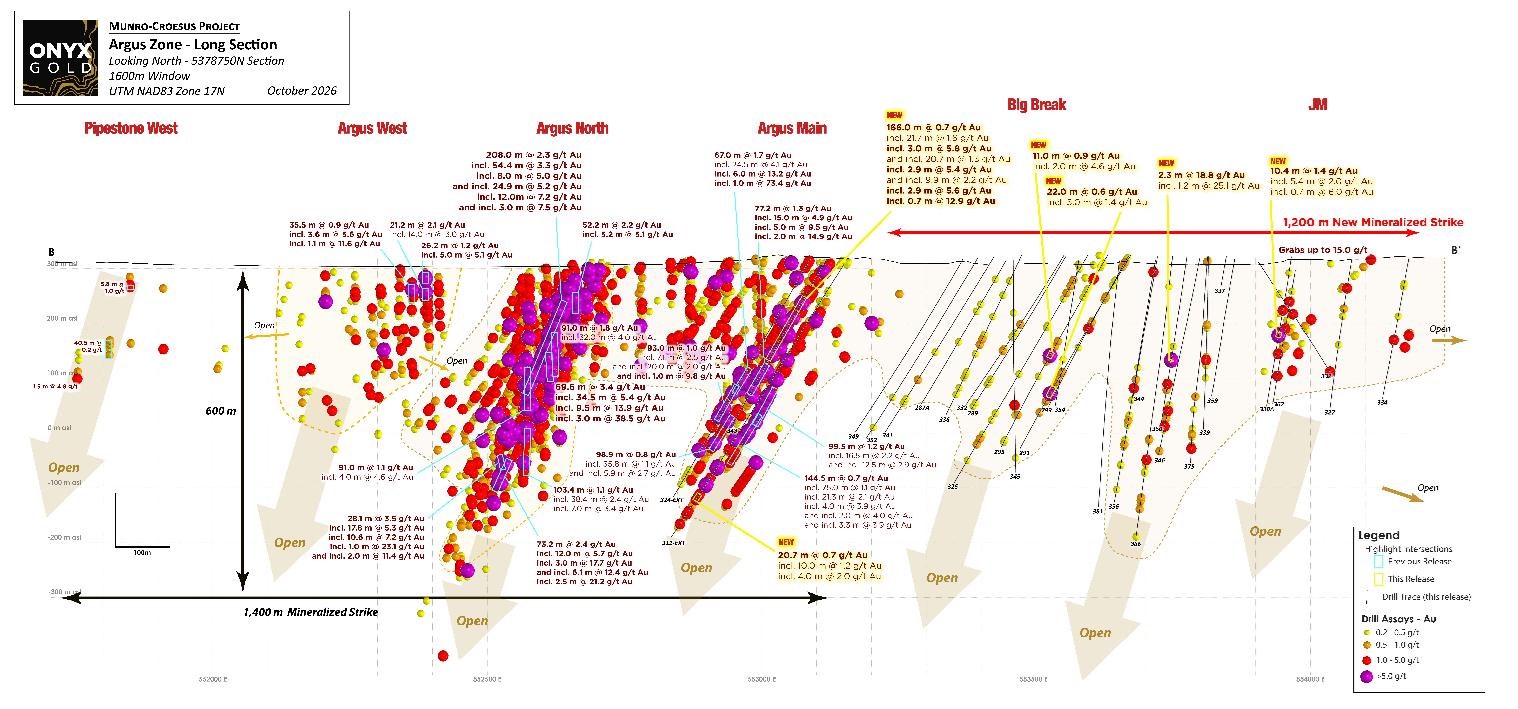
Figure 3 - Cross Section of Argus Main Drill Results
To view an enhanced version of this graphic, please visit:
https://images.newsfilecorp.com/files/9800/320856_622e5be80457e819_003full.jpg
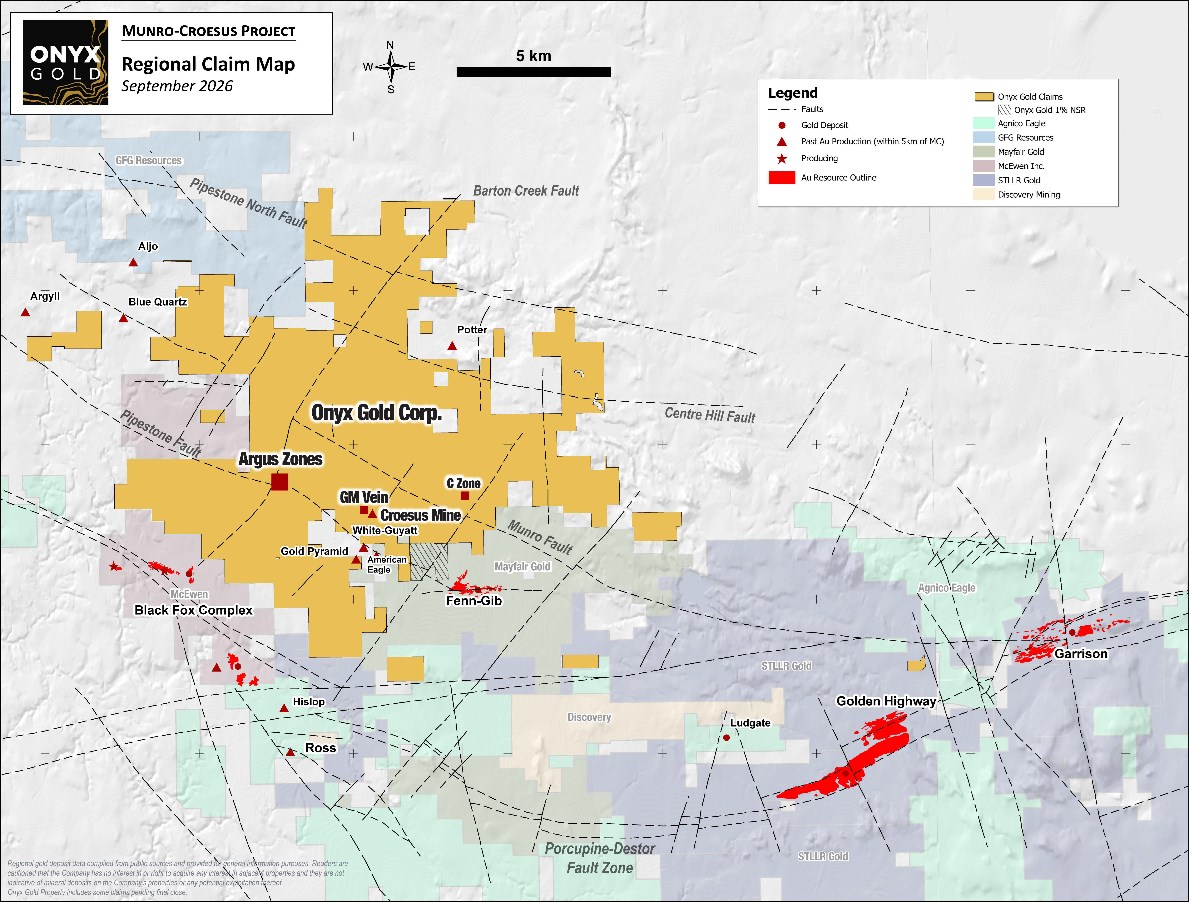
Figure 4 - Location of the Munro-Croesus Gold Project, Ontario
To view an enhanced version of this graphic, please visit:
https://images.newsfilecorp.com/files/9800/320856_622e5be80457e819_004full.jpg
Table 1 - Significant Assay Results Reported in this Release
| Target | From | To | Length | Au |
| Drill Hole | (m) | (m) | (m) | (g/t) |
| Argus Main East | ||||
| MC26-311-EXT | 656.3 | 677.0 | 20.7 | 0.7 |
| Including | 656.3 | 666.3 | 10.0 | 1.2 |
| Including | 656.3 | 660.3 | 4.0 | 2.0 |
| And | 693.0 | 696.0 | 3.0 | 0.8 |
| And | 712.0 | 723.0 | 11.0 | 0.5 |
| Including | 712.0 | 713.0 | 1.0 | 1.6 |
| And Including | 720.4 | 723.0 | 2.6 | 0.9 |
| And | 744.3 | 766.7 | 22.4 | 0.2 |
| Including | 754.0 | 757.7 | 3.7 | 0.9 |
| Including | 754.0 | 755.0 | 1.0 | 2.7 |
| MC26-324-EXT | 566.0 | 583.0 | 17.0 | 0.1 |
| MC26-343 | 8.6 | 39.0 | 30.4 | 0.2 |
| And | 51.0 | 58.0 | 7.0 | 0.3 |
| And | 77.1 | 83.8 | 6.7 | 0.5 |
| And | 99.0 | 265.0 | 166.0 | 0.7 |
| Including | 100.0 | 121.7 | 21.7 | 1.6 |
| Including | 114.0 | 117.0 | 3.0 | 5.8 |
| And Including | 151.3 | 172.0 | 20.7 | 1.3 |
| Including | 153.1 | 156.0 | 2.9 | 5.4 |
| And Including | 249.0 | 258.9 | 9.9 | 2.2 |
| Including | 256.0 | 258.9 | 2.9 | 5.6 |
| Including | 256.7 | 257.4 | 0.7 | 12.9 |
| And | 298.5 | 308.0 | 9.5 | 0.2 |
| And | 322.0 | 357.8 | 35.8 | 0.3 |
| Including | 353.8 | 356.8 | 3.0 | 0.8 |
Table 1 - Significant Assay Results Reported in this Release (Continued)
| Target | From | To | Length | Au |
| Drill Hole | (m) | (m) | (m) | (g/t) |
| Big Break | ||||
| MC25-287A | No Significant Assays | |||
| MC26-289 | No Significant Assays | |||
| MC26-291 | 107.2 | 116.2 | 9.0 | 0.4 |
| And | 311.2 | 340.0 | 28.8 | 0.2 |
| And | 355.0 | 377.0 | 22.0 | 0.6 |
| Including | 370.0 | 375.0 | 5.0 | 1.4 |
| And | 390.2 | 392.5 | 2.3 | 0.4 |
| And | 422.5 | 425.5 | 3.0 | 0.4 |
| MC26-295 | 60.5 | 69.2 | 8.7 | 0.3 |
| And | 203.0 | 206.0 | 3.0 | 0.4 |
| And | 226.0 | 242.0 | 16.0 | 0.3 |
| And | 256.0 | 267.0 | 11.0 | 0.9 |
| Including | 264.0 | 266.0 | 2.0 | 4.6 |
| And | 281.0 | 284.0 | 3.0 | 0.5 |
| And | 498.6 | 506.4 | 7.8 | 0.2 |
| MC26-299 | 189.0 | 196.4 | 7.4 | 0.6 |
| Including | 190.0 | 191.0 | 1.0 | 1.9 |
| MC26-326 | 65.0 | 82.8 | 17.8 | 0.2 |
| MC26-332 | 182.8 | 184.8 | 2.0 | 0.6 |
| MC26-336 | 218.0 | 225.5 | 7.5 | 0.3 |
| And | 311.5 | 328.5 | 17.0 | 0.1 |
| MC26-341 | 333.0 | 334.5 | 1.5 | 0.6 |
| MC26-345 | 392.0 | 393.0 | 1.0 | 2.9 |
| MC26-349 | No Significant Assays | |||
| MC26-352 | No Significant Assays | |||
Table 1 - Significant Assay Results Reported in this Release (Continued)
| Target | From | To | Length | Au |
| Drill Hole | (m) | (m) | (m) | (g/t) |
| JM/JM Variolitics | ||||
| MC26-322 | 135.2 | 137.9 | 2.7 | 1.3 |
| Including | 137.0 | 137.9 | 0.9 | 2.8 |
| And | 292.8 | 294.0 | 1.2 | 1.4 |
| MC26-327 | 81.0 | 82.0 | 1.0 | 1.1 |
| And | 133.6 | 135.0 | 1.4 | 0.7 |
| MC26-330A | 198.9 | 209.3 | 10.4 | 1.4 |
| Including | 203.9 | 209.3 | 5.4 | 2.0 |
| Including | 208.6 | 209.3 | 0.7 | 6.0 |
| MC26-334 | 216.0 | 218.8 | 2.8 | 1.0 |
| MC26-337 | No Significant Assays | |||
| MC26-339 | 179.2 | 182.2 | 3.0 | 0.5 |
| And | 275.5 | 276.5 | 1.0 | 1.1 |
| MC26-344 | 326.0 | 329.0 | 3.0 | 0.4 |
| MC26-346 | 398.0 | 475.5 | 77.5 | 0.1 |
| Including | 460.0 | 467.5 | 7.5 | 0.4 |
| MC26-350 | 275.3 | 277.6 | 2.3 | 18.8 |
| Including | 275.3 | 276.5 | 1.2 | 25.1 |
| And | 342.0 | 343.0 | 1.0 | 1.7 |
| And | 357.0 | 359.0 | 2.0 | 0.6 |
| MC26-354 | No Significant Assays | |||
| MC26-356 | 31.0 | 32.5 | 1.5 | 1.9 |
| And | 350.2 | 351.4 | 1.2 | 2.6 |
| And | 428.5 | 462.0 | 33.5 | 0.2 |
| And | 517.0 | 526.0 | 9.0 | 0.3 |
| Including | 517.0 | 519.0 | 2.0 | 0.8 |
| MC26-359 | No Significant Assays | |||
| MC26-362 | 186.0 | 186.9 | 0.9 | 1.2 |
| And | 321.0 | 322.0 | 1.0 | 4.4 |
| MC26-366 | 386.0 | 392.0 | 6.0 | 0.3 |
| And | 429.0 | 438.0 | 9.0 | 0.8 |
| Including | 430.0 | 431.0 | 1.0 | 5.0 |
| And | 455.0 | 459.2 | 4.2 | 0.2 |
| And | 511.0 | 537.0 | 26.0 | 0.2 |
| MC26-375 | 335.0 | 339.0 | 4.0 | 0.3 |
| And | 429.0 | 437.0 | 8.0 | 0.2 |
| And | 457.0 | 466.0 | 9.0 | 0.3 |
| Including | 465.0 | 466.0 | 1.0 | 1.1 |
| MC26-381 | No Significant Assays | |||
*All intersections are reported as drilled width; true width is unknown
On Behalf of Onyx Gold Corp.
"Brock Colterjohn"
President & CEO
For further information, please visit the Onyx Gold Corp. website at www.onyxgold.com or contact:
Brock Colterjohn, President & CEO
or
Vanessa Pickering, VP, Investor Relations - vanessa@onyxgold.com
Phone: 1-604-283-3341
Email: information@onyxgold.com
Website: www.onyxgold.com
LinkedIn: https://www.linkedin.com/company/onyx-gold-corp
X: https://x.com/OnyxGoldCorp
Neither TSX Venture Exchange nor its Regulation Services Provider (as that term is defined in the policies of the TSX Venture Exchange) accepts responsibility for the adequacy or accuracy of this release.
The Munro-Croesus Project
The Munro-Croesus Project is located along Highway 101 in the heart of the Abitibi greenstone belt, Canada's premier gold mining jurisdiction (Figure 3). This large,
The Project covers 114 km2 of highly prospective geology within the influence of major gold-bearing structural breaks. Bulk-tonnage gold deposits located in the immediate region include the Fenn-Gib gold project being developed by Mayfair Gold Corp., and the Tower Gold Project being developed by STLLR Gold Inc.
Qualified Person
Ian Cunningham-Dunlop, P.Eng., Executive Vice President of Onyx Gold Corp. and a Qualified Person as defined by National Instrument 43-101, has reviewed and approved the scientific and technical information contained in this news release.
About Onyx Gold
Onyx Gold Corp. (TSXV: ONYX) (OTCQX: ONXGF) is a Canadian exploration company focused on unlocking district-scale gold opportunities in two of the country's most prolific and proven mining jurisdictions - Timmins, Ontario, and Yukon Territory.
In the Timmins Gold Camp, Onyx controls an extensive portfolio anchored by the Munro-Croesus Property, host to the historic high-grade Croesus Mine and site of the Company's recent Argus North discovery. Complementing Munro-Croesus are two large, early-stage projects - Golden Mile, a 140 km² property situated just 9 km from Discovery Silver's multi-million-ounce Hoyle Pond Mine, and Timmins South, a 187 km² land package strategically positioned around the Shaw Dome structure, offering exceptional discovery potential.
Beyond Ontario, Onyx holds a commanding land position across four properties in Yukon's Selwyn Basin, an area rapidly gaining recognition for new gold discoveries and growing exploration investment. The Company's King Tut Property sits approximately 50 km south of Snowline Gold's Valley deposit and adjacent to Fireweed Metals' MacPass property.
Led by an experienced team with a strong track record of discovery, development, and value creation, Onyx Gold is well-funded and committed to delivering shareholder value through disciplined exploration, strategic growth, and responsible resource development.
Additional Notes:
Samples of drill core were cut by a diamond blade rock saw, with half of the cut core placed in individual sealed polyurethane bags and half placed back in the original core box for permanent storage. Sample lengths typically vary from a minimum 0.2-meter interval to a maximum 1.5-meter interval, with an average 0.5 to 1.0-meter sample length. Drill core samples were delivered by truck in sealed woven plastic bags to ALS Geochemistry laboratory facility in Timmins, Ontario for sample preparation with final analysis at ALS Geochemistry Analytical Lab facility in North Vancouver, BC, for the fire assay fusion method and inductively coupled plasma (ICP), with the photon assay method performed at the ALS Geochemistry Analytical Lab facility in Thunder Bay, Ontario. ALS Geochemistry operates meeting all requirements of International Standards ISO/IEC 17025:2017 and ISO 9001:2015
Drill core samples were crushed to
For all drill holes (including the RUSH mineralized portion), gold was also determined by the fire-assay fusion method (Au-AA26) of a 50-gram sub-sample with atomic absorption spectroscopy (AAS). Samples that returned values >10 ppm gold from fire assay and AAS were determined by using fire assay and a gravimetric finish. Various metals, including silver, gold, copper, lead, and zinc, were analyzed by inductively coupled plasma atomic emission spectroscopy (ME-ICP61), following multi-acid digestion. The elements copper, lead and zinc were determined by ore grade assay for samples that returned values >10,000 ppm by ICP analysis. Silver was determined by ore-grade assay for samples that returned>100 ppm.
All ALS Geochemistry sites operate under a single Global Geochemistry Quality Manual that complies with ISO/IEC 17025:2017. ALS Geochemistry follows the quality management and operational guidelines set out in the international standards ISO/IEC 17025 - "General Requirement for the Competence of Testing and Calibration Laboratories" and ISO 9001 - "Quality Management Systems".
The Company maintains a robust QA/QC program that includes the collection and analysis of duplicate samples and the insertion of blanks and standards (certified reference material).
Cautionary and Forward-Looking Statements
Forward-looking statements include predictions, projections, and forecasts and are often, but not always, identified by the use of words such as "seek", "anticipate", "believe", "plan", "estimate", "forecast", "expect", "potential", "project", "target", "schedule", "budget" and "intend" and statements that an event or result "may", "will", "should", "could" or "might" occur or be achieved and other similar expressions and includes the negatives thereof. All statements other than statements of historical fact included in this release, including, without limitation, statements regarding the interpretation and significance of drill results at Argus Main, Big Break and JM; the potential expansion of the Argus Gold System along strike and at depth; the interpretation of an approximately 2.6-kilometre gold-bearing trend along the Pipestone Fault corridor and the potential continuity of mineralization between separately drilled zones; the geological similarities and potential relationships between Argus Main, Argus North, Big Break and JM; the potential for additional mineralized zones and higher-grade shoots associated with favourable volcanic stratigraphy and interpreted northeast-trending structures; the prospectivity of the broader Pipestone Fault and Argus Fault corridors; the identification, prioritization and future drilling of exploration targets; the potential for additional gold discoveries at Munro-Croesus; and the anticipated timing, scope, completion and funding of the Company's ongoing exploration program constitute forward-looking statements. The Company's geological interpretations are preliminary and subject to change as additional drilling, geological mapping, geophysical and analytical information becomes available. Gold mineralization identified at multiple locations along the interpreted trend does not establish continuity between these areas or demonstrate the existence of an economic mineral deposit. Forward-looking statements are based on a number of material assumptions and are subject to known and unknown risks, uncertainties and other factors that could cause actual results or events to differ materially from those anticipated. These include, without limitation, actual exploration and assay results; geological interpretation and the continuity, grade and extent of mineralization; changes in exploration plans and project parameters; future metal prices; availability of capital and financing on acceptable terms; general economic, market and business conditions; regulatory changes; defects in title; availability of personnel, equipment and materials; accidents or equipment breakdowns; delays in obtaining required permits and approvals; unforeseen environmental impacts; and other exploration and operational risks described in the Company's filings with applicable securities regulators. Although management believes the assumptions underlying such forward-looking statements are reasonable, there can be no assurance that the anticipated results or events will occur. Actual results may differ materially from those expressed or implied, and readers are cautioned not to place undue reliance on forward-looking information. The Company undertakes no obligation to update or revise forward-looking statements except as required by applicable securities laws.

To view the source version of this press release, please visit https://www.newsfilecorp.com/release/320856
FAQ
AI-generated questions and answers. How Rhea-AI works. Not financial advice.
What were Onyx Gold's main Argus Main and JM drill results?
Argus Main hole MC26-343 returned 0.7 grams per tonne gold over 166.0 meters, while JM hole MC26-350 returned 18.8 grams per tonne over 2.3 meters. The JM intersection included 25.1 grams per tonne over 1.2 meters.
When does Onyx Gold expect to finish its 2026 Munro-Croesus drilling program?
Onyx anticipates completing the 110,000-meter program by year-end. Approximately 100,000 meters have been completed, with approximately 10,000 meters remaining and four rigs operating. The program is fully funded, with approximately $9 million in cash.
What additional exploration corridor does Onyx Gold identify at Munro-Croesus?
The separate interpreted Argus Fault corridor extends approximately 16 kilometers, including the sediment-hosted Flipper area approximately 3 kilometers south of Argus. It is distinct from the Pipestone Fault corridor where Big Break and JM are being evaluated.