
Oreterra CEO Letter to Shareholders Provides Forward Guidance on Trek South Drill Results in Advance of Assays
Visual copper observations guide the next drilling target, but grades and the prospect's economic significance remain unestablished.
Sentiment and the balance of points
Rhea-AI Sentiment reads the wording of the document, how positive or negative its language is on a 1 to 5 scale. The balance of points shown with the takes weighs what the document actually discloses, so the two can disagree, for example when a trial that missed its main goal is described in upbeat language.
Rhea-AI Summary
Oreterra Metals (OTMCF) outlined an interpreted deeper drilling target at Trek South after completing approximately 4,100 metres of Phase 1 drilling. The program comprised 11 holes at the copper-gold prospect in British Columbia's Golden Triangle. Central holes TS26-06, TS26-09 and TS26-10 produced the strongest visual results, with visible copper minerals and intense alteration, or changes in the surrounding rock.
The company interprets magnetic modelling and drill observations as pointing to an intrusive root beneath and southeast of the central holes, and plans 2027 Phase 2 drilling to test it. The model remains schematic and interpretive. Laboratory assays are expected in October and November 2026; actual copper and gold grades, mineralization continuity and thickness, root dimensions and economic significance remain unestablished.
How this balance works
Rhea-AI gives every point it takes from this document a weight. Minor counts 1, Moderate 3 and Major 9, so one Major point outweighs several Minor ones. The bar adds up the weights on each side, and when neither side holds more than 65% of the total the balance reads Mixed.
It reads the document as published, with the same rules for every company, and it does not look at what the market expected or at how the stock traded, so a point can be objectively good on a day the stock falls.
Rhea-AI Sentiment measures something else, the tone of the wording.
Hollow bars mark forward-looking points. How the balance works
Positive
- Moderate pointPhase 1 completed approximately 4,100 metres of drilling across 11 holes at Trek South.
- Moderate pointTS26-06, TS26-09 and TS26-10 produced the strongest visual results, including visible copper minerals.
- Minor pointBroad, multi-hundred-metre alteration intervals show the extent of the porphyry-style hydrothermal system.
- Minor pointMagnetic modelling identifies a potential intrusive root beneath and southeast of the central holes.
- Minor point. Forward-looking: it has not happened yet and may not happen.2027 Phase 2 drilling is planned to test beneath Phase 1 holes and into the interpreted root.
- Minor pointDrill pads, camp and core-shack infrastructure remain in place for the next field season.
Negative
- Moderate point. Forward-looking: it has not happened yet and may not happen.Hwy 37–Galore Creek access road completion remains necessary; the road ends 1.2 kilometres downslope from camp.
- Minor point. Forward-looking: it has not happened yet and may not happen.Copper and gold grades remain unestablished; laboratory assays are expected in October and November 2026.
- Minor pointMineralization continuity and thickness remain unestablished.
- Minor pointIntrusive-root interpretation remains schematic; exact dimensions and whether it contains expected grades remain unestablished.
- Minor pointEconomic significance of the potential discovery remains unestablished.
AI-generated analysis. How Rhea-AI works. Not financial advice.




Trek South Moves Closer to the Porphyry Root as Phase 1 Drilling Sharpens the Target
Toronto, Ontario--(Newsfile Corp. - October 5, 2026) - Oreterra Metals Corp. (TSXV: OTMC) (OTCQB: OTMCF) (FSE: D4R0) (WKN: A421RQ) ("Oreterra" or the "Company"). In advance of the receipt of laboratory assays expected later this month and next, Oreterra's CEO Kevin Keough is pleased to provide for the benefit of shareholders an assessment of the visual results and importance of the recently concluded (news, September 16) Phase 1 drill program at its new Trek South porphyry copper-gold prospect in BC's Golden Triangle. This letter to shareholders is supported by a Trek South presentation available at Corporate Presentation.
"Trek South has now moved beyond the question of whether the prospect area encompasses a porphyry system," states Mr. Keough. "The Phase 1 drill results have demonstrated that a broad, porphyry style alteration halo with locally abundant copper minerals is present across a wide area and extends at least several hundred metres in vertical depth. The more important question is now the location of the intrusive root believed to be the source underlying this broad area of alteration, as it is within that root that the highest-grade part of the system should be found. Across 11 holes and approximately 4,100 metres of drilling, our team has now built a much clearer picture of the system beneath the Trek South "A" Zone (Figure 1). Assays remain pending, but the combination of visual core observations, alteration patterns and magnetic modelling is pointing toward a specific target beneath the central holes in the drill fence - TS26-06, TS26-09 and TS26-10.
These three central holes combined particularly intense (and generally non-magnetic) alteration with visible copper minerals. The mineral assemblage included bornite, chalcopyrite, chalcocite, malachite and chrysocolla, with visible copper minerals occurring from trace amounts across several hundred metres to locally appreciable concentrations over shorter intervals. The combination of intense alteration and copper-bearing minerals has provided a strong vector toward what we believe to be the underlying high-temperature porphyry source. The presence of bornite, commonly intergrown with chalcopyrite and chalcocite, is considered a strong indication of an underlying, fertile intrusion source.
The Magnetic "Ship's Prow"
Our latest interpretation combines the visual drill results with magnetic modelling. Beneath the A Zone holes, we have identified a distinctive "ship's prow" shape in the underlying magnetic data. The resulting interpretation is a magnetically positive porphyry intrusion tilted toward the southeast, camouflaged beneath strongly magnetic volcanic rocks and later intrusions. Above it sits a large, lower-magnetic-susceptibility mineralized alteration halo (Figures 2 and 3).
In simplified terms, our geological interpretation points toward a deeper source beneath the area tested by our Phase 1 drilling. The broad surface alteration represents the outer expression of the system, while the stronger mineralization and higher-temperature assemblages encountered in the central holes provide a vector toward the underlying intrusive body. The magnetic model now suggests that this intrusive root may sit beneath and southeast of the central drill fence.
This model remains schematic and interpretive, but it provides us with something that exploration programs are designed to obtain: a more precise vector for our next drill holes.
Phase 1 Trek South 'A' Zone Drilling: What Changed
| Key Finding | Latest Result | What It Means |
| Drilling completed | 11 holes / ~4,100 m | Phase 1 has substantially tested the A Zone |
| Strongest central holes | TS26-06, TS26-09, TS26-10 | Central area produced the strongest visual results |
| Copper minerals | Bornite, chalcopyrite, chalcocite, malachite, chrysocolla | Indicates a fertile, copper-bearing hydrothermal environment |
| Alteration | Broad, multi-hundred-metre porphyry-style alteration | Shows the broad extent of the hydrothermal system |
| Magnetic interpretation | "Ship's prow" magnetic feature | Helps define the geometry of the potential intrusive body |
| Current geological vector | Root interpreted beneath/southeast of central holes | Provides the target for Phase 2 drilling |
Phase 1 Has Put Our Drills Above the Interpreted Target
Our current interpretation is that the intrusive root lies below the locations of TS26-06, 09 and 10. The Phase 1 program therefore has accomplished something beyond simply testing for the presence of mineralization: it has progressively narrowed the search area and put the program directly over what we believe to be the core - or intrusive root - of the system, while Phase 2 is planned to drill directly into that target. Drilling to date has, therefore, been localized to the roof of the porphyry system. If our current geological model is correct, the higher-temperature intrusive body should lie deeper and to the southeast beneath the existing drill fence.
Our Next Test / Phase 2: Drill the Root
We are now planning our 2027 Phase 2 drilling program around this interpretation. The proposed drill holes are being designed to test beneath the Phase 1 drilling and into the interpreted intrusive root directly. Importantly, drill pads and other infrastructure from the Phase 1 program have been left in place, including camp and core-shack infrastructure, providing a head start for the next field season.
What the Trek South 'A' Zone Drilling Has - and Has Not - Established
There are now several pieces of the Trek South program that we can describe with greater confidence:
Established through Phase 1 drilling and modelling:
- Approximately 4,100 metres drilled across 11 holes
- Broad, multi-hundred-metre intervals of porphyry-style alteration
- TS26-06, TS26-09 and TS26-10 produced the strongest visual results
- Visible copper minerals occur within the central holes
- Bornite and chalcocite occur within the mineralized system
- Magnetic modelling identifies a potential intrusive root beneath the central A Zone
- Phase 1 drilling and geophysical interpretation are now being used together to define the Phase 2 target.
Still to be established:
- The actual copper and gold grades from the Phase 1 holes
- The continuity and thickness of mineralization
- The exact dimensions of the intrusive root
- Whether the interpreted root contains the grades expected from our geological model
- Whether the system ultimately develops into an economically significant discovery.
In sum, our program has now moved from confirming a large alteration system to targeting the geological engine believed to have produced it. Our next holes will determine whether that interpretation holds when the drill bit reaches the intrusive root.
I will close by reminding shareholders, in the face of ever-turbulent markets, that Trek South is now more than ever a high-value copper-gold prospect strategically located directly adjacent to the Galore Creek development project, held jointly by Teck and Newmont and placing it squarely within one of the most geologically validated copper-gold corridors in North America. The terrain is moderate and, other than the necessary completion of the Hwy 37 to Galore Creek access road which currently ends just 1.2 kms downslope from our Trek South field camp, access to Trek South and any potential future development that might stem from continued exploration success, would be relatively straight-forward."
Kevin Keough
Chief Executive Officer
Oreterra Metals Corp.
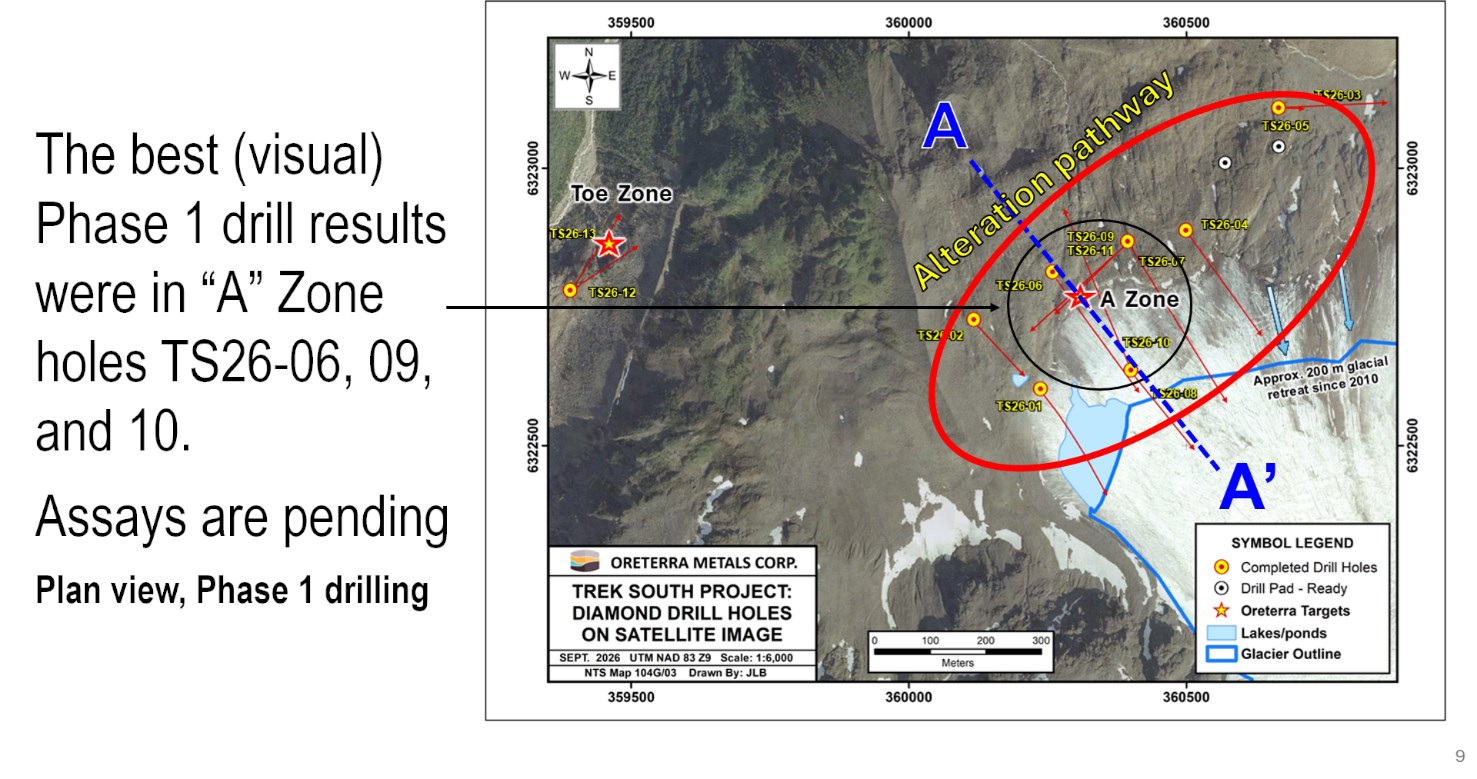
Figure 1: Trek South Phase 1 drill hole locations on satellite image
To view an enhanced version of this graphic, please visit:
https://images.newsfilecorp.com/files/5376/317314_00d918f5e4bc48e9_001full.jpg
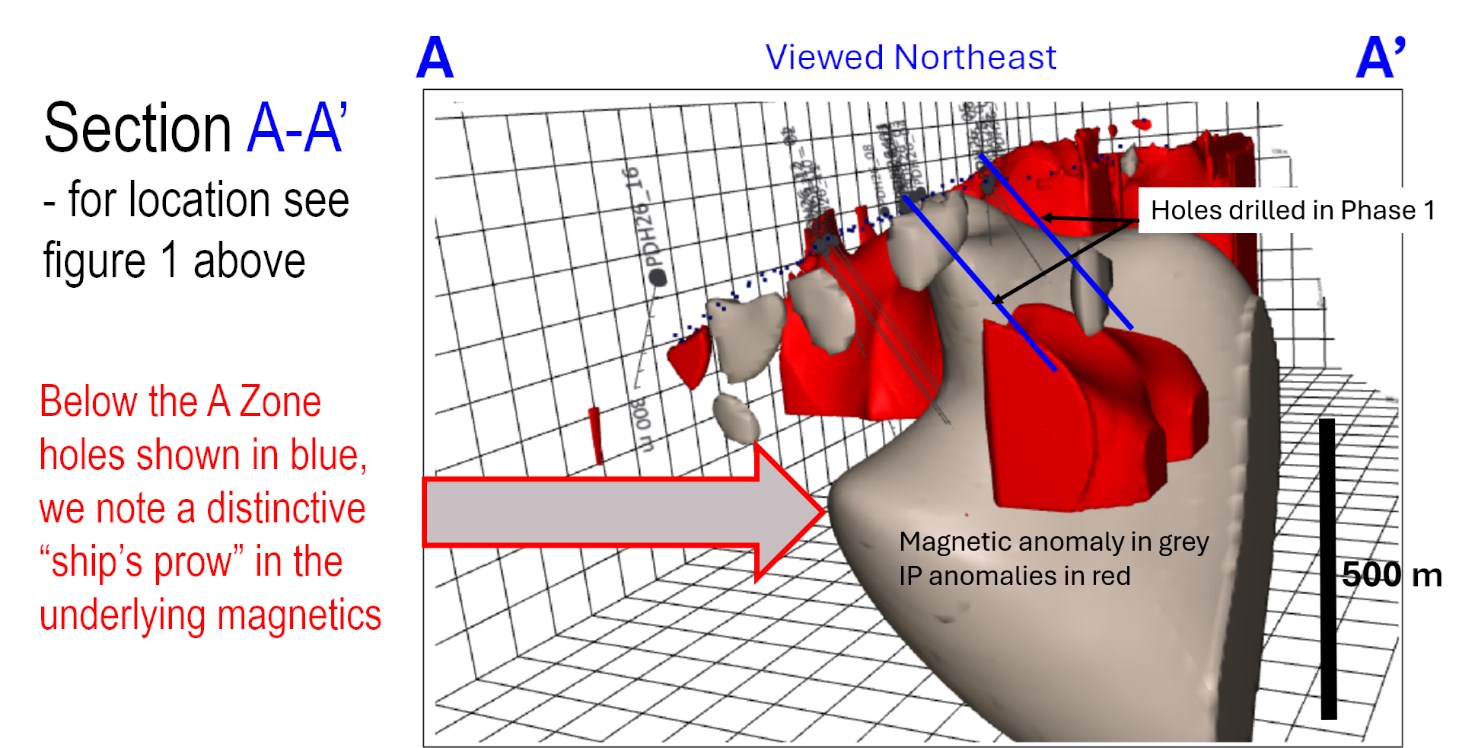
Figure 2: Trek South magnetic model (grey) with IP overlay (red)
To view an enhanced version of this graphic, please visit:
https://images.newsfilecorp.com/files/5376/317314_00d918f5e4bc48e9_002full.jpg
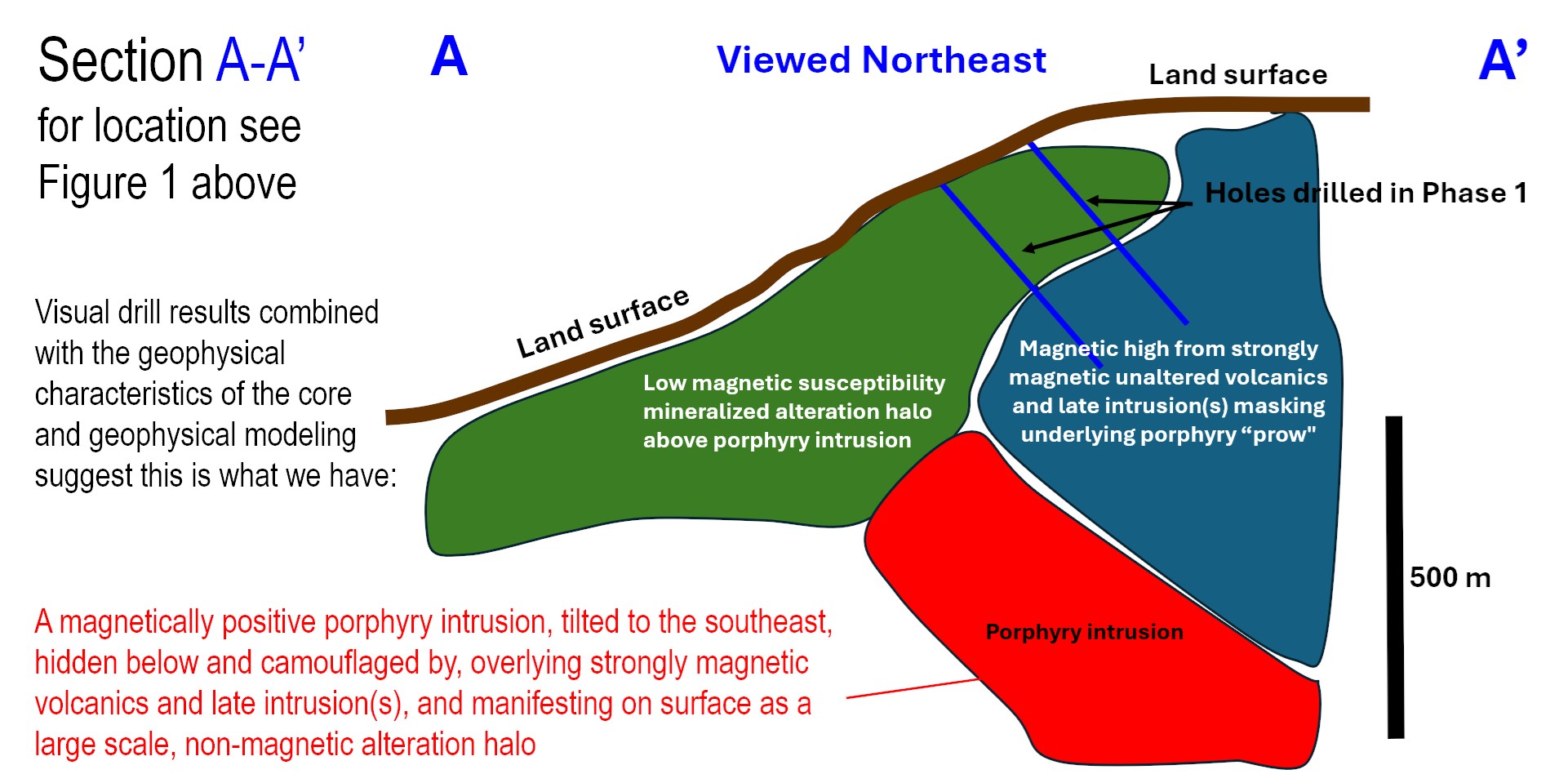
Figure 3: Interpreted lithologies and alteration overlay for Figure 2
To view an enhanced version of this graphic, please visit:
https://images.newsfilecorp.com/files/5376/317314_00d918f5e4bc48e9_003full.jpg
Qualified Person
The technical information in this news release has been reviewed and approved by John Biczok, P.Geo., Vice President, Exploration for Oreterra Metals Corp. and a Qualified Person as defined by National Instrument 43-101.
About Oreterra Metals Corp.
Oreterra Metals Corp. is a TSXV-listed mineral exploration company focused primarily on copper and gold. The Company holds several wholly-owned porphyry copper-gold prospects in British Columbia's Golden Triangle, the most significant of which is the large-scale Trek South prospect, only recently revealed by glacial ice melt, located adjacent to the southeast of Teck-Newmont's Galore Creek project. Additional wholly-owned Oreterra interests include two former producers in Nevada: the Kinkaid claims in the Walker Lane trend covering numerous shallow Au-Cu-Ag workings over what is believed to be one or more porphyry centres, and the Scossa mine property in the Sleeper trend which is a former high-grade gold producer. The Company also holds a
For further information, please visit www.oreterra.com or contact:
| Kevin M. Keough Chief Executive Officer and Director Tel: 613 622-1916 Email: kkeough@oreterra.com | Stephen Burega President and Director Tel: 647 515-3734 Email: sburega@oreterra.com |
Neither the TSX Venture Exchange nor its Regulation Services Provider (as that term is defined in the policies of the TSX Venture Exchange) accepts responsibility for the adequacy or accuracy of this release.
Cautionary Statement Regarding Forward-Looking Information
This news release includes certain "forward-looking statements" which are not comprised of historical facts. Forward-looking statements include estimates and statements that describe the Company's future plans, objectives or goals, including words to the effect that the Company or management expects a stated condition or result to occur. Forward-looking statements may be identified by such terms as "believes", "anticipates", "expects", "estimates", "may", "could", "would", "will", or "plan". Since forward-looking statements are based on assumptions and address future events and conditions, by their very nature they involve inherent risks and uncertainties. Although these statements are based on information currently available to the Company, the Company provides no assurance that actual results will meet management's expectations. Risks, uncertainties and other factors involved with forward-looking information could cause actual events, results, performance, prospects and opportunities to differ materially from those expressed or implied by such forward-looking information. Factors that could cause actual results to differ materially from such forward-looking information include, but are not limited to failure to identify mineral resources, delays in obtaining or failures to obtain required governmental, environmental or other project approvals, political risks, inability to fulfill the duty to accommodate First Nations, uncertainties relating to the availability and costs of financing needed in the future, changes in equity markets, inflation, changes in exchange rates, fluctuations in commodity prices, delays in the development of projects, capital and operating costs varying significantly from estimates and the other risks involved in the mineral exploration and development industry, and those risks set out in the Company's public documents filed on SEDAR+. Although the Company believes that the assumptions and factors used in preparing the forward-looking information in this news release are reasonable, undue reliance should not be placed on such information, which only applies as of the date of this news release, and no assurance can be given that such events will occur in the disclosed time frames or at all. The Company disclaims any intention or obligation to update or revise any forward-looking information, whether as a result of new information, future events or otherwise, other than as required by law.

To view the source version of this press release, please visit https://www.newsfilecorp.com/release/317314
FAQ
AI-generated questions and answers. How Rhea-AI works. Not financial advice.
When are Oreterra's Trek South Phase 1 assays expected?
Oreterra expects laboratory assays in October and November 2026. Actual copper and gold grades from the Phase 1 holes remain unestablished; the current assessment relies on visual core observations, alteration patterns and magnetic modelling.
What will Oreterra's 2027 Trek South Phase 2 drilling target?
Oreterra plans 2027 Phase 2 drilling to test the interpreted intrusive root beneath and southeast of the central Phase 1 holes. The proposed holes are being designed to drill below the earlier drilling into that target, whose geological interpretation remains schematic.
What infrastructure is already in place for Oreterra's next Trek South drilling season?
Drill pads, camp and core-shack infrastructure from Phase 1 have been left in place. Oreterra says this provides a head start for the next field season.
What road access limitation remains at Oreterra's Trek South prospect?
The Hwy 37–Galore Creek access road still requires completion and currently ends 1.2 kilometres downslope from the Trek South field camp. Oreterra describes access and any potential future development as relatively straightforward apart from that road requirement, with development dependent on continued exploration success.