STOCK TITAN

Rambam Health Care Campus, EOS and PTC Partner to Establish Advanced In-House Digital Implant Engineering Center

(Neutral)
(Very Positive)
Tags
partnership

PTC (NASDAQ: PTC), Rambam Health Care Campus and EOS announced a collaboration to establish an in-house Digital Implant Engineering Center at Rambam in Haifa, Israel. A dedicated team of engineers and physicians will design, develop and produce customized patient implants and devices using metal 3D printing.

The initiative combines Rambam’s clinical expertise, EOS’s industrial 3D printing, and PTC’s Creo CAD solution to integrate 3D-CAD design, validation, manufacturing and quality in one framework. According to PTC, the center targets better anatomical fit, improved surgical accuracy, shorter procedures and recovery times, faster treatment, reduced reliance on external suppliers and support for regulatory safety and effectiveness requirements.

Loading...
Loading translation...

Positive

  • None.

Negative

  • None.

News Market Reaction – PTC

+0.90%
+0.90% Session close to close

In the Jul 15 session, PTC gained 0.90%, reflecting a mild positive market reaction.

Data tracked by StockTitan Argus on the day of publication.

Market Context

Against a backdrop of low reported short interest and mixed one-day reactions to prior partnerships ...
Analysis

Against a backdrop of low reported short interest and mixed one-day reactions to prior partnerships averaging -1.2%, this new hospital 3D implant collaboration mainly extends PTC’s Creo footprint. The key watchpoint is whether such healthcare deals translate into durable ARR growth.

Previous Partnership Reports

2 past events · Latest: Jul 07 (Positive)
Same Type Pattern 2 events
Date Event Sentiment 24h Move Catalyst
Jul 07 Partnership announcement Positive +0.1% Whatfix partnership to enhance PLM adoption and in-app guidance on PTC Windchill.
May 28 Partnership announcement Positive -2.4% PTC named official engine design software partner for TRD U.S.A. by Toyota.

24h Move is the share-price change in the day after each event; other market factors may also have contributed.

Pattern Detected

Recent partnership headlines for PTC have produced mixed one-day stock reactions, with one small gain and one notable decline.

Key Terms

3d printing, computer-aided design, additive manufacturing, point-of-care, +1 more
5 terms
3d printing technical
"produce customized patient implants and devices using metal 3D printing."
3D printing is a manufacturing process that builds physical objects layer by layer from a digital design, using materials such as plastics, metals, ceramics, or resins. It matters to investors because it can cut tooling and inventory costs, speed product development, enable customized or on‑demand production, and change supply chains and margins—think of a factory that 'prints' parts as needed rather than holding large stockpiles.
computer-aided design technical
"PTC's advanced Creo® computer-aided design (CAD) solution."
Computer-aided design (CAD) is software that lets engineers and designers create, modify and test detailed digital models of products, buildings, or components on a computer, like a virtual workshop for blueprints. It matters to investors because CAD speeds development, reduces the need for costly physical prototypes, improves accuracy, and helps companies bring products to market faster and with fewer manufacturing problems—factors that can lower costs and boost future revenue.
additive manufacturing technical
"integrating advanced industrial-grade additive manufacturing with validated hospital workflows."
Additive manufacturing, often called 3D printing, builds physical parts by laying down material layer by layer from a digital design, rather than cutting or molding from a solid block. It matters to investors because it can cut production time and waste, enable cheaper prototypes and customized products, and reshape supply chains—changes that can lower costs, speed new products to market, and create competitive advantages that affect a company's revenue and margins.
point-of-care medical
"Producing implants at point of care improves collaboration between surgeons and developers,"
"Point-of-care" refers to the location where immediate decision-making or actions happen, often involving the direct delivery of services or results. In healthcare, it describes tests or treatments performed directly at the patient's side, rather than in a distant laboratory. For investors, understanding "point-of-care" highlights the convenience, speed, and potential growth opportunities of services or products that bring solutions directly to the user or patient.
patient-specific implants medical
"Patient-specific implants have been shown to provide better anatomical fit and surgical accuracy."
Medical implants designed and manufactured to match the exact anatomy of an individual patient, using medical imaging and computer-aided design to create custom shapes and sizes. Like a tailored suit or custom-fit shoes, they can improve fit and function for the patient; for investors, they matter because they affect a maker’s manufacturing complexity, pricing power, regulatory and reimbursement pathways, and scalability of the business model.

AI-generated analysis. How Rhea-AI works. Not financial advice.

See more from StockTitan in Google Search and AI answers. Adds StockTitan as a preferred source · opens Google
Add on Google

HAIFA, Israel and KRAILLING, Germany and BOSTON, July 15, 2026 /PRNewswire/ -- Rambam Health Care Campus, EOS, and PTC today announced collaboration to establish a Digital Implant Engineering Center at Rambam in Haifa, Israel. A dedicated team of engineers and physicians plan to work together to design, develop, and produce customized patient implants and devices using metal 3D printing.

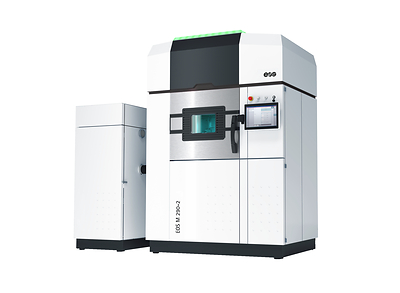
EOS M 290-2 metal additive manufacturing machine.

The collaboration leverages Rambam's clinical expertise, EOS's industrial 3D printing technology, and PTC's advanced Creo® computer-aided design (CAD) solution. The initiative aims to enhance personalized care and improve patient outcomes by integrating advanced 3D-CAD design, validation, manufacturing, and quality within a unified framework.

Patient-specific implants have been shown to provide better anatomical fit and surgical accuracy. Producing implants at point of care improves collaboration between surgeons and developers, reduces reliance on external suppliers and speeds up patient treatment. This approach also shortens procedures and recovery times, helps maintain high quality standards, and helps meet regulatory requirements for safety and effectiveness.

"Personalized care represents the future of medicine, and Rambam is establishing a significant benchmark with its dedicated in-house center," said Dr. Michal Mekel, Director General (CEO), Rambam Health Care Campus. "This initiative supports Rambam in developing patient-specific care that emphasizes innovation, clinical value, and operational excellence."

"Point-of-care innovation in healthcare depends on integrating advanced industrial-grade additive manufacturing with validated hospital workflows. Our open software structure enables such scan-to-print workflows," said Nikolai Zaepernick, CSO, EOS. "We view this as a vital step toward a repeatable, highly responsive and digitally connected model for patient-specific care."

"Cutting-edge personalized implants require a connected digital foundation that ties together clinical need, design, manufacturability and workflow discipline," said Dr. Ronen Ben-Horin, Vice President Technology, PTC. "The Digital Engineering Center at Rambam demonstrates how intelligent digital engineering drives innovation. We see this development as a breakthrough for the health care industry and are proud our technology will play a central role."

This initiative represents a significant move toward digitally integrated, clinically driven solutions for complex, customized treatments. By combining clinical expertise, engineering knowledge, structured processes, and advanced additive manufacturing, the partners aim to create a system that enables patient-specific innovation. This framework could help major hospitals around the world access tailored implant solutions, leading to faster and better patient care.

About Rambam Health Campus: Rambam is a 1,100-bed academic hospital serving over 2.7 million residents of northern Israel. Rambam provides comprehensive medical services in all medical specialties and is a tertiary referral center for 12 district hospitals. The hospital provides the full spectrum of patient care, as well as engaging in clinical research. As northern Israel's only tertiary medical center, Rambam is the country's most experienced trauma facility, with extensive experience treating severe injuries, and is home to one of Israel's largest pediatric and adult oncology centers, where the use of implants is increasingly common.

Rambam Health Campus was recently ranked as one of the most recommended hospitals in Israel. In addition to serving the residents of northern Israel, Rambam serves the IDF Northern Command, UN peacekeeping forces, and the U.S. Sixth Fleet. Many of Rambam's physicians are internationally recognized for their clinical expertise. Physicians participate in innovative research projects to bring new treatments not only to their patients, but to the wider global community.

About EOS: EOS provides responsible manufacturing solutions via industrial 3D printing technologies to organizations around the world. Since 1989, EOS has shaped the future of manufacturing by enabling its customers to innovate and differentiate through expert guidance, technology and services, leveraging its end-to-end additive manufacturing (AM) industry partnerships. From strategy to education to production, EOS is the leading global partner for both metal and polymer AM solutions, accelerating time-to-market for its customers through high-quality production efficiencies and sustainable solutions.

About PTC: PTC (NASDAQ: PTC) is a global software company that enables industrial and manufacturing companies to digitally transform how they engineer, manufacture, and service the physical products that the world relies on. Headquartered in Boston, Massachusetts, PTC employs over 7,000 people and supports more than 30,000 customers globally. For more information, please visit www.ptc.com.

Media Contacts

Rambam Health Campus
David Ratner, Spokesperson Rambam Hospital
d_ratner@rmc.gov.il

EOS
Britta Fritsch, Head of EMEA Marketing & Communications
Britta.Fritsch@eos.info

PTC
Libby Fink, Sr. Director Global Public Relations
prteam@ptc.com

Cision View original content to download multimedia:https://www.prnewswire.com/news-releases/rambam-health-care-campus-eos-and-ptc-partner-to-establish-advanced-in-house-digital-implant-engineering-center-302826367.html

SOURCE PTC Inc.

FAQ

What did PTC (PTC) announce with Rambam and EOS on July 15, 2026?

PTC announced a collaboration with Rambam Health Care Campus and EOS to create a Digital Implant Engineering Center at Rambam in Haifa. According to PTC, the center will use Creo CAD and EOS metal 3D printing to design and produce customized patient-specific implants on site.

What is the goal of the Digital Implant Engineering Center involving PTC (PTC) and Rambam?

The center aims to enable personalized, patient-specific implants and devices produced directly at the hospital. According to PTC, integrating clinical expertise, CAD design, validation, manufacturing and quality in one framework is intended to enhance surgical accuracy, shorten procedures and recovery times, and support regulatory compliance.

How will PTC’s Creo software be used in the Rambam digital implant project (PTC)?

PTC’s Creo CAD solution will provide the digital design and validation environment for customized implants. According to PTC, Creo will be part of a unified workflow that connects clinical needs, design, manufacturability and process discipline with EOS industrial 3D printers to support patient-specific treatments.

How could the Rambam, EOS and PTC (PTC) collaboration impact patient care?

The collaboration is intended to improve patient care by enabling better anatomical fit and more accurate surgeries through patient-specific implants. According to PTC, point-of-care production may speed treatment, reduce dependence on external suppliers, shorten procedures and recovery times, and help maintain high quality and safety standards.

Where will the Digital Implant Engineering Center supported by PTC (PTC) be located?

The Digital Implant Engineering Center will be located at Rambam Health Care Campus in Haifa, Israel. According to PTC, this hospital-based, in-house facility is designed to support point-of-care production of metal 3D printed implants, enabling closer collaboration between surgeons and engineering teams.

What technologies are being combined in the Rambam, EOS and PTC (PTC) digital implant initiative?

The initiative combines Rambam’s clinical expertise, EOS’s industrial metal 3D printing systems and PTC’s Creo CAD software. According to PTC, this combination supports scan-to-print workflows, structured engineering processes and digitally integrated manufacturing to deliver customized implants tailored to individual patients.