
RZOLV Reports 99.9% Silver Extraction from Solar-Panel Concentrate in Bench-Scale Testing
The bench-scale results cover extraction and removal from solution, but final refined-silver recovery remains unconfirmed.
Sentiment and the balance of points
Rhea-AI Sentiment reads the wording of the document, how positive or negative its language is on a 1 to 5 scale. The balance of points shown with the takes weighs what the document actually discloses, so the two can disagree, for example when a trial that missed its main goal is described in upbeat language.
Rhea-AI Summary
RZOLV Technologies (RZOLF) reported 99.9% silver extraction to solution from solar-panel concentrate in bench-scale testing using its non-cyanide process. Extraction was calculated from independent ALS assays of the feed and final washed residue and their recorded dry masses. Subsequent electrowinning, which uses electricity to deposit dissolved silver as a solid, reduced dissolved silver concentration by 40.4% within 10 minutes and 99.85% after five hours.
Reagent consumption was calculated at 10%; the company expects approximately 90% to remain available for reuse in the next leaching cycle. Final recovery to a refined silver product still requires product weighing and assaying, reconciliation of the silver mass balance, and accounting for subsequent refining losses.
How this balance works
Rhea-AI gives every point it takes from this document a weight. Minor counts 1, Moderate 3 and Major 9, so one Major point outweighs several Minor ones. The bar adds up the weights on each side, and when neither side holds more than 65% of the total the balance reads Mixed.
It reads the document as published, with the same rules for every company, and it does not look at what the market expected or at how the stock traded, so a point can be objectively good on a day the stock falls.
Rhea-AI Sentiment measures something else, the tone of the wording.
Hollow bars mark forward-looking points. How the balance works
Positive
- Moderate point99.9% silver extraction to solution achieved from tested solar-panel concentrate at bench scale.
- Minor pointElectrowinning reduced dissolved silver concentration by 40.4% within 10 minutes and 99.85% after five hours.
- Minor point. Forward-looking: it has not happened yet and may not happen.Reagent consumption was 10%; RZOLV expects approximately 90% to remain available for the next leaching cycle.
Negative
- Minor pointFinal refined-silver recovery remains unconfirmed, pending weighing, assaying, silver mass-balance reconciliation and accounting for refining losses.
AI-generated analysis. How Rhea-AI works. Not financial advice.


Advancing a Low-Cost, Non-Cyanide Silver Recovery Platform for Solar-Panel Recycling
Vancouver, British Columbia--(Newsfile Corp. - October 26, 2026) - RZOLV Technologies Inc. (TSXV: RZL) (OTCQB: RZOLF) (FSE: S711) ("RZOLV" or the "Company"), a Canadian clean technology company commercializing innovative, low-cost, non-cyanide metal recovery solutions, is pleased to report
"Silver is a key source of value in solar recycling, and our goal is to recover it as a saleable product through an integrated clean-technology process," said Duane Nelson, President and CEO of RZOLV. "Achieving
Subsequent electrowinning testwork indicated silver recovery from solution of
Together, the results address the two core steps in recovering value from recycled materials: dissolving silver from the solids into solution, and then recovering the silver from solution using conventional electrowinning.
Silver Extraction, Reagent Consumption, and Electrowinning Results
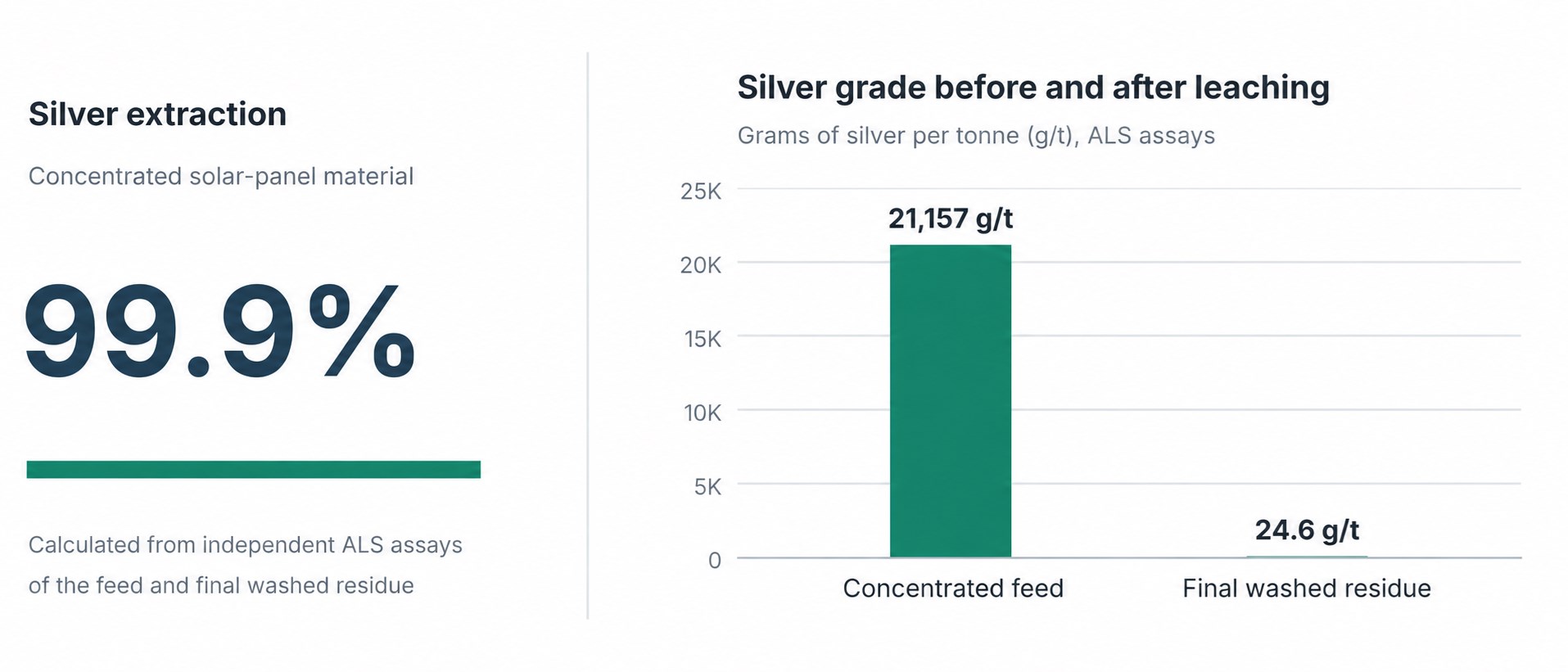
Figure 1. Silver grade of the feed and final washed residue (ALS assays). Extraction is calculated from these assays and the recorded dry masses.
To view an enhanced version of this graphic, please visit:
https://images.newsfilecorp.com/files/11597/320857_0bf637ba747a7ae9_001full.jpg
Understanding the results
Silver extraction to solution of
Reagent consumption was calculated at
Electrowinning testwork on the pregnant leach solution reduced dissolved silver concentration by
These results demonstrate near-complete extraction from the tested feed and near-complete depletion of dissolved silver during electrowinning. Final recovery to a refined silver product remains subject to confirmation through product weighing and assaying, reconciliation of the silver mass balance, and accounting for any subsequent refining losses.
Capturing the Silver Value in Solar Recycling
In crystalline-silicon solar panels, silver is used in the solar cells' electrical contacts. Mechanical recycling can separate the silver-bearing cell material into a fine cell-dust fraction. At a yield of approximately 40 kilograms per tonne of panels, this fraction represents just
RZOLV is targeting silver in end-of-life solar panels as a potential revenue stream for recyclers and an additional source of secondary silver supply. The Silver Institute's World Silver Survey 2026 forecasts a sixth consecutive annual deficit in the global silver market in 2026 [1]. By advancing silver recovery from secondary materials, RZOLV aims to return more metal to productive use and support a circular supply chain for solar materials.
About RZOLV Technologies Inc.
RZOLV Technologies Inc. is an innovative Canadian clean technology company commercializing low-cost, non-cyanide metal recovery solutions. The Company's proprietary RZOLV™ platform is a water-based hydrometallurgical technology developed to recover precious, base and critical metals, including rare-earth elements, from ores, concentrates, tailings and secondary materials. Through strategic industry partnerships, RZOLV is advancing testing, process integration and potential commercialization across mining and recycling applications. The Company focuses on unlocking value from complex resources that challenge conventional recovery methods.
For further information
Paul Lam
VP, Investor Relations and Business Development
RZOLV Technologies Inc.
Tel: +1-604-332-2662
Email: Paul@rzolv.com
Forward-Looking Information
This release includes forward-looking information under applicable Canadian securities laws concerning further silver-recovery testing, product verification, process integration, potential silver-recycling applications, production of a saleable metal product, secondary silver supply, process economics and commercialization. Such statements reflect current expectations and assume suitable feedstocks, technical performance, financing, market access and the ability to develop a commercially viable recovery process.
Actual results may differ materially because of feed variability, unresolved analytical or material-balance differences, product yield and purity, scale-up performance, metal prices, processing costs, access to capital, regulatory requirements and market acceptance. Concentration decreases do not establish recovered product quantities. Preliminary laboratory results may not be reproduced at larger scale or translated into profitable operations. Third-party market forecasts and industry data are uncertain and are not forecasts of RZOLV revenue or market share.
Readers should consider the risks described in the Company's public filings on SEDAR+ at www.sedarplus.ca and should not place undue reliance on forward-looking information. These statements are made as of the date of this release. Except as required by law, the Company does not undertake to update them.
Neither the TSX Venture Exchange nor its Regulation Services Provider (as that term is defined in the policies of the TSX Venture Exchange) accepts responsibility for the adequacy or accuracy of this release.
Reference
[1] The Silver Institute, World Silver Survey 2026 news release, April 15, 2026.
To view the source version of this press release, please visit https://www.newsfilecorp.com/release/320857
FAQ
AI-generated questions and answers. How Rhea-AI works. Not financial advice.
What did RZOLV's solar-panel silver extraction testing achieve?
RZOLV achieved 99.9% silver extraction to solution from solar-panel concentrate in bench-scale testing. The calculation used independent ALS assays of the feed and final washed residue, together with their recorded dry masses.
Has RZOLV confirmed final recovery of refined silver from solar-panel concentrate?
Final recovery to a refined silver product remains subject to confirmation. This requires product weighing and assaying, reconciliation of the silver mass balance, and accounting for any subsequent refining losses. The electrowinning results measured reductions in dissolved silver concentration.