
Origin Agritech Establishes R&D Center in Guizhou with Biotech Unit and State-Backed Seed Joint Venture
Origin Agritech (NASDAQ: SEED) has launched its Southwest R&D Center in Kaiyang County, Guizhou, built around wholly owned biotech unit Guizhou Origin and a state-controlled seed joint venture in which Origin holds 25%.
Sentiment and the balance of points
Rhea-AI Sentiment reads the wording of the document, how positive or negative its language is on a 1 to 5 scale. The balance of points shown with the takes weighs what the document actually discloses, so the two can disagree, for example when a trial that missed its main goal is described in upbeat language.
Rhea-AI Summary
Origin Agritech (NASDAQ: SEED) has launched its Southwest R&D Center in Kaiyang County, Guizhou, built around wholly owned biotech unit Guizhou Origin and a state-controlled seed joint venture in which Origin holds 25%. The roughly 8,000 m² complex includes advanced molecular testing and tissue culture platforms, four intelligent glass greenhouses exceeding 15,000 m², and about 160 mu (≈26 acres) of field trial land.
Guizhou Origin, formed in March 2026 with RMB 10 million investment, offers genetic transformation across 11 crops, a doubled haploid platform with 100,000-line annual capacity, GM trait services with a nationwide biosafety certificate, and full-chain virus-free sweet potato solutions. The April 2026 joint venture with Guizhou Modern Seed Industry Group has RMB 40 million total investment, focuses on corn and other crops for the mountainous Southwest, and is supported by a distributor network of more than 300 outlets. Both entities are operational, with over 10,000 corn germplasm accessions under field evaluation and a three-year roadmap to scale biotech services and regional seed commercialization.
Positive
- RMB 10 million investment to establish wholly owned Guizhou Origin biotech unit in March 2026
- New state-controlled joint venture launched with RMB 40 million total investment and Origin holding 25%
- Southwest R&D Center includes 8,000 m² complex and >15,000 m² of greenhouses plus ~26 acres of trial land
- Doubled haploid breeding platform capacity of 100,000 DH lines annually across three locations
- GM trait platform with nationwide biosafety certificate approved in May 2024 for BBL2-2 triple-stacked traits
- Distribution network of >300 outlets across Guizhou supports commercialization in Southwest China
Negative
- Origin holds only a 25% equity interest in the state-controlled joint venture
- Guizhou Origin and the joint venture are in early stages with a multi-year commercialization roadmap
Details
News Market Reaction – SEED
On Aug 31, the day this news came out, SEED closed 0.65% above the previous close.
Data tracked by StockTitan Argus for the Aug 31 session.
Key Figures
- Guizhou Origin investment
- RMB 10 million
- Established in March 2026
- Joint venture investment
- RMB 40 million
- Established in April 2026
- Origin equity interest
- 25%
- Ownership of the state-controlled Joint Venture
- R&D complex
- 8,000 square meters
- Southwest R&D Center complex
- Genetic transformation coverage
- 11 crops
- Guizhou Origin services
- DH breeding capacity
- 100,000 DH lines annually
- Platform operated across Hainan, Beijing, and Guiyang
- Distributor network
- More than 300 distributors
- Joint Venture coverage across Guizhou townships
- Corn germplasm accessions
- More than 10,000
- Deployed for field identification in 2026
Previous Partnership Reports
-
Partnerships expanded Origin's biotechnology service collaboration with 12 agricultural companies.
-
Three-way partnership advanced corn smart-plant breeding with two Chinese research institutions.
24h Move is the share-price change in the day after each event; other market factors may also have contributed.
Key Terms
germplasm technical
genetic transformation technical
crispr/cas9 gene editing medical
doubled haploid technical
biosafety certificate regulatory
AI-generated analysis. How Rhea-AI works. Not financial advice.




Wholly Owned Guizhou Origin and a
BEIJING, Aug. 31, 2026 (GLOBE NEWSWIRE) -- Origin Agritech Ltd. (NASDAQ: SEED) (the "Company" or "Origin"), a leading Chinese agricultural technology company, today unveiled its Southwest R&D Center in Kaiyang County, Guiyang City, Guizhou Province, on the second anniversary of the Company's relaunch. The Center is anchored by two entities established earlier this year: Guizhou Origin Biotechnology Co., Ltd. ("Guizhou Origin"), a wholly owned subsidiary, and Guiyang Agricultural Investment Origin Modern Seed Industry Co., Ltd. (the "Joint Venture"), a state-controlled company in which Origin holds a
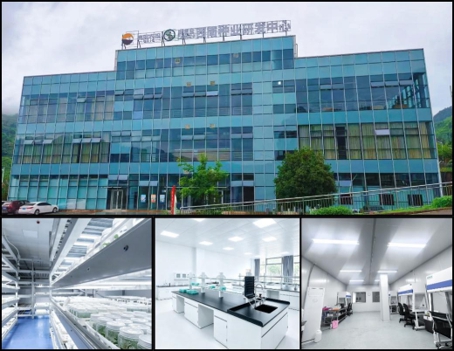
Picture 1: Guizhou Origin R&D Building and its First Class Laboratories
The approximately 8,000-square-meter complex houses a 4,000-square-meter experimental zone, a 600-square-meter molecular testing platform, a 2,000-square-meter tissue culture platform, and four intelligent glass greenhouses totaling more than 15,000 square meters, supported by roughly 160 mu (approximately 26 acres) of standardized field trial land. This facility is part of Guizhou Origin, a research company wholly owned by Origin. It stands as one of the company's four research stations and is currently the largest in terms of floor space. With its state‑of‑the‑art infrastructure, it is poised to become the most significant biotech research center in China. Notably, Guizhou Origin supports Origin's biotech operations nationwide, whereas the joint venture is dedicated to serving businesses in southwest China.
Guizhou Origin: The Biotech Engine
Established in March 2026 with an investment of RMB 10 million, Guizhou Origin concentrates on molecular design breeding, germplasm resource innovation, cross-species haploid engineering breeding, and virus-free sweet potato seedlings. It has engaged national-level biotech breeding experts, including Professors Tian Feng and Wang Lei of China Agricultural University ("CAU"), and established a CAU Professor Workstation on site.
Its key technology platforms and services include:
- Genetic transformation services across 11 crops — corn, rapeseed, peanut, tobacco, alfalfa, pepper, cotton, wheat, rice, soybean, and tomato — with year-round order acceptance, typical delivery of 10 to 15 T0-positive seeds or plants within four to nine months, and support for single-gene and multi-gene stacking as well as CRISPR/Cas9 gene editing.
- A doubled haploid (DH) breeding platform with an annual capacity of 100,000 DH lines, operated across Hainan, Beijing, and Guiyang. With CAU, the Company pioneered the "One-Step Line Formation" induced editing technology system, published in Nature in 2024, which enables precise improvement of target traits in corn inbred lines through a single hybridization within one year — three to four years faster than traditional backcrossing — while overcoming linkage drag.
- GM technology services featuring the BBL2-2 triple-stacked trait platform combining Cry1Ab, Cry2B, and GAT (glyphosate tolerance), which carries a biosafety certificate approved in May 2024 for nationwide application and controls major lepidopteran pests, including the Asian corn borer, cotton bollworm, and armyworm, while tolerating glyphosate at more than four times conventional rates.
- A one-stop sweet potato full-chain service offering year-round virus testing with full-process reports, virus-free seedling production within 8 to 12 months, order-based test-tube and acclimatized seedling production, virus-free seed potato production, and selenium-rich fresh sweet potato production. The base's 1,200-meter altitude, cool climate, natural pest-prevention advantages, and selenium-rich soil yield breeder-stock quality seed potatoes at foundation-stock prices, alongside premium Japanese-bred and leading domestic fresh varieties supplied directly from Origin.
The Joint Venture: State-Backed Commercial Platform for the Southwest
Established in April 2026 between Guizhou Modern Seed Industry Group Co., Ltd. and Beijing Origin Agriculture Co., Ltd., with total investment of RMB 40 million, the Joint Venture is state-controlled, with Origin holding a
The Joint Venture focuses on corn seed research, production, processing, sales, and full-chain technical services, developing high-yield, stable-yield, stress-tolerant, and widely adaptable premium corn varieties suited to mountainous terrain. Its scope also covers sweet potato, ginger, and vegetable varieties, as well as grain procurement and grain and oil storage. It operates an integrated system of standardized seed production in the Northwest, refined processing in the Southwest, and full-market services across the region, supported by more than 300 distributors covering townships across Guizhou. Its breeding R&D team of doctoral- and master's-level professionals works in collaboration with CAU, the College of Agriculture of Guizhou University, and the Guizhou Academy of Agricultural Sciences.
R&D Operations Already Underway
Both companies are fully registered and operating, with a local research team of master's- and doctoral-level professionals in place. More than 10,000 corn germplasm accessions and new combinations have been deployed this year for field identification at multiple locations across the Southwest; several corn combinations have entered provincial regional trials; the Center is undertaking provincial-level key research tasks; virus-free sweet potato seedling breeding is underway; and evaluation of local specialty crop materials, including pepper and rapeseed, has begun, with a substantial portion of the trial work conducted directly in Guizhou. Elite corn materials under evaluation at the base include Zhongdan 6458, developed by the Institute of Crop Sciences of the Chinese Academy of Agricultural Sciences ("CAAS").
Path Forward: Three Focus Areas
- A high-throughput biotechnology platform. Molecular marker screening, germplasm evaluation, and new material creation for corn, sweet potato, pepper, rapeseed, and Guizhou specialty crops, prioritizing mountainous-Southwest breeding targets, including tolerance to barren soils, tolerance to cloudy and rainy conditions, and disease resistance.
- Applied industry-university-research cooperation. Using the laboratory, greenhouses, and field bases to host seed multiplication, phenotypic identification, and multi-site adaptability testing for universities and research institutes, bringing research breeding materials through real field tests in Guizhou's mountains.
- Industrial transformation is connected to grower demand. Completing multi-site testing of new varieties, seedling multiplication, and demonstration displays, then screening qualified new corn varieties and virus-free sweet potato seedlings for large-scale demonstration and promotion across Guizhou and the broader Southwest.
Market Opportunity: The Mountainous Corn Belt of Southwest China
Guizhou's mountainous topography leaves much of its corn acreage unsuited to the flat-field hybrids that dominate China's northern plains. Varieties for the Southwest must combine stress tolerance, stable yields on fragmented, sloping land, and broad adaptability to local agronomic practices — precisely the profile the Joint Venture's breeding program targets. A long-standing shortage of premium, locally adapted hybrids, together with national and provincial policy support for seed industry revitalization, positions the R&D Center's full-chain model to capture an underserved premium seed market.
"China's mountainous Southwest holds unique germplasm resources, but growers there have largely been planting varieties designed for the northern plains," said Weibin Yan, Chief Executive Officer of Origin Agritech. "Guizhou Origin gives us the molecular breeding tools to close that gap — we already have more than 10,000 germplasm accessions in field identification this year — and our state-owned partner gives us more than 300 distribution points already in the ground. That combination is what turns a research center into a commercial platform, and it is a meaningful step in Origin's national expansion strategy."
Commercialization Roadmap
- Year One — Establish. Commission the R&D Center's experimental, molecular, and tissue culture platforms; launch genetic transformation and DH breeding service orders across target crops; and establish demonstration plantings of Joint Venture corn varieties across Guizhou's key prefectures.
- Year Two — Scale. Grow Guizhou Origin's biotech service revenue; expand the Joint Venture's seed production and refined processing capacity; and extend the distributor network beyond Guizhou into the wider Southwest market.
- Year Three — Commercialize. Bring Joint Venture seed sales to full-channel deployment as Guizhou Origin's commercialization matures, including the virus-free sweet potato and selenium-rich fresh sweet potato supply chains.
Unveiling Ceremony Draws Senior Scientific and Government Leadership
The ceremony was attended by more than 30 experts, officials, and industry leaders, including Dai Jingrui, Academician of the Chinese Academy of Engineering and Professor at CAU's College of Agronomy; Huang Haoyang, Deputy Mayor of the Guiyang Municipal People's Government; Lai Jinsheng, Director of the National Maize Improvement Center of China at CAU; Chen Zufa, Chairman of Guiyang Agricultural Investment Group; — together with representatives of CAAS, the Beijing Academy of Agriculture and Forestry Sciences, the International Maize and Wheat Improvement Center (CIMMYT), Yazhou Bay National Laboratory, Sichuan Agricultural University, and Northeast Agricultural University. Academician Dai, Deputy Mayor Huang, Director Lai, Chairman Chen Zufa, and Weibin Yan jointly cut the ribbon, after which attendees toured the Center's laboratories, greenhouses, and field trial base.
Academician Dai noted that the Southwest possesses unique germplasm resources but that breeding for mountainous terrain is objectively difficult. He urged the new platform to commit to the patient work of germplasm identification and creation, to integrate conventional breeding with biotechnology, to target the real production pain points of Guizhou's mountainous agriculture, and to cultivate a research team rooted in the Southwest.
Deputy Head Hu welcomed the Center on behalf of the local government, noting that Guiyang has made "superior seeds" a key agricultural priority and issued 18 supporting policies for high-quality seed industry development, and that the Origin–Guizhou Modern Seed Industry Group project is an important element of the region's seed industry revitalization plans. He pledged continued support for the site, field infrastructure, and government services for the Company's breeding trials and demonstration work.
"Origin has accumulated complete technology systems in gene editing, haploid breeding, transgenic breeding, and conventional breeding," said Mr. Yan, who also serves as Chairman of Beijing Origin Agriculture Co., Ltd. "What this cooperation with Guizhou's state-owned platforms adds is the ground itself. We conduct screening and validation in the Southwest, where the varieties ultimately have to perform. Rooted in Kaiyang, the R&D Center will take on the real challenges of mountainous breeding through germplasm creation, variety screening, and the transformation of results into seed growers can use."
About Origin Agritech Limited
Origin Agritech Limited, founded in 1997 and headquartered at the Origin R&D Center in Songzhuang, Tongzhou, Beijing, is a leading Chinese agricultural technology company. In crop seed biotechnology, Origin Agritech's phytase corn was the first transgenic corn to receive a Biosafety Certificate from China's Ministry of Agriculture. Over the years, Origin has established a robust biotechnology seed pipeline, including products with glyphosate tolerance and Bt (pest resistance) traits. For further information, please visit the Company's website at www.originagritech.com. The Company also maintains an X account to update investors on Company and industry developments, available at https://x.com/origin_agritech.
Forward-Looking Statements
This press release contains forward-looking statements within the meaning of the Private Securities Litigation Reform Act of 1995, including statements regarding the expected financial performance of Guizhou Origin and the Southwest R&D Center, projected revenue and output value, expected commercialization timing and channel deployment, and the anticipated benefits of the Company's partnership with Guizhou Modern Seed Industry Group and other government-related entities. Words such as "expect," "anticipate," "intend," "plan," "believe," "seek," "will," "would," "target," and similar expressions identify forward-looking statements. These statements involve known and unknown risks and uncertainties -- including grower adoption rates, seed production yields and inventory timing, weather and growing conditions across the target region, competitive variety introductions, pricing pressure in the Chinese seed market, regulatory and agricultural policy developments in China, currency fluctuation, and the Company's ability to fund and execute the plans described above -- which may cause actual results to differ materially from those expressed or implied. Forward-looking statements are not guarantees of future performance, and field trial results are not a guarantee of on-farm performance across all conditions. Origin Agritech undertakes no obligation to update or revise any forward-looking statement, whether as a result of new information, future events, or otherwise, except as required by securities and other applicable laws.
For more information, please contact:
Origin Agritech Limited Contact:
Kate Lang (Mandarin/English)
Director of Investor Relations
Phone: +86 186-1839-3368
Email: bing.lang@originseed.com.cn
Investor Relations Contact:
Matthew Abenante, IRC
President
Strategic Investor Relations LLC
Tel: 347-947-2093
Email: matthew@strategic-ir.com

FAQ
AI-generated questions and answers. How Rhea-AI works. Not financial advice.