
Innatera Selects Synopsys Simulation to Scale Brain-Inspired Processors for Edge Devices
Innatera selected Synopsys (NASDAQ: SNPS) on March 2, 2026 to validate and scale neuromorphic microcontrollers for ultra-low-power edge AI.
Sentiment and the balance of points
Rhea-AI Sentiment reads the wording of the document, how positive or negative its language is on a 1 to 5 scale. The balance of points shown with the takes weighs what the document actually discloses, so the two can disagree, for example when a trial that missed its main goal is described in upbeat language.
Rhea-AI Summary
Innatera selected Synopsys (NASDAQ: SNPS) on March 2, 2026 to validate and scale neuromorphic microcontrollers for ultra-low-power edge AI. Synopsys PathFinder-SC and Totem provide ESD simulation, transistor-level power integrity, and analog modeling to reduce noise, improve reliability, and accelerate product readiness for wearables, sensors, and robotics.
Positive
- ESD and power integrity tools reduce design risk before fabrication
- High-fidelity modeling supports analog and mixed-signal neuromorphic designs
- Design validation aimed to accelerate product development and scaling
Negative
- Neuromorphic mixed-signal designs remain ESD-sensitive, requiring extra validation
- Increased design complexity from dense interconnects and low-voltage operation
Details
News Market Reaction – SNPS
On Mar 2, the day this news came out, SNPS closed 2.57% above the previous close.
Data tracked by StockTitan Argus for the Mar 2 session.
Key Figures
- Latency improvement
- up to 100x lower latency
- Pulsar neuromorphic microcontroller vs conventional AI processors at the edge
- Energy reduction
- 500x lower energy consumption
- Pulsar neuromorphic microcontroller vs conventional AI processors
Historical Context
-
Strong revenue and EPS with reiterated guidance and buyback expansion.
-
New director appointment and transitions to support Ansys integration.
-
Corporate update highlighting partnerships and Synopsys design support.
-
Announcement of Q1 2026 earnings release date and conference call.
-
Launch of Converge Conference to showcase silicon-to-systems vision.
24h Move is the share-price change in the day after each event; other market factors may also have contributed.
Key Terms
neuromorphic computing technical
neuromorphic microcontrollers technical
spiking neural networks (SNNs) technical
electrostatic discharge (ESD) technical
power integrity technical
mixed-signal analog computation technical
noise coupling technical
transistor-level analysis technical
AI-generated analysis. How Rhea-AI works. Not financial advice.




Innatera adopts Synopsys simulation technology to help design neuromorphic chips that enable low-power AI for wearables, smart home devices, and digital twin industrial sensors
Key Highlights
- Synopsys helps Innatera design chips that enable real-time, energy-efficient AI processing at the edge, catalyzing the development of next-generation applications in physical AI
- Synopsys PathFinder-SC™ signoff solution delivers improved precision for more accurate layout-level outcomes, expertly manages design requirements, and enables early-phase analysis
- Synopsys Totem™ power integrity platform enables transistor-level analysis for reliable power delivery and performance optimization for ultra-low-power AI processors
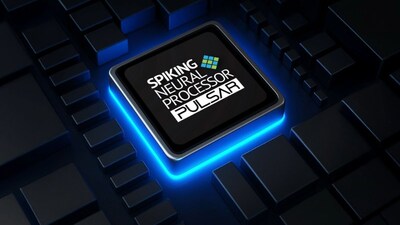
Neuromorphic microcontrollers process information through Spiking Neural Networks (SNNs) that mimic how biological neurons communicate, delivering brain-inspired intelligence at the sensor edge. This event-driven approach enables real-time, ultra-low-power operation in sensor-rich environments where responsiveness and energy efficiency are critical. Innatera's architecture combines mixed-signal analog computation, dense interconnects, and low-voltage design — key enablers of efficiency but potential sources of electrical noise and ESD sensitivity. To address these challenges and ensure robust performance across complex neuromorphic circuits, Innatera leverages PathFinder-SC and Totem to validate power integrity, manage noise coupling, and maintain reliability without compromising speed or efficiency.
PathFinder-SC simulates ESD events at scale, identifying vulnerabilities and root causes before the final design goes to manufacturing and ensuring chips are functioning optimally against real-world electrostatic occurrences. It also provides early, high-fidelity modeling of analog behavior, empowering designers to validate performance under diverse conditions.
Totem performs detailed power integrity analysis at the transistor level, ensuring reliable power delivery and optimal performance for highly efficient AI tasks. By pairing Totem's high-fidelity modeling of typical operating conditions with PathFinder-SC's capacity to identify and address ESD risks, the solution provides designers with a comprehensive reliability tool — one that protects against both expected and unexpected electrical challenges throughout the chip's life cycle and is backed by robust technical support.
"Innatera's mission to redefine edge AI through neuromorphic computing requires both technological innovation and reliable design collaboration," said Aditya Dalakoti, director of SoC and mixed-signal at Innatera. "Synopsys stood out for its leading technology and unwavering support for startups in the edge AI ecosystem. Its ESD analysis solution and collaborative approach enable us to scale into real-world, adaptive applications with enhanced speed, usability, and versatility."
For example, Innatera used Synopsys technology to validate the design of Pulsar, the world's first commercial neuromorphic microcrontroller. Pulsar optimizes AI workloads at the edge by combining flexible computing architecture, resulting in up to 100x lower latency and 500x lower energy consumption than conventional AI processors. Using SNNs, Pulsar only reacts to registered sensor changes, significantly improving data transfer speeds and battery power for "always-on" devices like wearables and smart sensors.
"By enabling Innatera to accelerate product development and scale confidently, Synopsys reinforces its role as a catalyst for cutting-edge technologies shaping the future of embedded AI," said Prith Banerjee, senior vice president at Ansys, part of Synopsys. "This collaboration underscores our commitment to empowering innovation across the semiconductor ecosystem, from global enterprises to emerging startups. As edge computing becomes increasingly central to real-time intelligence, Synopsys simulation is helping innovators bring efficient AI where it's most needed."
About Synopsys
Synopsys, Inc. (Nasdaq: SNPS) is the leader in engineering solutions from silicon to systems, enabling customers to rapidly innovate AI-powered products. We deliver industry-leading silicon design, IP, simulation and analysis solutions, and design services. We partner closely with our customers across a wide range of industries to maximize their R&D capability and productivity, powering innovation today that ignites the ingenuity of tomorrow. Learn more at www.synopsys.com.
© 2026 Synopsys, Inc. All rights reserved. Synopsys, Ansys, the Synopsys and Ansys logos, and other Synopsys trademarks are available at https://www.synopsys.com/company/legal/trademarks-brands.html. Other company or product names may be trademarks of their respective owners.
Contacts
Media
Pete Smith
pete.smith@synopsys.com
corp-pr@synopsys.com
 View original content to download multimedia:https://www.prnewswire.com/news-releases/innatera-selects-synopsys-simulation-to-scale-brain-inspired-processors-for-edge-devices-302700138.html
SOURCE Synopsys, Inc.
FAQ
AI-generated questions and answers. How Rhea-AI works. Not financial advice.