
Stellantis Invests $29.5 Million in Innovative Wind Tunnel Technology to Enhance EV Aerodynamics
Stellantis has invested $29.5 million in Moving Ground Plane (MGP) technology at its Auburn Hills facility to enhance EV aerodynamics.
Rhea-AI Summary
Stellantis has invested $29.5 million in Moving Ground Plane (MGP) technology at its Auburn Hills facility to enhance EV aerodynamics. The upgraded wind tunnel will measure and reduce airflow resistance from wheels and tires, which account for up to 10% of total aerodynamic drag. This technology aims to improve EV driving range and potentially reduce battery sizes, leading to cost and weight savings. The facility can test larger vehicles and simulate speeds up to 140 mph. The investment is part of an $85 million commitment from the 2019 UAW contract and supports Stellantis' goal to achieve 50% US EV sales and 100% European EV sales by 2030.
Positive
- Investment in MGP technology enables potential battery size reduction and improved vehicle efficiency
- Facility upgrade allows testing of larger vehicles, particularly STLA Large and Frame platforms
- Automation reduces testing time from hours to minutes, increasing speed to market
- Technology supports goal of 75+ BEVs and 5 million annual EV sales by 2030
Negative
- None.
Details
News Market Reaction – STLA
The recorded move for STLA in the trading session of this news was +1.45%.
Data tracked by StockTitan Argus. Session date unavailable.
AI-generated analysis. How Rhea-AI works. Not financial advice.




AUBURN HILLS, Mich., Oct. 23, 2024 /PRNewswire/ --
$29.5 million - Introduces capability to measure and reduce airflow resistance from wheels and tires, which account for up to
10% of total real-world aerodynamic drag - Helps improve aerodynamics of Stellantis brand vehicles sold worldwide, a critical factor in increasing EV driving range
- Improved EV aerodynamics may lead to potential battery-size reductions, benefitting vehicle efficiency and design
- Upgrade complements AI's role in Stellantis product development; affords greater precision and additional automation, which can increase speed to market
- MGP technology will be a key enabler in the development of Stellantis BEVs, a cornerstone of the company's Dare Forward 2030 strategic plan
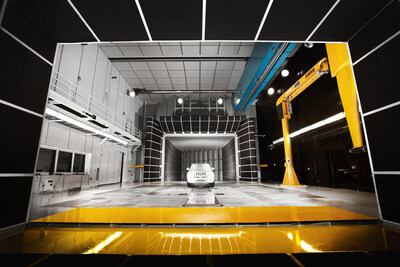
Stellantis unveiled its innovative Moving Ground Plane (MGP) technology – a
The upgraded wind tunnel will be able to measure and reduce airflow resistance from wheels and tires, which can account for up to
Optimizing aerodynamic efficiency is crucial in the effort to extend the driving range of electrified vehicles on a single charge. This enhancement directly contributes to improved efficiency, benefiting customers with longer EV ranges and potentially reducing battery sizes, which in turn could lead to cost and weight savings.
"Range is a core consideration for customers who are transitioning to cleaner mobility through battery power," said Mark Champine, senior vice president and head of
The upgrade to the company's innovative aero-acoustic wind tunnel simulates real-world travel while allowing test vehicles to remain static. Belts suspended by cushions of air enable wheel movement at all four corners, while a fifth belt runs longitudinally beneath the vehicle, mimicking on-road travel conditions.
This realistic simulation allows for more precise testing and aerodynamic improvements.
"For EVs, a range increase enabled by improved aerodynamics can lead to potential battery-size reductions," said Champine. "This has positive implications from more efficient packaging-to-weight savings that, in the end, will enhance the customer experience."
The investment in MGP technology will benefit multiple Stellantis brands, regardless of where they are sold or how they are powered, and will gain from aerodynamic optimization.
The upgraded wind tunnel also provides a valuable complement to virtual development tools.
"This apparatus is a great addition to virtual tools, which may not account for factors such as tire deformation that can compromise aerodynamics," said Champine. "With this technology we can replicate such conditions and capture real-time data to explore solutions."
The new facility also adds vital automation capability. Changes to wheelbase and track testing, which can take as much as two hours in conventional wind tunnels, can now be done in minutes.
The combined outcome of real-time data collection and increased automation: increased speed to market.
While Stellantis uses MGP technology at other facilities around the world, those sites are focused on smaller vehicle platforms. The upgraded
MGP technology is a key enabler in the development of BEVs, as outlined in the company's Dare Forward 2030 strategic plan, and will account for
The investment underscores Stellantis' commitment to becoming carbon net-zero by 2038 as part of its leadership in climate-change mitigation.
The upgraded facility is part of an estimated
The measuring platform and turntable that comprise the heart of the MGP equipment weighs 137 tons, rests on a concrete foundation and are supported by a specially designed steel frame.
The wind tunnel, capable of generating wind speeds of more than 160 mph, has been in continuous operation since 2002.
Stellantis has a long history of aerodynamic leadership:
- In 1929, a company led by aviation pioneer Orville Wright built one of the auto industry's first wind tunnels, for Chrysler Corporation
- The Chrysler AirFlow, introduced in 1934, was the world's first vehicle designed with the aid of a wind tunnel
- The Mercury Redstone Rocket used by Alan Shepherd and Gus Grissom for the first two NASA space flights was designed by Chrysler
- The Citroen CX, launched in 1974 at the Paris Auto Salon, featured a coefficient of drag of 0.29. CX is the French acronym for coefficient of drag
- Roof flap mandated by NASCAR to apply downforce in emergency situations was developed in the
Auburn Hills wind tunnel - The 2025 Ram 1500 full-size pickup and Chrysler Pacifica minivan lead their segments with best-in-class coefficient of drag – 0.357 and 0.300, respectively
Stellantis North America
Stellantis (NYSE: STLA) is one of the world's leading automakers, aiming to provide clean, safe and affordable freedom of mobility for all. In
Follow company news and video on:
Company blog: http://blog.stellantisnorthamerica.com
Media website: http://media.stellantisnorthamerica.com
Company website: www.stellantis.com
LinkedIn: https://www.linkedin.com/company/Stellantis
Facebook: https://www.facebook.com/StellantisNA
Instagram: https://www.instagram.com/stellantisna
Twitter: @StellantisNA
YouTube: http://youtube.com/StellantisNA
 View original content to download multimedia:https://www.prnewswire.com/news-releases/stellantis-invests-29-5-million-in-innovative-wind-tunnel-technology-to-enhance-ev-aerodynamics-302284124.html
SOURCE Stellantis
FAQ
AI-generated questions and answers. How Rhea-AI works. Not financial advice.