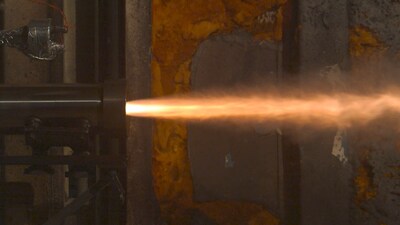
Titomic (OTC:TITMF) announced a successful hot fire test on a solid rocket motor thrust chamber additively manufactured using its Titomic Kinetic Fusion (TKF) cold spray process on Dec 2, 2025. The thrust chamber reportedly demonstrated structural integrity, strength, and thermal resilience that met or exceeded aerospace and defense propulsion expectations under extreme operating conditions.
The company highlighted rapid production—components delivered within weeks—and says this milestone supports further collaboration with a major U.S. defense prime, a recent evaluation contract for rocket engine repair, and expanded localized manufacturing in the U.S.
Loading...
Loading translation...
Positive
Hot fire test passed, performance exceeded expectations
Components delivered within weeks of order
New evaluation contract for rocket engine repair with a U.S. prime
Supports localized U.S. manufacturing partnerships with defense primes
Negative
None.
News Market Reaction – TITMF
-38.67%
-38.67%Session close to close
In the Dec 3 session, TITMF declined 38.67%, reflecting a significant negative market reaction.
The stock dropped -38.7% in the session following this news. A negative reaction despite technically...
Analysis
The stock dropped -38.7% in the session following this news. A negative reaction despite technically positive news fits a pattern where the only recent event, a successful hot fire test, still saw a -38.67% move. This suggests that, at times, the market has discounted operational milestones or focused on other concerns not captured in the news flow. Such divergence highlights risks that sentiment, liquidity, or broader company factors can outweigh individual technical achievements, potentially leading to sharp downside moves.
Key Figures
Hot fire test date:Dec. 2, 2025
1 metrics
Hot fire test dateDec. 2, 2025Date thrust chamber test was completed
Successful hot fire test of TKF-made rocket motor thrust chamber.
24h Move is the share-price change in the day after each event; other market factors may also have contributed.
Pattern Detected
The only recent news event, a clearly positive technology validation, coincided with a -38.67% price reaction, indicating divergence between fundamentals and market response.
Recent Company History
On Dec 2, 2025, Titomic reported a successful hot fire test of a solid rocket motor thrust chamber produced with its Titomic Kinetic Fusion (TKF) cold spray technology. The test reportedly exceeded aerospace and defense performance expectations and supported deeper collaboration with a major U.S. defense prime and a separate rocket engine repair evaluation contract. Despite this operational milestone, the stock showed a -38.67% move over the following 24 hours.
"successful completion of a hot fire test on a solid rocket motor thrust chamber"
A solid rocket motor is an engine that produces thrust by burning a solid mixture of fuel and oxidizer packed into a sturdy casing; once ignited it provides a strong, continuous push like a giant, controlled firework. For investors, it matters because these motors tend to be simpler, easier to store and rapidly deploy than liquid engines, affecting the cost, reliability, production scale and regulatory risks of companies involved in launches, defense systems or space hardware.
thrust chambertechnical
"hot fire test on a solid rocket motor thrust chamber produced for a major U.S."
A thrust chamber is the part of a rocket or jet engine where fuel and oxidizer burn and hot gases are expelled to produce thrust. Think of it like the engine’s combustion room and nozzle combined: it converts chemical energy into the push that moves a vehicle. For investors, its design and materials directly affect performance, fuel efficiency, reliability, manufacturing cost, and flight safety—key factors in a manufacturer’s competitiveness and margins.
cold spray additive manufacturingtechnical
"a global leader in cold spray additive manufacturing utilizing their Titomic Kinetic"
Cold spray additive manufacturing is a way to build or repair metal parts by blasting tiny metal particles at very high speed so they stick together and to a surface without melting. Think of it like packing snowballs tightly with a fast blower to form a solid object; because there’s little heat involved, parts suffer less distortion and retain stronger material properties, which can lower production costs, shorten lead times and open new markets for manufacturers — factors investors watch closely.
titomic kinetic fusiontechnical
"Titomic Kinetic Fusion (TKF)™ technology for demanding aerospace and defense"
A high‑speed metal deposition process that uses tiny particles shot at a surface so they stick and build up layers without melting, similar to fastening grains of sand together by slamming them into place. Investors care because it can create strong, precise metal parts faster and with less heat than traditional melting methods, potentially lowering manufacturing costs, shortening production time, and creating sellable technology or contract revenue.
propulsion systemstechnical
"performance expectations required for aerospace and defense propulsion systems."
Propulsion systems are the engines, motors and related parts that make vehicles, vessels or spacecraft move—think of them as the mechanical 'power plant' or car engine that pushes something forward. For investors, the type and efficiency of a propulsion system matter because they drive fuel or energy costs, maintenance needs, regulatory compliance, performance and product appeal, all of which affect a maker’s sales, profit margins and future growth potential.
thermal resiliencetechnical
"demonstrated exceptional structural integrity, strength, and thermal resilience, not only"
Thermal resilience is the ability of a product, material, facility, or supply chain to tolerate temperature changes without losing function, quality, or safety. For investors, it matters because higher thermal resilience reduces the risk of spoiled goods, regulatory failures, costly recalls, or interrupted operations—think of it like insulation for a house: better protection from temperature swings means lower maintenance costs and fewer surprises to a company’s revenues and reputation.
HUNTSVILLE, Ala., Dec. 2, 2025 /PRNewswire/ -- Titomic Limited (ASX: TTT), a global leader in cold spray additive manufacturing utilizing their Titomic Kinetic Fusion™ technology, is pleased to announce the successful completion of a hot fire test on a solid rocket motor thrust chamber produced for a major U.S. aerospace and defense prime. The milestone marks a major step forward in validating Titomic's proprietary Titomic Kinetic Fusion (TKF)™ technology for demanding aerospace and defense applications, confirming the capability of cold spray additive manufacturing to produce high-performance components for mission-critical systems. https://news.northropgrumman.com/srm/Northrop-Grumman-Collaborates-to-Rapidly-Develop-Test-Solid-Rocket-Motor-Components
The thrust chamber, manufactured using Titomic's advanced cold spray process, underwent rigorous hot fire testing under extreme operating conditions. The results demonstrated exceptional structural integrity, strength, and thermal resilience, not only meeting but exceeding the performance expectations required for aerospace and defense propulsion systems. The successful test highlights the robustness and reliability of Titomic's manufacturing approach, which enables rapid production of high-quality metallic components without the need for traditional high-heat or melting processes.
This achievement reinforces the growing confidence in Titomic Kinetic Fusion™ as a transformative manufacturing technology for the aerospace and defense sectors. By eliminating conventional barriers in metal manufacturing, Titomic offers the ability to produce large and complex geometries with improved material properties, significantly reduced lead times and minimal material waste. These advantages present clear opportunities for meeting increasing market demands for innovative and complex aerospace and defense applications. enhancing efficiency, sustainability, and responsiveness across global supply chains.
The successful hot fire test represents a key validation milestone for both Titomic and the prime, providing a strong foundation for future collaboration, including the potential integration of cold spray technology into operational programs. It also demonstrates Titomic's capability to deliver localized manufacturing solutions in the United States, aligning with its strategy to strengthen partnerships with major defense primes and expand its presence in the Department of Defense.
"This successful test validates the strength and performance of Titomic's technology in one of the most challenging environments imaginable," said Jim Simpson, CEO of Titomic, "It represents not only a technical achievement but further affirms cold spray as a critical additive manufacturing capability for advanced aerospace and defense solutions. Titomic delivered the components to its customer within weeks of receiving the order, demonstrating our ability to rapidly deliver - from prototype to production - critical missile components which today has significant lead times."
Further adoption of Titomic Kinetic Fusion™ in propulsion applications is a recent contract with another major U.S. prime contractor evaluating the capability for rocket engine repair. "We are truly excited about the continued interest in our demonstrated TKF™ solutions," said Dr. Patti Dare, Titomic USA President.
FAQ
What did Titomic (TITMF) announce on Dec 2, 2025 about the hot fire test?
Titomic reported a successful hot fire test on a solid rocket motor thrust chamber made with its TKF cold spray process that met or exceeded performance expectations.
How does the successful hot fire test affect Titomic's relationship with U.S. defense primes (TITMF)?
The test provides a validation milestone that the company says strengthens collaboration with a major U.S. prime and supports potential integration into operational programs.
Did Titomic (TITMF) deliver the tested components quickly and what was the timeline?
The company stated it delivered the components to its customer within weeks of receiving the order, highlighting rapid production capability.
Does Titomic (TITMF) have other contracts related to propulsion after the hot fire test?
Titomic disclosed a recent contract with another major U.S. prime evaluating TKF for rocket engine repair.
What advantages did Titomic (TITMF) cite for its TKF cold spray manufacturing?
Titomic cited the ability to produce large, complex metallic geometries with improved material properties, reduced lead times, and minimal material waste.
Will the successful test lead to localized manufacturing in the U.S. for Titomic (TITMF)?
The company said the milestone demonstrates its capability to deliver localized manufacturing solutions in the United States and align with defense partnerships.