
UL Solutions Launches Modeling and Simulation Service for Gypsum Board Manufacturers
UL Solutions (ULS) has launched a modeling and simulation service to help gypsum board manufacturers evaluate designs before full-scale fire-resistance testing.
Sentiment and the balance of points
Rhea-AI Sentiment reads the wording of the document, how positive or negative its language is on a 1 to 5 scale. The balance of points shown with the takes weighs what the document actually discloses, so the two can disagree, for example when a trial that missed its main goal is described in upbeat language.




Digital engineering services provide development-stage insights to complement physical fire-resistance testing and certification.
- UL Solutions has launched a service that uses validated thermal modeling and simulation to help gypsum board manufacturers evaluate designs earlier and prepare for full-scale fire resistance testing.
- The service brings digital engineering to a traditionally test-driven process, helping manufacturers identify promising options and make more focused development decisions.
- Modeling and simulation complement, but do not replace, physical testing required for certification or applicable code and regulatory requirements.
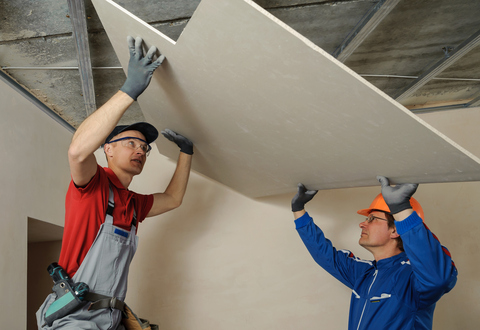
UL Solutions’ modeling and simulation service complements physical testing required for certification by providing earlier insights into product performance. The service helps gypsum board manufacturers evaluate designs and prepare for full-scale fire-resistance testing.
As manufacturers face increasing pressure to accelerate product development, manage costs and evaluate more design alternatives, digital engineering tools are becoming an important complement to traditional testing methods. Modeling and simulation can provide earlier insights into product performance.
“Digital technologies are opening new possibilities for how products are developed and evaluated,” said Jennifer Scanlon, president and CEO, UL Solutions. “Bringing modeling and simulation together with our safety science expertise helps manufacturers innovate with greater confidence.”
Gypsum board is a critical component of fire-resistance-rated wall, floor and ceiling assemblies used in commercial and residential constructions. The service applies validated thermal modeling methodologies based on UL 263, the Standard for Fire Tests of Building Construction and Materials, and ASTM E119 fire test approaches to help manufacturers assess performance earlier in the development process. The modeling framework incorporates thermal models using UL 263 furnace conditions, realistic boundary conditions, material property characterization and gypsum dehydration behavior. Together, these elements can help manufacturers better understand how design choices may influence thermal performance under modeled conditions.
Modeling and simulation do not replace testing required for certification or applicable code and regulatory requirements. Instead, the service complements UL Solutions’ existing testing, inspection and certification services. Simulation can support a much more agile design and earlier development decisions, while physical testing and certification continue to provide the evidence and independent evaluation used to assess products against applicable requirements.
The service is designed to support new product development and formulation screening, product optimization, material substitution assessments, cost-reduction initiatives, recertification support and research and development evaluation before full-scale testing. Potential benefits include reduced development risk, fewer unproductive test iterations and more focused use of laboratory resources.
For the construction industry, the launch demonstrates how digital tools can work alongside established fire science to support product innovation. For manufacturers, it provides another way to evaluate designs and prepare for testing. For fire safety, earlier insight can support the development of more robust fire-resistant products while maintaining the rigor of physical evaluation for certification.
Learn more about UL Solutions modeling and simulation services.
About UL Solutions
A global leader in applied safety science, UL Solutions Inc. (NYSE: ULS) transforms safety, security and sustainability challenges into opportunities for customers in more than 110 countries. UL Solutions delivers testing, inspection and certification services, advisory offerings and software solutions that support our customers’ product innovation and business growth. The UL Mark serves as a recognized symbol of trust in our customers’ products and reflects an unwavering commitment to advancing our safety mission. We help our customers innovate, launch new products and services, navigate global markets and complex supply chains, and grow sustainably and responsibly into the future. Our science is your advantage.
Source Code: ULS-IR
View source version on businesswire.com: https://www.businesswire.com/news/home/20261006292763/en/
Media:
Kathy Fieweger
Senior Vice President and Chief Corporate Communications Officer
Kathy.Fieweger@ul.com
+1 312-852-5156
Investors:
Yijing Brentano
Vice President, Investor Relations
IR@ul.com
+1 312-895-9873
Source: UL Solutions Inc