
VinFast's Approach to Building Smarter Mobility
VinFast (NASDAQ: VFS) outlines a step-by-step strategy toward smarter mobility focused on advanced driver assistance, AI and affordability.
Sentiment and the balance of points
Rhea-AI Sentiment reads the wording of the document, how positive or negative its language is on a 1 to 5 scale. The balance of points shown with the takes weighs what the document actually discloses, so the two can disagree, for example when a trial that missed its main goal is described in upbeat language.
Rhea-AI Summary
VinFast (NASDAQ: VFS) outlines a step-by-step strategy toward smarter mobility focused on advanced driver assistance, AI and affordability. Current EVs feature Level 2 ADAS, while next-generation platforms target enhanced Level 2+ and 2++ systems that maintain human supervision.
VinFast is expanding R&D through a partnership with Autobrains to develop Level 2++ technologies and a camera-first “Robo-Car” architecture using seven cameras and a high-performance computing platform. Pilot tests are underway on VF 8 and VF 9, and Robo-Car is being evaluated in controlled zones in Hanoi.
Positive
- Strategic AI partnership with Autobrains to develop Level 2++ and Robo-Car
- Current Level 2 ADAS deployed across VinFast's electric vehicle lineup
- Pilot testing of enhanced Level 2++ systems on VF 8 and VF 9
- Controlled Robo-Car trials in Hanoi using camera-first, AI-driven architecture
Negative
- None.
Details
News Market Reaction – VFS
On Jul 8, the day this news came out, VFS closed 2.25% below the previous close.
Data tracked by StockTitan Argus for the Jul 8 session.
Key Figures
- ADAS level
- Level 2
- Current VinFast EV lineup driver assistance capability
- Cameras in Robo-Car
- 7 production-grade cameras
- Robo-Car autonomous vehicle architecture sensor setup
- Compute performance
- 20 trillion operations per second
- Robo-Car compact high-performance computing platform
Historical Context
-
Outlined broader green mobility ecosystem and strong Q1 2026 delivery growth.
-
Highlighted long-term EV and battery warranties and charging network access.
-
Promoted VF 8 family SUV with pricing, incentives and ADAS features.
-
Showcased Canada 10‑year EV and battery warranty to support reliability message.
-
Emphasized VF 8 first‑EV experience and long warranty support for new buyers.
24h Move is the share-price change in the day after each event; other market factors may also have contributed.
Key Terms
adas technical
lidar technical
agentic ai technical
AI-generated analysis. How Rhea-AI works. Not financial advice.




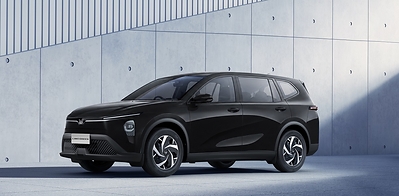
Against this backdrop, VinFast is pursuing a measured strategy that reflects the industry's changing priorities. The company is focusing on advancing research and development while progressively expanding the capabilities of its driver assistance technologies. Every milestone is designed around measurable validation, real-world usability and affordability.
Building Autonomy Through Proven Technology
Today, VinFast's electric vehicle lineup is equipped with Level 2 Advanced Driver Assistance Systems (ADAS), offering features such as Adaptive Cruise Control, Lane Centering Assist, Automatic Emergency Braking and Intelligent Speed Assist. These technologies are designed to support drivers by reducing fatigue and enhancing safety, while ensuring the driver remains fully responsible for operating the vehicle.
As discussions around autonomous driving often blur the line between driver assistance and self-driving capability, VinFast chooses to emphasize transparency. Level 2 systems are designed to assist, not replace, the driver, reinforcing safe driving practices while delivering tangible benefits in everyday mobility.
That philosophy also shapes the company's technology roadmap.
Beginning with its next-generation vehicle platform, VinFast aims to introduce enhanced Level 2+ and Level 2++ capabilities. These systems will build upon the company's existing ADAS foundation with more sophisticated perception, decision-making and driver assistance functions, while continuing to require active human supervision.
VinFast approaches development of autonomy as a series of engineering milestones, where each phase is supported by extensive testing, software refinement and measurable safety validation before deployment. This system allows new technologies to mature under real-world driving conditions instead of controlled demonstrations alone.
R&D Partnerships Powering the Next Generation
Central to this roadmap is VinFast's expanding investment in research and development through strategic global technology partnerships.
One notable example is the company's collaboration with Autobrains, an AI innovator specializing in automotive intelligence, to jointly develop enhanced Level 2++ autonomous driving technologies for future VinFast electric vehicles. The partnership underscores VinFast's long-term commitment to strengthening its software and AI capabilities, while accelerating the development of safer and more intelligent mobility solutions.
Beyond upgrading driver assistance, the two companies are also collaborating on a new autonomous vehicle architecture known as "Robo-Car," an approach that seeks to simplify how autonomous systems are built.
Unlike many autonomous platforms that rely on costly LiDAR sensors, multiple radar arrays and high-definition mapping infrastructure, the Robo-Car concept combines seven production-grade cameras with a compact high-performance computing platform capable of processing approximately 20 trillion operations per second.
Powered by Autobrains' Agentic AI architecture, the system continuously interprets complex traffic environments using human-like reasoning while minimizing computational demand. Combined with Air-to-Road localization technology, which fuses real-time camera data with satellite imagery, the platform aims to create an autonomous foundation that is both technologically advanced and commercially scalable.
The collaboration also reflects a broader industry shift. As artificial intelligence increasingly becomes the key differentiator in next-generation vehicles, software innovation and ecosystem partnerships are emerging as strategic advantages alongside traditional automotive engineering.
Scalable Innovation for the Real World
For VinFast, the objective is not simply to develop more sophisticated autonomous technology, it is to make that technology practical and accessible.
Cost remains one of the biggest barriers to large-scale autonomous vehicle adoption. Systems dependent on premium sensors and highly specialized infrastructure can significantly increase vehicle costs, limiting their deployment across diverse markets and customer segments.
By prioritizing camera-first perception, AI-driven software and efficient computing architecture, VinFast is pursuing an approach that can scale across multiple vehicle platforms while maintaining affordability. This strategy aligns with the industry's growing recognition that widespread adoption will depend as much on accessibility as technological sophistication.
Current pilot testing of enhanced Level 2++ systems is already underway on the VF 8 and VF 9. Meanwhile, VinFast and Autobrains are also evaluating the Robo-Car architecture within controlled zones in Hanoi, Vietnam, with plans to progressively expand testing into larger urban environments and international markets.
For drivers, this phased approach delivers continuous improvements. Each software generation is expected to provide increasingly intelligent assistance, from smoother highway driving and improved lane management to more advanced hazard detection and situational awareness, while keeping the driver firmly in control.
As the automotive industry transitions from a hardware-driven business to one defined by software and artificial intelligence, research and development has become one of the most important engines of long-term competitiveness. Through sustained investment in AI, software engineering and strategic partnerships, VinFast is contributing to the future of intelligent mobility by building technologies that are practical, scalable and validated for everyday use.
 View original content to download multimedia:https://www.prnewswire.com/news-releases/vinfasts-approach-to-building-smarter-mobility-302820155.html
SOURCE VinFast
FAQ
AI-generated questions and answers. How Rhea-AI works. Not financial advice.