
Vivakor Highlights Strategic Value of Its Southwestern U.S. Midstream Infrastructure Network Amid Elevated Crude Oil Market Volatility
Rhea-AI Summary
Vivakor (Nasdaq: VIVK) highlights the strategic value of its Southwestern U.S. midstream network amid 2026 crude oil price volatility. The company operates oil terminals, trucking fleets, pipeline injection stations, and crude pipelines across major basins, including Permian, Delaware, Haynesville, and Eagle Ford.
Vivakor’s network in Texas, New Mexico, and Oklahoma includes 10 pipeline injection stations supported by a fleet of more than 100 tanker trucks, a 120,000 bbl terminal in Colorado City, Texas, and a 100,000 bbl Omega terminal in Oklahoma, both connected to major pipeline systems.
Positive
- 10 pipeline injection stations in Texas and New Mexico
- Fleet of more than 100 tanker trucks supporting crude transport
- 220,000 bbl combined terminal storage in Texas and Oklahoma
- Connectivity to major pipelines, including Enterprise, Cactus II, Permian Express, and Plains
- Footprint across key basins: Permian, Delaware, Haynesville, Eagle Ford
Negative
- None.
News Market Reaction – VIVK
In the Jun 17 session, VIVK declined 3.59%, reflecting a moderate negative market reaction. Argus tracked a peak move of +60.2% during that session. Argus tracked a trough of -30.0% from its starting point during tracking. Our momentum scanner triggered 17 alerts that day, indicating notable trading interest and price volatility. Trading volume was exceptionally heavy at 6.3x the daily average, suggesting significant selling pressure.
Data tracked by StockTitan Argus on the day of publication.
Key Figures
Historical Context
| Date | Event | Sentiment | 24h Move | Catalyst |
|---|---|---|---|---|
| Jun 11 | Annual meeting announcement | Neutral | +5.0% | Set date, time, and record date for 2026 annual shareholder meeting. |
| Jun 10 | Remediation JV launch | Positive | +15.6% | Joint venture to bring Houston remediation processing center into commercial operation. |
| Jun 09 | Q1 2026 earnings | Neutral | -4.1% | Revenue declined after divestitures but gross margin improved and net loss narrowed. |
| Jun 04 | Crude transaction deal | Positive | -36.0% | One-year crude oil transaction via Cushing Terminal with $108M annualized revenue potential. |
| May 08 | Convertible note financing | Negative | -1.6% | Six-month convertible note private placement for $12M gross proceeds and $15M principal. |
24h Move is the share-price change in the day after each event; other market factors may also have contributed.
Recent positive commercial and JV announcements have sometimes coincided with sharp negative reactions, while financing news and routine corporate updates have seen milder, more aligned moves.
Over the last six weeks, Vivakor issued several material updates, including a crude transaction expected to generate $108 million annualized revenue and a Houston remediation JV, alongside a $12 million institutional convertible note financing and Q1 2026 results. Price reactions ranged from a -35.98% drop on the crude deal to a +15.63% move on the remediation JV. Today’s focus on midstream positioning and basin connectivity fits the ongoing pivot toward logistics, trading, and infrastructure-centric operations highlighted in prior releases.
Key Terms
midstream technical
pipeline injection stations technical
crude oil pipeline infrastructure technical
crude oil terminal technical
terminaling infrastructure technical
Brent crude technical
AI-generated analysis. How Rhea-AI works. Not financial advice.




Company Highlights Strategic Connectivity Across Key Domestic Producing Regions
Dallas, TX, June 17, 2026 (GLOBE NEWSWIRE) -- Vivakor, Inc. (Nasdaq: VIVK) (“Vivakor” or the “Company”), an integrated provider of energy transportation, storage, reuse, and remediation services, today highlighted the strategic positioning of its integrated midstream operating assets across several major U.S. producing basins amid elevated crude oil price volatility and increasing demand for domestic energy logistics infrastructure.
Vivakor is a diversified midstream energy company, operating oil terminals, trucking fleets, pipeline injection stations, and a crude oil pipeline infrastructure across several of the most active U.S. producing basins, including Permian, Delaware, Haynesville and Eagle Ford.
Vivakor’s network of operating assets in New Mexico, Oklahoma, and Texas:
Vivakor’s operating network includes pipeline-connected injection stations, terminaling infrastructure, transportation assets, and storage operations designed to support regional crude oil movement and market connectivity.
Vivakor Chairman and Chief Executive Officer James Ballengee commented, “Periods of elevated crude oil volatility typically increase the importance of strategically located transportation, storage, and pipeline-connected infrastructure across domestic oil producing regions. We believe Vivakor’s operating footprint across highly active oil basins positions the Company to support increasing regional crude oil movement through strategically connected logistics, storage and terminaling infrastructure.”
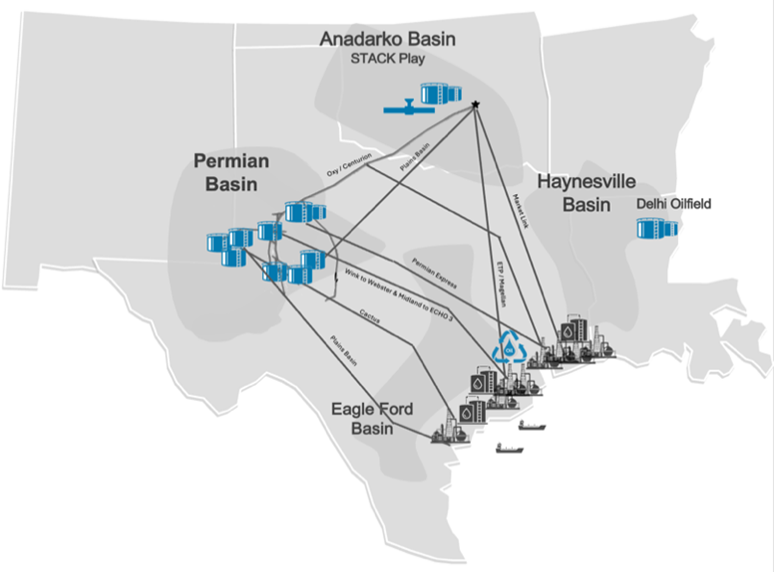
Pipeline-Connected Infrastructure Network:
- 10 pipeline injection stations in Texas and New Mexico supported by a fleet of more than 100 tanker truck fleet
- Connecting pipelines in Texas: Centurion Pipeline (Lotus), Plains Basin Pipeline, Cactus II, Permian Express, The West Texas System (Enterprise)
- Crude Oil Terminal (White Claw Colorado City), 120,000 bbl storage capacity with connection to the Enterprise Pipeline, Scurry Gathering System, and optionality to tie into the Midland Basin System
- Omega Terminal in Oklahoma, 100,000 bbl storage capacity, connected to Cushing, Oklahoma through the Omega Pipeline and Plains Pipeline network
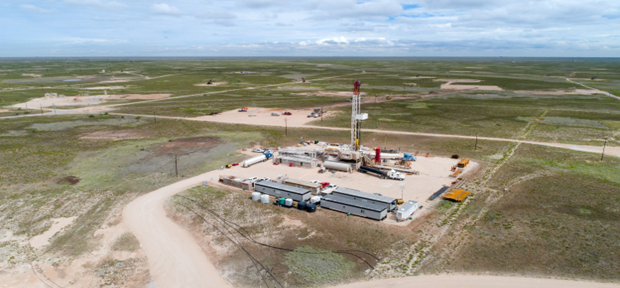
Domestic Infrastructure Demand:
Crude oil markets have experienced significant volatility during 2026, with Brent crude prices rising sharply amid heightened geopolitical tensions and supply concerns in the Middle East.
Higher oil prices typically support increased domestic drilling activity and oil production. Analysis from the Federal Reserve Bank of Dallas reports that U.S. drilling activity tends to accelerate when oil prices rise above the
About Vivakor, Inc.
Vivakor, Inc. is an integrated provider of sustainable energy transportation, storage, reuse, and remediation services, operating one of the largest fleets of oilfield trucking services in the continental United States. Its corporate mission is to develop, acquire, accumulate, and operate assets, properties, and technologies in the energy sector. Vivakor’s integrated facilities assets provide crude oil gathering, storage, transportation, reuse, and remediation services under long-term contracts. Once operational, Vivakor's interest in oilfield waste remediation facilities will facilitate the recovery, reuse, and disposal of petroleum byproducts and oilfield waste products.
For more information, please visit our website: http://vivakor.com
Cautionary Statement Regarding Forward-Looking Statements
This news release may contain forward-looking statements within the meaning of the "safe harbor" provisions of the Private Securities Litigation Reform Act of 1995. Such forward-looking statements are based upon the current beliefs and expectations of our management and are inherently subject to significant business, economic and competitive uncertainties and contingencies, many of which are difficult to predict and generally beyond our control. Actual results and the timing of events may differ materially from the results anticipated in these forward-looking statements. Forward-looking statements may be identified but not limited by the use of the words "anticipates," "expects," "intends," "plans," "should," "could," "would," "may," "will," "believes," "estimates," "potential," or "continue" and variations or similar expressions. Our actual results may differ materially and adversely from those expressed in any forward-looking statements as a result of various factors and uncertainties, including, but not limited to, the expected transaction and ownership structure, the valuation of the transaction, the likelihood and ability of the parties to successfully and timely consummate planned acquisitions, the risk that any required regulatory approvals are not obtained, are delayed or are subject to unanticipated conditions that could adversely affect Vivakor or the expected benefits of the such transaction, our ability to maintain the listing of our securities on The Nasdaq Capital Market, the parties failure to realize the anticipated benefits of pending transactions, disruption and volatility in the global currency, capital, and credit markets, changes in federal, local and foreign governmental regulation, changes in tax laws and liabilities, tariffs, legal, regulatory, political and economic risks, our ability to successfully develop products, rapid change in our markets, changes in demand for our future products, and general economic conditions.
These risks and uncertainties include, but are not limited to, risks and uncertainties discussed in Vivakor's filings with the U.S. Securities and Exchange Commission, which factors may be incorporated herein by reference. Actual results, performance or achievements may differ materially, and potentially adversely, from any projections and forward-looking statements and the assumptions on which those forward-looking statements are based. There can be no assurance that the data contained herein is reflective of future performance to any degree. You are cautioned not to place undue reliance on forward-looking statements as a predictor of future performance as projected financial information and other information are based on estimates and assumptions that are inherently subject to various significant risks, uncertainties and other factors, many of which are beyond our control. All information set forth herein speaks only as of the date hereof in the case of information about Vivakor and the Endeavor Entities or the date of such information in the case of information from persons other than Vivakor and the Endeavor Entities, and we disclaim any intention or obligation to update any forward-looking statements as a result of developments occurring after the date of this communication. Forecasts and estimates regarding the Endeavor Entities industries and markets are based on sources we believe to be reliable; however, there can be no assurance these forecasts and estimates will prove accurate in whole or in part.
Investor Contact:
P:469-480-7175
info@vivakor.com
Attachments
