Remsleep Holding Stock Price, News & Analysis
Company Description
REMSleep Holdings, Inc. (RMSL) is a medical device manufacturer in the sleep apnea and respiratory therapy space. According to company disclosures, REMSleep focuses on designing and manufacturing devices and products for the treatment of obstructive sleep apnea and other respiratory conditions. The company’s work centers on continuous positive airway pressure (CPAP) therapy interfaces intended to improve comfort and long‑term therapy adherence for patients.
Business focus and industry
REMSleep operates in the surgical and medical instrument manufacturing industry within the broader manufacturing sector. Its stated mission is to "forever change" the level of treatment provided to obstructive sleep apnea patients by addressing the well‑documented problem of CPAP mask discomfort and non‑compliance. The company highlights that a significant portion of CPAP users discontinue therapy due to mask issues, and it positions its products to target this group of non‑compliant or pressure‑sensitive users.
Core products and technology
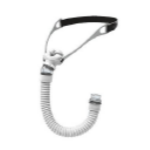
The company’s flagship product is the DELTAWAVE Nasal Pillows System, also described as the Deltawave CPAP pillows interface or CPAP mask system. REMSleep reports that this interface is:
- FDA‑cleared via a 510(k) premarket notification (K233415) as a noncontinuous ventilator (IPPB), Class II device under 21 CFR 868.5905, product code BZD.
- Patented, with the company also announcing allowance of another utility patent for its nasal ventilation system by the United States Patent and Trademark Office and plans to maintain a continuation application for improvements.
- Described by the company as a CPAP interface designed to restore natural sleep‑breathing rhythm and to improve comfort for users who struggle with conventional CPAP masks.
Company communications emphasize features of the Deltawave concept, such as synchronization with a 14 breaths‑per‑minute rhythm, operation at relatively low CPAP pressures, and design elements intended to reduce inspiratory and expiratory resistance, facial marks, and the need for humidification. REMSleep characterizes Deltawave as a non‑invasive interface aimed at making therapy feel more like natural breathing for sleep apnea patients, including those who are sensitive to pressure.
Market positioning and target users
REMSleep states that its primary commercial goal is to serve CPAP users who abandon therapy due to mask discomfort and related issues. In a shareholder letter, the company notes that a substantial share of CPAP users become non‑compliant within months, and it identifies the subset who stop therapy because of mask discomfort as its initial target audience. The company also highlights that CPAP machine manufacturers benefit when masks improve compliance, and it frames its interfaces as complementary to existing CPAP devices rather than as competing machines.
Beyond obstructive sleep apnea, REMSleep has indicated internal interest in next‑generation masks that may be relevant for patients with additional conditions such as chronic obstructive pulmonary disease (COPD) and congestive heart failure (CHF). The company has expressed an intention to pursue formal FDA clinical trials to evaluate these broader applications, positioning this as a potential future market opportunity.
Product pipeline and intellectual property
In addition to the DELTAWAVE Nasal Pillows System, REMSleep has discussed a product pipeline of CPAP interfaces:
- DELTAWAVE Nasal Pillows System – FDA‑cleared CPAP interface and current commercial focus.
- “Longevity” CPAP pillows interface – described by the company as a next‑generation device for which it intends to submit a 510(k) application following the Deltawave launch; the company states that the design is complete.
- A third‑generation CPAP interface mask – referenced as a planned follow‑on product in the company’s communications.
REMSleep reports that it holds patents and has an allowed utility patent for its nasal ventilation system, and it plans to maintain continuation filings to cover improvements. This intellectual property strategy is presented as part of its effort to protect its CPAP interface designs.
Regulatory status and compliance
The company discloses that the DELTAWAVE Nasal Pillows System has received 510(k) clearance from the U.S. Food and Drug Administration, with the FDA determining that the device is substantially equivalent to legally marketed predicate devices for the stated indications for use. As a Class II medical device, the product is subject to general controls under the Federal Food, Drug, and Cosmetic Act, including registration, listing, labeling, and good manufacturing practice requirements.
REMSleep communications also describe efforts to ensure regulatory compliance around product launch, including coordination with regulatory consultants, attention to material shelf life (such as medical‑grade silicone), and timing of production and packaging to align with regulatory and manufacturing constraints.
Commercialization and distribution
REMSleep states that it is transitioning from development to commercialization of Deltawave. Company updates describe several commercialization steps:
- Securing distribution agreements, including a formal agreement with 1800CPAP.com, a durable medical equipment (DME) distributor, through which the Deltawave CPAP mask system is offered as a new arrival nasal pillow product.
- Receiving Medicare registration approval for Deltawave, enabling patients to purchase the mask through Medicare coverage.
- Engaging independent sales representatives and developing sales materials such as brochures and instructional videos.
- Planning and executing marketing strategies that include national media campaigns, outreach to Veterans Affairs (VA) systems and DME providers, distributor partnerships, and clinical trial opportunities.
The company has also described upgrading its website and e‑commerce capabilities, and working with marketing leadership experienced in the home medical equipment space to build brand positioning and sales channels for Deltawave.
Operations and systems
REMSleep has communicated that it is evaluating and implementing operational systems to support growth, including consideration of an enterprise resource planning (ERP) system. The described objectives for such a system include management of inventory and in‑transit inventory, accounting, customer relationship management, purchase order generation and collection, order entry and returns, billing, quality management, sales reporting, and business analytics. The company characterizes these infrastructure efforts as critical to scaling its medical device operations.
Corporate profile and capital markets
REMSleep Holdings, Inc. trades on the OTCQB/OTC markets under the symbol RMSL. The company identifies itself as a small start‑up focused on bringing its CPAP interface products to market. In shareholder communications, REMSleep has articulated internal goals such as capturing a portion of the CPAP mask market within a defined time frame and, over time, seeking to qualify for listing on a national exchange, while acknowledging that these are corporate objectives rather than guaranteed outcomes.
The company has also referenced monitoring of trading activity in its shares, including observations of short interest and concerns about potential manipulative trading practices. REMSleep states that it intends to take legal steps it deems necessary to protect shareholder interests, while encouraging investors to follow official press releases and social media channels for updates.
Research, clinical focus, and user groups
REMSleep’s communications highlight several groups and settings where it believes its products may be relevant:
- Sleep apnea patients who are sensitive to CPAP pressures or who have difficulty tolerating conventional masks.
- Veterans and VA systems seeking non‑invasive, low‑resistance sleep therapy interfaces.
- Hospitals and sleep labs interested in clinical innovation and clinical trials involving low‑pressure sleep therapy.
- Distributors and DME providers looking for alternatives to standard CPAP masks.
The company positions Deltawave as a candidate for clinical trials and research collaborations, particularly in low‑pressure sleep therapy and potential applications in cardiopulmonary rest and perfusion. It also notes internal indications that future‑generation masks may be studied for patients with COPD or CHF in addition to sleep apnea, with formal clinical trials described as a planned step.
Regulatory filings and reporting
As a public company, REMSleep files periodic reports with the U.S. Securities and Exchange Commission (SEC). For example, the company filed a Form 12b‑25 (NT 10‑Q) to notify the SEC of a delayed Quarterly Report on Form 10‑Q for the period ended September 30, 2025. In that notification, REMSleep stated that additional time was needed for its independent registered public accounting firm to complete its review of the financial statements, and it indicated an intention to file the Form 10‑Q within the permitted extension period. The filing also confirmed that all other required periodic reports over the prior 12 months had been filed.
Company outlook as described by management
In letters and press releases, REMSleep’s management emphasizes a focus on launching Deltawave, expanding distribution, and developing next‑generation CPAP interfaces. The company characterizes its journey as that of a small start‑up navigating regulatory, manufacturing, and market‑entry challenges, with an expressed determination to bring its products to sleep apnea sufferers and to pursue growth opportunities in the CPAP mask market.
FAQs about REMSleep Holdings, Inc.
Stock Performance
Latest News
SEC Filings
Financial Highlights
Upcoming Events
Short Interest History
Short interest in Remsleep Holding (RMSL) currently stands at 57.5 thousand shares, down 92.8% from the previous reporting period, representing 0.0% of the float. Over the past 12 months, short interest has increased by 1970.8%. This relatively low short interest suggests limited bearish sentiment.
Days to Cover History
Days to cover for Remsleep Holding (RMSL) currently stands at 1.0 days. This low days-to-cover ratio indicates high liquidity, allowing short sellers to quickly exit positions if needed.