
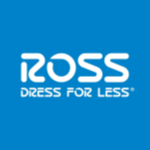
Ross Stores Stock Price, News & Analysis
Company Description
Ross Stores, Inc. (Nasdaq: ROST) is an S&P 500, Fortune 500, and Nasdaq 100 company in the retail trade sector, focused on the family clothing stores industry. Headquartered in Dublin, California, the company operates as an off-price apparel and home fashion retailer, offering name brand and designer merchandise at discounts to traditional department and specialty store prices. According to company disclosures, Ross Stores generated fiscal 2024 revenues of $21.1 billion, reflecting its large-scale presence in U.S. value-oriented retail.
Core business and off-price model
Ross Stores operates two primary retail banners: Ross Dress for Less and dd’s DISCOUNTS. Ross Dress for Less is described by the company as the largest off-price apparel and home fashion chain in the United States, with 1,909 locations in 44 states, the District of Columbia, Guam, and Puerto Rico. The Ross banner focuses on first-quality, in-season, name brand and designer apparel, accessories, footwear, and home fashions for the entire family, generally positioned at savings of 20% to 60% off department and specialty store regular prices.
The dd’s DISCOUNTS chain operates 364 stores in 22 states. These stores feature a more moderately priced assortment of first-quality, in-season, name brand apparel, accessories, footwear, and home fashions for the entire family, with stated savings of 20% to 70% off moderate department and discount store regular prices. Together, Ross Dress for Less and dd’s DISCOUNTS operate 2,273 locations across 44 states, the District of Columbia, Guam, and Puerto Rico, illustrating the company’s broad geographic footprint in off-price retail.
Customer value proposition
Across both banners, Ross Stores emphasizes branded, first-quality, in-season merchandise at everyday discounts versus traditional retailers. The company highlights savings ranges (20% to 60% at Ross and 20% to 70% at dd’s DISCOUNTS) as a core element of its value proposition. Merchandise spans apparel and home-related categories and is positioned for the entire family, indicating a focus on family-oriented, budget-conscious shoppers seeking brand-name goods at lower prices.
Company communications describe Ross Dress for Less as offering apparel, accessories, footwear, and home fashions, while dd’s DISCOUNTS offers similar categories with a more moderately priced assortment. This structure allows Ross Stores to address different price points within the off-price segment while maintaining a consistent focus on discounted branded merchandise.
Scale, store base, and growth
Ross Stores reports that it operates more than two thousand locations under its two banners. As of the end of certain recent reporting periods, Ross Dress for Less locations ranged from 1,847 to 1,909 stores, and dd’s DISCOUNTS locations ranged from 358 to 364 stores, with a combined total of 2,273 locations at the end of a recent quarter. The company has communicated ongoing store growth plans, including the opening of 90 new locations in one fiscal year, consisting of both Ross Dress for Less and dd’s DISCOUNTS stores across multiple states.
Expansion activity has included opening new Ross Dress for Less stores in regions such as the Midwest and Northeast, as well as strengthening the company’s presence in sunbelt states. At dd’s DISCOUNTS, the company has discussed enhancing its footprint in core markets such as California and Texas. These details, taken from company news releases, underscore Ross Stores’ focus on expanding within existing markets and entering new geographic areas within the United States and certain territories.
Financial profile and capital structure context
Ross Stores regularly reports its financial results through quarterly earnings releases and SEC filings. Recent condensed consolidated statements of earnings, balance sheets, and cash flows show the company’s revenues, operating income, net earnings, and store counts over various reporting periods. While specific figures change over time, the presence of detailed financial disclosures, including sales, cost of goods sold, selling, general and administrative expenses, and operating income, reflects Ross Stores’ role as a large, publicly traded retailer with extensive reporting obligations.
The company has also disclosed the use of share repurchase authorizations and regular quarterly cash dividends, indicating that returning capital to shareholders is part of its financial strategy. In addition, Ross Stores has entered into a senior unsecured revolving credit facility providing up to $1.3 billion in borrowing availability, replacing a prior facility with substantially similar commercial terms and capacity. The credit agreement includes customary covenants, such as a consolidated adjusted debt to consolidated EBITDAR ratio limit, restrictions on additional indebtedness and liens, and conditions to credit extensions.
Corporate governance and leadership transitions
Ross Stores’ SEC filings and press releases describe ongoing corporate governance developments. The company has announced a Board Chair succession plan under which its Executive Chairman will step down from that role and retire from the Board on a specified date, while another long-serving Board member, who has served as Lead Independent Director, has been appointed to succeed as Chairman of the Board. Company statements emphasize the outgoing Chair’s role in helping Ross evolve from a regional chain into a nationally recognized retailer operating two banners with more than 2,200 stores.
The company has also reported executive leadership changes in its finance organization. An 8-K filing describes a planned Chief Financial Officer succession, including the retirement of the current CFO and the appointment of a new Executive Vice President and Chief Financial Officer, who previously served in senior finance roles at Ross Stores. The filing outlines the new executive employment agreement, including term, base salary, incentive bonus target, equity awards, and provisions related to severance, non-solicitation, confidentiality, and potential recoupment of performance-based compensation in the event of financial restatements.
Risk factors and operating environment
In its earnings releases, Ross Stores includes forward-looking statements and summarizes risk factors that may affect its business. These risks include uncertainties in the macroeconomic environment, such as inflation, interest rates, energy and fuel costs, housing costs, and overall consumer confidence and disposable income. The company also cites competitive pressures in the apparel and home-related merchandise retailing industry and the need to effectively manage inventories, markdowns, and inventory shortage to achieve planned gross margins.
Additional risks identified by the company include changes in U.S. tax, tariff, or trade policy affecting apparel, shoes, and home-related merchandise, especially goods originating from China and other countries; supply chain disruptions and higher-than-expected freight costs; unseasonable weather affecting demand for seasonal merchandise; information or data security breaches and cyber-attacks; and disruptions in information systems or supply chain operations. Ross Stores also notes risks related to obtaining acceptable new store sites, expanding into new geographic markets, potential legal or regulatory matters, reputation and brand damage, and the need to attract, train, and retain associates capable of executing its off-price retail strategies.
Community engagement
Company communications indicate that Ross Stores, through the Ross Stores Foundation, participates in community support initiatives. For example, Ross Stores has announced donations to support flood relief and rebuilding efforts in Texas, with funds directed to a community foundation’s flood relief fund to aid nonprofit organizations, first responder agencies, and local governments. Statements from company leadership highlight a commitment to supporting local communities, especially during times of need.
Ross Stores stock and investor information
Ross Stores’ common stock trades on Nasdaq under the ticker symbol ROST. As an S&P 500, Fortune 500, and Nasdaq 100 constituent, the company is widely followed by institutional and individual investors. The company regularly issues press releases regarding quarterly earnings, store openings, dividends, and corporate governance matters, and it hosts conference calls and webcasts to discuss financial results and outlook. Investors can review Ross Stores’ SEC filings, including Forms 10-K, 10-Q, and 8-K, for detailed information on its operations, financial condition, risk factors, and governance.
Business segments and merchandising focus
While Ross Stores’ public communications do not describe separate reportable segments beyond its two banners, they consistently emphasize a merchandising focus on apparel and home fashions for the entire family. The company highlights its ability to offer first-quality, in-season, name brand and designer products at discounts to regular prices at department, specialty, and moderate department and discount stores. This off-price positioning is central to Ross Stores’ identity within the family clothing stores industry and the broader retail trade sector.
Stock Performance
Ross Stores (ROST) stock last traded at $213.09, up 0.90% from the previous close. Over the past 12 months, the stock has gained 65.0%. At a market capitalization of $68.3B, ROST is classified as a large-cap stock with approximately 323.4M shares outstanding.
Latest News
Ross Stores has 10 recent news articles. Of the recent coverage, 9 articles coincided with positive price movement and 1 with negative movement. Key topics include earnings, conferences, dividends. View all ROST news →
SEC Filings
Ross Stores has filed 5 recent SEC filings, including 4 Form 4, 1 Form 144. The most recent filing was submitted on March 23, 2026. SEC filings provide transparency into a company's financial condition, material events, and regulatory compliance. View all ROST SEC filings →
Insider Radar
Insider selling at Ross Stores over the past 90 days can reflect routine portfolio management, scheduled trading plans (Rule 10b5-1), tax planning, or compensation-related dispositions rather than a directional view on the stock.
Financial Highlights
Ross Stores generated $21.1B in revenue over the trailing twelve months, retaining a 27.8% gross margin, operating income reached $2.6B (12.2% operating margin), and net income was $2.1B, reflecting a 9.9% net profit margin. The company generated $2.4B in operating cash flow. With a current ratio of 1.55, the balance sheet reflects a strong liquidity position.
Upcoming Events
Short Interest History
Short interest in Ross Stores (ROST) currently stands at 7.6 million shares, down 15.3% from the previous reporting period, representing 2.4% of the float. Over the past 12 months, short interest has increased by 35%. This relatively low short interest suggests limited bearish sentiment.
Days to Cover History
Days to cover for Ross Stores (ROST) currently stands at 3.0 days, down 24.6% from the previous period. This days-to-cover ratio represents a balanced liquidity scenario for short positions. The days to cover has increased 98% over the past year, indicating improving liquidity conditions. The ratio has shown significant volatility over the period, ranging from 1.1 to 4.0 days.





ROST Company Profile & Sector Positioning
Ross Stores (ROST) operates in the Apparel Retail industry within the broader Retail-family Clothing Stores sector and is listed on the NASDAQ.
Investors comparing ROST often look at related companies in the same sector, including Burlington Stores Inc (BURL), Tjx Companies Inc (TJX), Lululemon (LULU), Boot Barn Hldgs Inc (BOOT), and Gap Inc (GAP). Comparing financial metrics, valuation ratios, and stock performance across these peers can help investors evaluate ROST's relative position within its industry.