
Freeport-McMoRan (FCX) Arizona Plan Would Add 10% to US Copper Mining


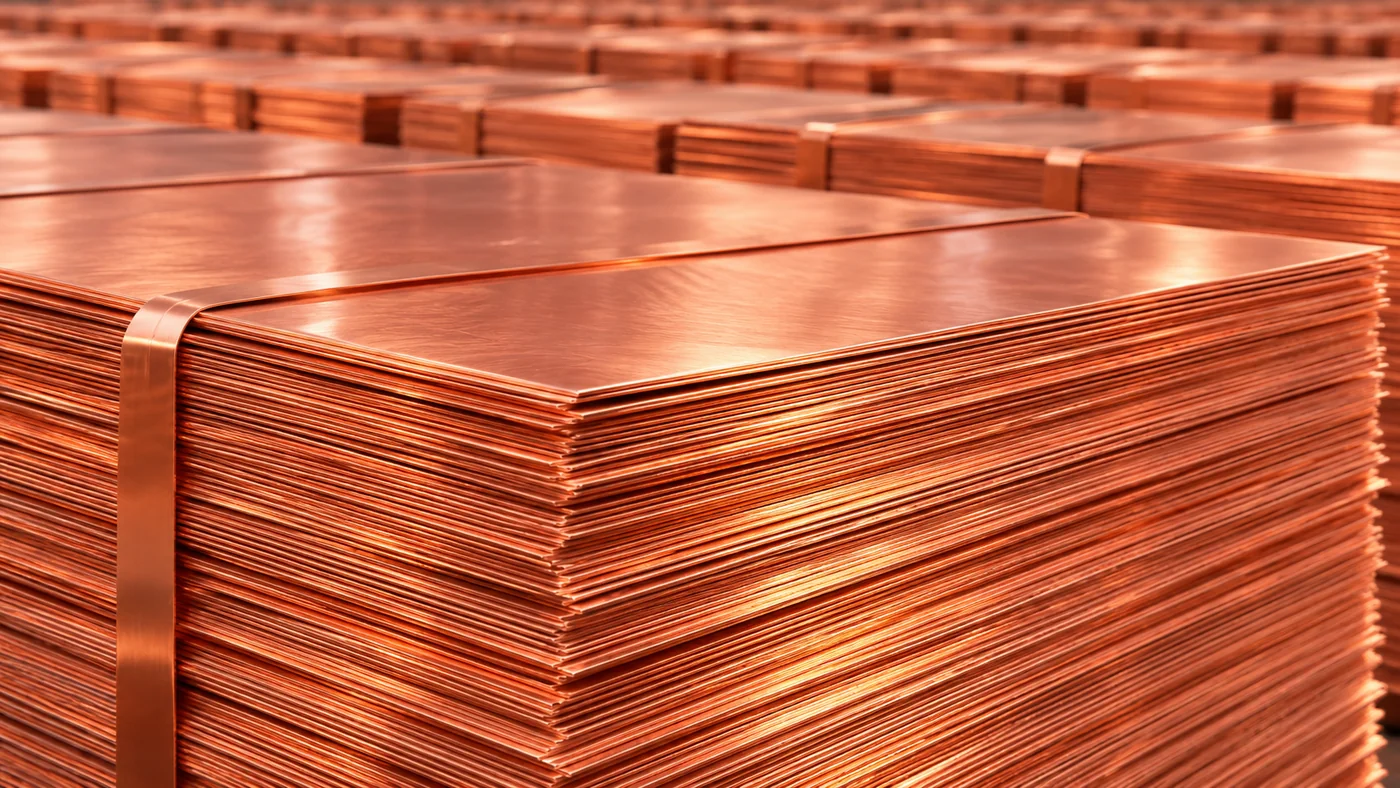
Freeport-McMoRan's board approved a $4.5 billion plan to more than double copper output at its Bagdad mine in Arizona, Freeport said on November 4, 2026. At full rate the expansion would add about 102,000 metric tons of copper a year, about a tenth of the 1.0 million tons all US mines produced in 2025, with first copper targeted for mid-2030.
The short answer. Freeport expects to spend about $4.5 billion on an expansion built around a new processing plant, at a mine that has run since 1945, its November 4 release says. Copper goes mostly into buildings, electrical products and vehicles, the USGS says, citing the Copper Development Association. In 2025 the United States imported more refined copper, the finished metal, than all of its mines produced. This one expansion would add about a tenth to US copper mining, yet at least half the money is spent before its first copper. And the US already exports copper in ore and concentrate, the form Bagdad's new plant will make, before it becomes metal. Those exports equal about a third of what US mines produce.
What the Bagdad expansion would add and cost

Show the data
| What the drawing shows | Copper, metric tons |
|---|---|
| US mine production, 2025 (USGS estimate) | About 1,000,000 |
| Bagdad expansion, added each year at the long-term rate | About 102,000 |
| Each bar in the drawing | 100,000 |
| First new copper targeted | Mid-2030 |
On this page
How much copper will the Freeport-McMoRan Bagdad mine expansion add?
Bagdad made 149 million pounds of copper in 2025. Freeport plans to add about 225 million pounds a year. That would more than double what the mine makes.
The approval is in a report Freeport filed with the Securities and Exchange Commission, the US market regulator, on November 4. That report, an 8-K, attaches that morning's press release. The 225 million pounds a year equal about 102,000 metric tons.
The heart of the plan is a new concentrator, the plant that grinds rock and pulls out a powder of copper minerals called concentrate. Freeport says the new plant would handle about 115,000 tons of ore a day. That is more than the whole of today's mill, which was built for 77,100 metric tons a day, according to Freeport's annual report for 2025.
The project also adds a new crusher, a long conveyor belt, a water pipeline, a power line and more trucks. In 2025 Bagdad became the first major US mine with a fully driverless haul truck fleet, the release says. Building it all would bring more than 4,000 direct and indirect jobs to Arizona, Freeport says.

Show the data
| Category | Value |
|---|---|
| 2023 | 146 |
| 2024 | 146 |
| 2025 | 149 |
| Planned, more than 400 | 400 |
Bagdad also produces molybdenum, a metal mixed into steel to make it stronger. Freeport expects about 12 million more pounds of it a year, taking the mine past 20 million pounds. For copper, the whole mine would make more than 400 million pounds a year once the new plant runs at its long-term rate.
Freeport says the bigger Bagdad would become the second-largest copper mine in the United States, behind its own Morenci mine, also in Arizona. The mine holds 2.6 billion metric tons of ore in its reserve, the ore it has shown it can mine at a profit. That is enough for more than 80 years, the company says. Kathleen Quirk, Freeport's president and chief executive, called it "an important step in advancing Freeport's U.S. copper growth strategy." In plain words, Freeport is growing at a US mine it already runs, which it calls a low-risk project.
How much copper does the US mine each year?
US mines produced about 1.0 million metric tons of copper in 2025, the US Geological Survey estimates. Bagdad's addition is about a tenth of that, from one mine that already exists.
The USGS copper summary for 2026 counts 26 US copper mines, and 17 of them make almost all of it. Arizona alone gave about 70% of US copper in 2025.
US output has been sliding. It was 1.23 million tons in 2021 and about 1.0 million in 2025, a drop of about a fifth. The USGS says 2025 output was hurt by concentrator shutdowns and lower ore grades at several mines, which means less copper in each ton of rock.

Show the data
| Category | US mine production | US refined copper imports |
|---|---|---|
| 2021 | 1,230 | 919 |
| 2022 | 1,230 | 732 |
| 2023 | 1,130 | 771 |
| 2024 | 1,050 | 903 |
| 2025 estimated | 1,000 | 1,700 |
Against that, Bagdad's planned addition of about 102,000 tons is large. Once the whole mine runs at more than 400 million pounds, Bagdad alone would equal more than 18% of what every US mine produced in 2025. US mines lost about 230,000 tons of yearly output from 2021 to 2025, so the expansion would make up a bit less than half of that drop.
How much copper does the US import?
Bagdad's addition equals about 6% of the refined copper the US imported in 2025, a year swollen by stockpiling. Against 2024's more usual imports it is about 11%.
Refined copper is the nearly pure metal that factories turn into wire and pipe. The US imported 903,000 metric tons of it in 2024, the USGS says. In 2025 imports jumped to an estimated 1.7 million tons, more than US mines produced.
Much of that was not used right away. Stockpiles of refined copper in the US rose by about 327,000 tons in 2025, equal to about 40% of the jump in imports. The USGS says analysts tied 2025's record copper price mainly to worries about tariffs on copper imports.
The USGS puts US net import reliance, the share of the refined copper used at home that came from abroad, at 57% in 2025. The measure counts exports and changes in stockpiles too. Chile was the biggest supplier from 2021 to 2024, followed by Canada, Peru and Mexico.
In November 2025 copper joined the government's list of critical minerals, the minerals the country needs and could run short of. A 2025 proclamation put a 50% tariff on the copper in imported semi-finished copper goods, products partly made from copper. Refined copper was left out, and the proclamation lets the President decide later on a phased duty on it, starting in 2027. Reuters reported on September 10, 2026 that the White House had not made that decision.
Show the data
| Measure | Figure |
|---|---|
| US net import reliance for refined copper, 2024 | 45% |
| US net import reliance for refined copper, 2025 estimate | 57% |
| Chile's share of US refined copper imports, 2021 to 2024 | 68% |
| Canada's share, 2021 to 2024 | 16% |
| Peru's share, 2021 to 2024 | 7% |
| Mexico's share, 2021 to 2024 | 6% |
| Tariff on the copper in imported semi-finished copper goods, from August 1, 2025 | 50% |
| Possible duty on refined copper from 2027, left to a later decision | 15% |
| Possible duty on refined copper from 2028, left to a later decision | 30% |
Source: USGS Mineral Commodity Summaries 2026, Copper, 2021 to 2025; White House proclamation of July 30, 2025.
Will the Bagdad expansion cut US copper imports?
Not by itself. Bagdad's new plant will make concentrate, which has to be smelted and refined before factories can use its copper, and the filing does not say where that will happen.
To become metal, concentrate goes to a smelter, a furnace that melts out most of what is not copper, and then to a refinery. The US has only two primary smelters, the kind that work on mined ore, according to the USGS.

Show the data
| Category | Value |
|---|---|
| Mined in the US | 1,000 |
| Exported unsmelted | 340 |
In 2025 the US exported ore and concentrate holding an estimated 340,000 tons of copper. That equals about a third of the 1.0 million tons US mines produced, and it becomes metal in other countries' smelters and refineries.
Freeport sends a large part of the concentrate from Bagdad and its other Arizona and New Mexico mines to its own smelter in Miami, Arizona, its annual report says. That smelter processed 821,200 metric tons of concentrate in 2025.
How will Freeport spend the $4.5 billion on the Bagdad expansion?
Freeport's cost estimate rose by about 29% in eight months, to $4.5 billion. At least half of the money is set to be spent before the first new copper comes out.
Freeport's annual report, filed on February 13, 2026, said "Estimated incremental project capital costs, which continue to be reviewed, approximate $3.5 billion." Its third-quarter report of October 27, 2026 put the cost about $1 billion higher, "taking into account current estimates, including for materials, equipment and labor." The November 4 approval kept that figure.
The cost may still move. The November 4 release says, "Ongoing inflationary pressures and cost escalation could affect these estimates." Freeport adds that it aims to finish within its current cost estimates and timelines.
Freeport's release gives the spending as shares of the cost. About 20% is expected in 2027 and 30% to 35% in 2028. The rest falls in 2029 and 2030, and Freeport does not split it between those two years.

Show the data
| Date | Event |
|---|---|
| Feb 13, 2026 | Annual report puts the cost at about $3.5 billion |
| Oct 27, 2026 | Estimate rises to about $4.5 billion |
| Nov 4, 2026 | Board approves the expansion |
| 2027 | About 20% of the cost, about $0.9 billion |
| 2028 | 30% to 35%, about $1.35 billion to $1.575 billion |
| 2029 to 2030 | The rest, about $2.025 billion to $2.25 billion |
| mid-2030 | First new copper targeted |
So by the end of 2028, $2.25 billion to $2.475 billion would be spent, and no new copper would have come out yet.
Freeport is already doing engineering, purchase planning and early site work. It will add the money to its updated plan for spending on mines and equipment. It also classes the money as "discretionary", meaning it is left out of the cash figure Freeport uses to set its payouts to shareholders, its October conference call slides say.
Freeport says the project covers its costs at a copper price of about $4.00 a pound, with molybdenum at $20 a pound. For comparison, in the third quarter of 2026 alone, Freeport's copper sold for an average of $6.54 a pound, its October report shows.
The company also expects the bigger mine to cut its long-term cost per pound by about 20%, through larger scale, newer equipment and the money it makes from molybdenum.
The first new copper is targeted for mid-2030, after about three and a half years of building. First production is not full production, and the release does not say how long the new plant will take to reach its full rate.
For the next three years, then, the expansion is mostly money going out. The new copper is targeted to start in 2030, and where it is smelted will decide how much of it becomes metal made in the US.
What to watch
- Freeport's updated plan for capital spending, which the company says will include the Bagdad money: its fourth-quarter results release; the last one came on January 22, 2026.
- Where Bagdad's extra concentrate goes, and how fast the new plant reaches its full rate: Freeport's 2026 annual report on Form 10-K. The 2025 one was filed on February 13, 2026.
- Any US duty on refined copper: a presidential proclamation published on whitehouse.gov and in the Federal Register, with no date set.
- US copper mining in 2026: the USGS Mineral Commodity Summaries 2027; the 2026 edition came out in February.
Our numbers
These figures are our calculations from the sources linked in this article. The national comparisons use 2025 estimates because US output in 2030 is not known, and imports are also compared with 2024 because stockpiling swelled 2025 imports.
- About 102,000 metric tons of copper a year: Freeport's 225 million pounds converted at 2,204.62 pounds per metric ton.
- About a tenth of US mine output: about 102,000 tons against the roughly 1.0 million tons US mines produced in 2025.
- More than today's mill in either ton: the release does not say which ton its 115,000 means, and 115,000 US tons equal about 104,000 metric tons, above the mill's 77,100.
- More than 18% for the whole mine: more than 400 million pounds, over 181,000 tons, against the same 2025 total.
- A drop of about a fifth and about 230,000 tons: US mine output of 1.23 million tons in 2021 against about 1.0 million in 2025.
- A bit less than half of that drop: about 102,000 tons against about 230,000 tons.
- About 6% and about 11% of refined imports: about 102,000 tons against 1.7 million tons imported in 2025 and 903,000 tons in 2024.
- About 327,000 tons, about 40% of the jump: refined stockpiles of 123,000 tons at the end of 2024 and 450,000 at the end of 2025, against imports that rose by about 797,000 tons.
- About a third shipped abroad: an estimated 340,000 tons of copper in exported ore and concentrate against 1.0 million tons mined in 2025.
- A $1 billion rise, about 29%: from about $3.5 billion in the 2025 annual report to about $4.5 billion.
- $0.9 billion, $1.35 billion to $1.575 billion, and $2.025 billion to $2.25 billion: Freeport's yearly shares applied to $4.5 billion.
- $2.25 billion to $2.475 billion before first copper: the 2027 and 2028 shares added together.
Frequently asked questions
Where is the Bagdad mine?
Bagdad is in Yavapai County, Arizona, about 100 miles northwest of Phoenix. It has run since 1945, Freeport's annual report says. Freeport also runs four other copper mines in Arizona, at Morenci, Safford, Sierrita and Miami.
Who owns the Bagdad mine?
Freeport-McMoRan owns all of Bagdad. Its shares trade on the New York Stock Exchange as FCX. Its figures are on the Freeport-McMoRan page on StockTitan.
Where are Freeport-McMoRan's mines?
Freeport runs five copper mines in Arizona and two in New Mexico, at Chino and Tyrone. It also has two molybdenum mines in Colorado. Abroad, it runs Cerro Verde in Peru, El Abra in Chile and the Grasberg mines in Indonesia.
Does FCX mine silver?
Yes, as a side product of its copper. Freeport says some of its US copper mines also yield gold and silver. Its business in Indonesia makes refined gold and silver too.
Is copper a critical mineral in the US?
Yes. The government added copper to its list of critical minerals on November 7, 2025, the USGS says. The list names minerals the country needs and could run short of.
Sources
- Freeport-McMoRan 8-K of November 4, 2026, on StockTitan
- Freeport Announces Plans to Boost U.S. Copper and Molybdenum Production, November 4, 2026, on StockTitan
- Freeport-McMoRan (FCX) overview on StockTitan
- Freeport-McMoRan Form 8-K, November 4, 2026, SEC
- Exhibit 99.1, Freeport press release, November 4, 2026, SEC
- Freeport third-quarter 2026 results, October 27, 2026, SEC
- Freeport third-quarter 2026 conference call slides, October 27, 2026, SEC
- Freeport-McMoRan annual report on Form 10-K for 2025, SEC
- US Geological Survey, Mineral Commodity Summaries 2026, Copper
- Proclamation, Adjusting Imports of Copper into the United States, July 30, 2025, The White House
The information provided in this article is for educational and informational purposes only. It does not constitute financial advice, investment recommendation, or an endorsement of any particular investment strategy. Past performance does not guarantee future results. Investors should conduct their own research and consult with a qualified financial advisor before making investment decisions.