
Articles Tagged 'Beginner'

Momentum Scanner Update: New Strategies and SEC Filings
The rebuilt Momentum Scanner adds wider coverage, strategy badges naming each alert's pattern, SEC filing links beside the news, and a redesigned page.

SEC Filing Dates Explained
SEC filings carry more than one date, and they don't always match. Learn what the filing date, the SEC acceptance time, and public availability each mean.

What Is T+1 Settlement? The One-Day Rule Explained
A plain-English guide to T+1 settlement: what trade settlement is, how the one-day cycle works, and what the 2024 change meant for ex-dividend dates and FX.
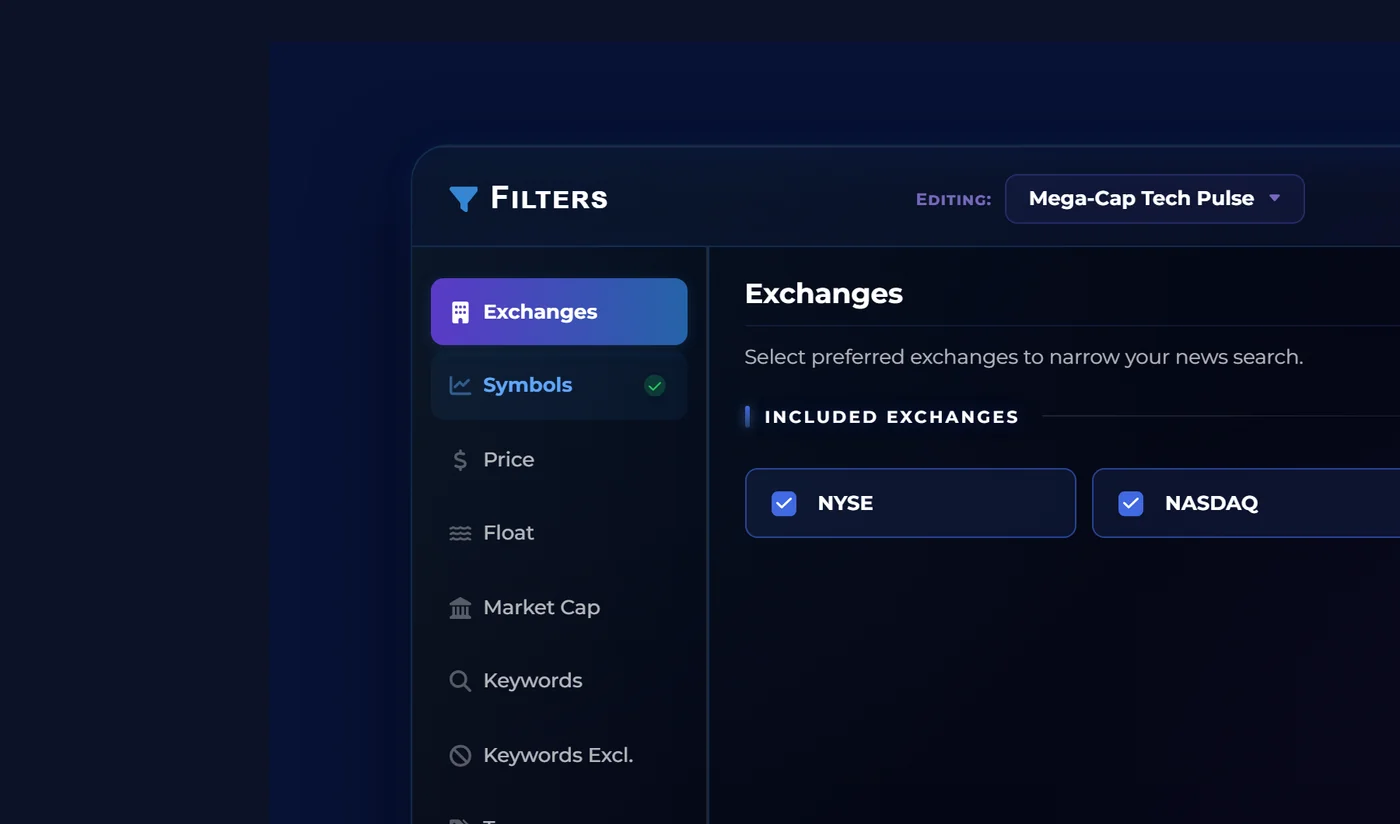
Multi-Active Filters: News and SEC Filings Guide
StockTitan's live news and SEC filings feeds support multiple active saved filters. Learn how saved filters, rules, tier limits, and matching behavior work.

What Is a Clinical Trial? FDA Phases for Investors
Clinical trial phases explained in plain English, including FDA Phase 1, Phase 2, Phase 3, Phase 4, PDUFA dates, endpoints, and biotech news context.

How to Use Keyword Filters on StockTitan
Learn how StockTitan keyword filters work for news feeds, including comma-separated keywords, excluded keywords, phrase matching, double quotes, and trailing-space examples.

Types of SEC Filings: A Complete Guide for Investors
Learn the most important SEC filing types, from 10-K annual reports to Form 4 insider transactions. Includes a comparison table and filing deadlines.

S-1 Filings Explained: Reading an IPO Registration Statement
Learn how to read an S-1 registration statement, the SEC filing companies submit before going public. Key sections, red flags, and how to find them.

10-Q Quarterly Reports: What Changes Quarter to Quarter
Learn what changes in a 10-Q filing each quarter, which sections to read first, and how to spot red flags in quarterly SEC reports.

How to Read a 10-K Annual Report: The Investor's Field Guide
Learn how to read a 10-K annual report. This guide covers the key sections, red flags, filing deadlines, and what experienced investors focus on first.

What Is a Stock Offering? Types, Dilution, and How to Spot One Early
Learn what a stock offering is, how dilution works, why stocks often drop after offerings, and how to spot warning signs early.

Financial Health Score Methodology: StockTitan Complete Guide
How StockTitan computes the 0-100 Financial Health Score: six radar dimensions, sector-family scoring, percentile-within-family ranking, data-quality flags, and the critical distinction between business quality and stock valuation.

Market-Wide Circuit Breakers: Levels, History & Trading Halt Rules
Learn how market-wide circuit breakers work, when trading halts trigger at 7%, 13%, and 20%, and what happens during these critical market events.

Stop, Stop-Limit, and Trailing Stops: Complete Trading Guide
A stop order becomes a market order once its price is reached, a stop-limit order becomes a limit order instead, and a trailing stop follows the stock as it moves. This guide explains when each one is used and includes a stop order calculator.

Dividend Yield vs Total Return: The Complete Guide for Smart Investors
Dividend yield counts only the cash a stock pays out, while total return also counts what happened to its price, and this article shows how a high yield can sit on top of a falling stock, with a calculator that compares the two.

Understanding Federal Reserve Interest Rates: How They Work and Why They Matter
The Fed steers several interest rates, the federal funds rate and the discount rate among them, and this article explains how each one is set, why the Fed moves them and how a change passes through to the rates you pay on a mortgage or a credit card.

What Is the Federal Reserve? Your Complete Guide to America's Central Bank [2026 Edition]
The Federal Reserve is a board in Washington and twelve regional banks acting as the central bank of the United States, and this article explains why Congress created it in 1913, how its decisions are made and how they reach your loans and savings.

What Is an Index Fund? Complete Guide to Passive Investing
An index fund holds the same stocks as a market index in the same proportions; this guide covers how these funds work and what they cost, and it includes a returns calculator and sample portfolios for different levels of risk.

U.S. Stock Market Hours: Complete Trading Sessions Guide
The regular U.S. session runs from 9:30 AM to 4:00 PM Eastern, Monday through Friday. This article sets out the pre-market and after-hours sessions on either side of it, the market holidays and early closes, and what those hours are in other time zones.

NYSE & NASDAQ Holiday Schedule 2026: Market Closures and Early Closes
Complete 2025 NYSE and NASDAQ holiday schedule with market closures, early closes, and trading strategies for holiday weeks.