
Rocket Lab (RKLB) Earnings Show Record Revenue and a 52% Backlog Jump


Rocket Lab's backlog, the value of work customers have signed for but not yet received, rose 52% in one quarter to $3.57 billion. Revenue hit a record $268 million in the third quarter of 2026, and the company's operations brought in more cash than they used.
The short answer. Rocket Lab signed nearly $1 billion of new launch contracts and $470 million of spacecraft and parts work from July to September. Over $515 million of that went to Neutron, its larger rocket, which has not flown yet. Rocket Lab now says Neutron will fly no earlier than 2027. Below are the results, where the backlog came from, and the forecast for the last quarter of 2026.
Rocket Lab third quarter 2026 results at a glance
On this page
Every company reporting the same week, with its date and time, is in StockTitan's Earnings Calendar for the Week of November 9, 2026.
Where the new backlog came from
Backlog is signed work Rocket Lab has not yet done. It grew by about $1.2 billion in the quarter, and most of the new orders were for launches.
CEO Peter Beck said nearly $1 billion of new launch contracts were signed in the third quarter alone. They cover its small rockets, Electron and HASTE, and its larger Neutron.
Rocket Lab also signed $470 million for Space Systems. That is the unit that builds spacecraft and parts for other companies and for governments.
The launch backlog now holds 117 launches, a record.
Rocket Lab has more than 55 spacecraft in development and build. Customers include NASA, the Space Development Agency, the U.S. Space Force and constellation operators. Twelve spacecraft it built have launched and now operate in space, eight of them for Globalstar.
Eight Neutron launches sold before the first flight
Customers signed for eight Neutron launches worth more than $515 million in the quarter. Rocket Lab also raised the rocket's base price to $70 million, from $55 million, for several of them.
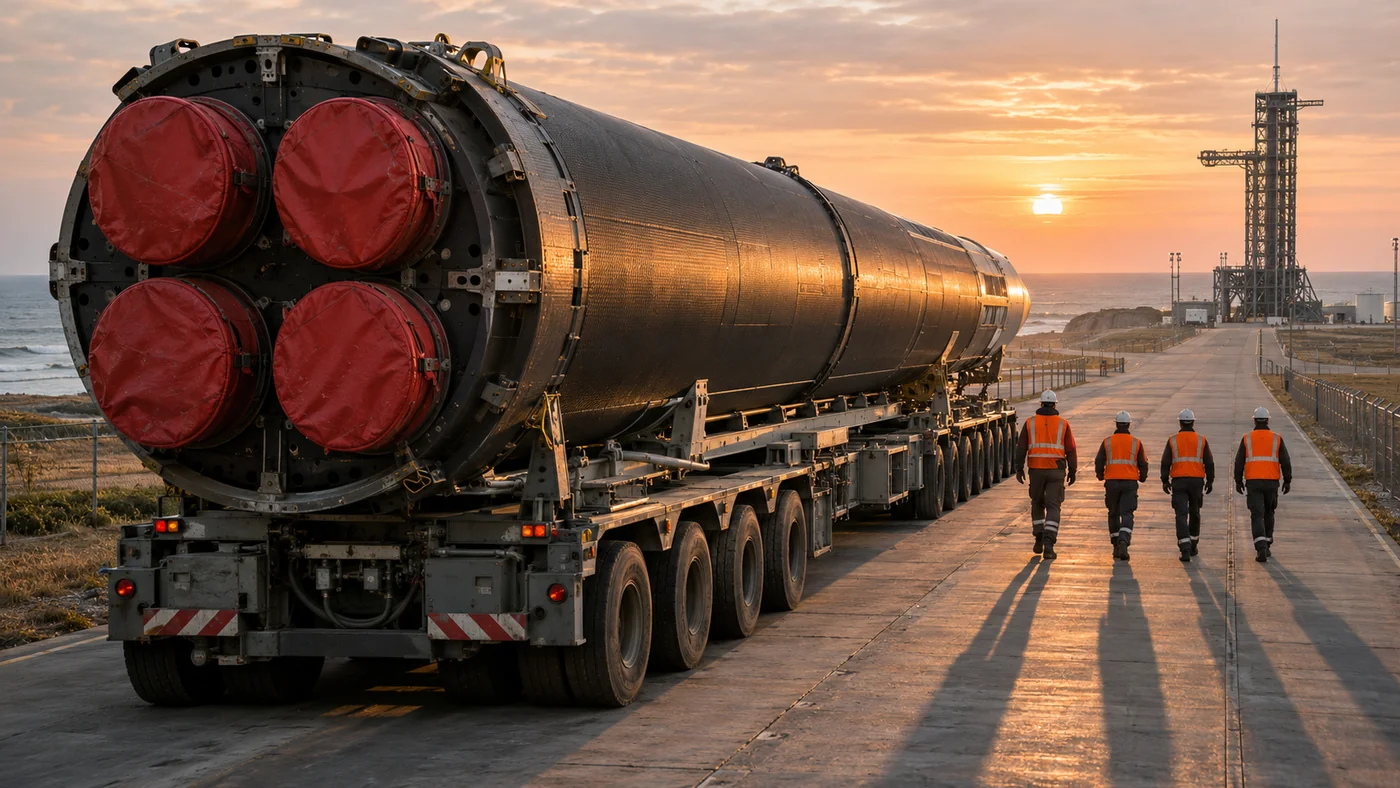
Neutron is a reusable rocket meant to carry up to 13,000 kg to low Earth orbit. It is much larger than Electron. Its first launch had not happened by the time of these results.
The deals were signed from July to September. On October 14, after the quarter ended, Rocket Lab said the first launch would move to 2027. StockTitan covered that change in Rocket Lab Pushes Neutron to 2027, Three Years Behind Plan.
The buyers are mostly companies that run groups of satellites, called constellations. ICEYE booked three launches starting in late 2028. Muon Space booked two, one in 2029 and one in 2030.
Starcloud, which plans data centers in space, booked one launch in 2029. Kepler Communications booked one. The U.S. Space Force booked one for a program that tracks moving targets from space.
Neutron now has 16 missions on its list. Rocket Lab says its next open launch slots are in the 2030s. It ties the price rise to tight launch capacity across the industry.
Revenue and margins against the August forecast
Revenue of $268 million came in above the $250 million to $265 million range Rocket Lab gave in August. It was $34 million more than in the second quarter.
Revenue rose 73% from a year earlier. Product revenue was $197.5 million, and service revenue was $70.3 million.
Gross margin is the share of revenue left after the direct cost of making and launching. On the adjusted basis Rocket Lab prefers, it was 38.4%. The August forecast was 35% to 37%.
Spending ran above plan. GAAP operating expenses were $169.3 million, against a forecast of $143 million to $149 million. They included $21.3 million of transaction costs.
Adjusted EBITDA, a profit measure that leaves out items such as stock pay and interest, was a loss of $18.0 million. That sits inside the forecast loss of $17 million to $23 million.
| Measure, Q3 2026 | Forecast in August | Result |
|---|---|---|
| Revenue | $250 million to $265 million | $267.8 million |
| Non-GAAP gross margin | 35% to 37% | 38.4% |
| GAAP operating expenses | $143 million to $149 million | $169.3 million |
| Non-GAAP operating expenses | $121 million to $127 million | $130.2 million |
| Adjusted EBITDA | Loss of $17 million to $23 million | Loss of $18.0 million |
Source: Rocket Lab second quarter 2026 results release (forecast, August 10, 2026) and third quarter 2026 results release (result, November 9, 2026).
Operations brought in cash for the quarter
Rocket Lab's operations brought in $7.2 million more cash than they used in the third quarter. Operating cash flow measures that, by the official GAAP accounting rules.
The year to date still shows cash going out. Over the first nine months of 2026, operations used $127.3 million. The release gives the quarter's figure only as a total, without its parts.
Customers often pay before the work is done, and that money counts as a contract liability. Rocket Lab's contract liabilities stood at $423.6 million at the end of September, against $195.4 million at the end of 2025.
The company holds a large cash pile. Cash and cash equivalents were $4.45 billion, up from $828.7 million at the end of 2025. Most of it came from selling new shares, which raised $3.91 billion in nine months.
Rocket Lab says that share sale fully funds its pending purchase of Iridium Communications. Iridium shareholders have approved the deal.
Why the net loss grew
The net loss was $79.7 million, or $0.12 a share, against $18.3 million, or $0.03 a share, a year earlier.
Two items explain much of the gap. This quarter held a $27.3 million loss on extinguishment of debt, a charge for paying off debt early. Convertible notes on the balance sheet fell to $1.3 million, from $152.4 million at the end of 2025.
A year earlier, Rocket Lab booked a $41.1 million tax benefit, which shrank that quarter's loss. This quarter it paid a $3.5 million tax charge instead.
Interest income helped. Rocket Lab earned $28.6 million on its cash, against $6.7 million a year earlier.
Rocket Lab's forecast for the fourth quarter
Rocket Lab expects revenue of $270 million to $290 million for October to December. The whole range sits above the third quarter's record.
It expects adjusted gross margin of 39% to 41%, up from 38.4% in the third quarter.
On the GAAP basis, the gross margin forecast is 34% to 36%.
It forecasts an adjusted EBITDA loss of $14 million to $20 million. It expects net interest income of $45 million.
Rocket Lab holds its call with analysts on November 9, 2026, at 5:00 p.m. ET, with a webcast on its investor relations site.
Frequently asked questions
What was Rocket Lab's revenue in Q3 2026?
Rocket Lab reported record revenue of $268 million for the third quarter of 2026, up 73% from a year earlier and above its forecast of $250 million to $265 million.
How big is Rocket Lab's backlog?
The backlog was about $3.57 billion at the end of September 2026, up 52% from $2.36 billion at the end of June. It includes 117 launches.
Did customers still sign for Neutron?
Yes. Rocket Lab signed eight Neutron launches worth more than $515 million in the third quarter, from ICEYE, Muon Space, Starcloud, Kepler Communications and the U.S. Space Force. The deals came before the October 14 news that the first launch moved to 2027.
What did Rocket Lab earn per share in Q3 2026?
Rocket Lab reported a net loss of $0.12 per share, or $79.7 million, against a loss of $0.03 per share a year earlier.
What is Rocket Lab's Q4 2026 guidance?
Rocket Lab expects revenue of $270 million to $290 million, adjusted gross margin of 39% to 41% and an adjusted EBITDA loss of $14 million to $20 million.
Sources
- Rocket Lab Announces Third Quarter 2026 Financial Results, StockTitan
- Rocket Lab third quarter 2026 results release, GlobeNewswire
- Rocket Lab Lands Over $515M in Neutron Launch Deals from Constellation Operators in Q3, GlobeNewswire
- Rocket Lab Form 8-K, November 9, 2026, SEC
- Rocket Lab investor relations
The information provided in this article is for educational and informational purposes only. It does not constitute financial advice, investment recommendation, or an endorsement of any particular investment strategy. Past performance does not guarantee future results. Investors should conduct their own research and consult with a qualified financial advisor before making investment decisions.