
AC Immune Presents New Phase 1 Data Indicating Higher Uptake of TDP-43 PET Tracer ACI-19626 in Patients with ALS
AC Immune (NASDAQ: ACIU) reported new preliminary Phase 1 data for its first-in-class TDP-43 PET tracer ACI-19626, showing significantly higher tracer uptake in key brain regions of amyotrophic lateral sclerosis (ALS) patients versus healthy controls.
Rhea-AI Summary
AC Immune (NASDAQ: ACIU) reported new preliminary Phase 1 data for its first-in-class TDP-43 PET tracer ACI-19626, showing significantly higher tracer uptake in key brain regions of amyotrophic lateral sclerosis (ALS) patients versus healthy controls.
The tracer previously showed higher uptake in genetically defined frontotemporal dementia (FTD). ACI-19626 is described as safe and well tolerated, with rapid brain uptake and washout and dosimetry within accepted limits, supporting its potential use for human brain imaging and precision medicine approaches across TDP-43 proteinopathies.
Positive
- Higher ACI-19626 uptake in ALS brain stem and precentral gyrus versus controls
- Previously observed higher tracer uptake in disease-relevant regions in genetic FTD
- Phase 1 data indicate good safety, tolerability, and dosimetry within accepted limits
- Rapid brain uptake and washout suggest pharmacokinetics suitable for human brain imaging
- Ongoing Phase 1 trial expansion may include up to 30 FTD, ALS or LATE patients
- Company highlights potential for early diagnosis and precision medicine in TDP-43 proteinopathies
Negative
- Reported findings are preliminary Phase 1 data, not confirmatory clinical results
- Post-hoc expert analysis is for informational purposes only and not official final data
Details
News Market Reaction – ACIU
In the May 22 session, ACIU declined 0.70%, reflecting a mild negative market reaction.
Data tracked by StockTitan Argus on the day of publication.
Key Figures
- Trial phase
- Phase 1
- First-in-human trial of TDP-43 PET tracer ACI-19626
- Part 2 planned enrollment
- up to 30 patients
- Part 2 expansion may include up to 30 FTD, ALS or LATE patients
- ClinicalTrials.gov ID
- NCT06891716
- Identifier for ongoing Phase 1 ACI-19626 study
- Event year
- 2026
- Data presented at 2026 TDP43 Summit in Madison, Wisconsin
Previous Clinical trial Reports
-
First in vivo PET images of TDP-43 pathology using ACI-19626.
-
First participant dosed in Phase 1 trial of NLRP3 inhibitor ACI-19764.
-
Positive interim Phase 2 data for ACI-7104.056 in early Parkinson’s disease.
-
Further positive interim Phase 2 results for ACI-7104.056 in Parkinson’s.
-
Interim Phase 1b/2 ABATE safety data for ACI-24.060 in Down syndrome.
24h Move is the share-price change in the day after each event; other market factors may also have contributed.
Key Terms
positron emission tomography medical
pet tracer medical
amyotrophic lateral sclerosis medical
frontotemporal dementia medical
dosimetry medical
pharmacokinetic (pk) medical
AI-generated analysis. How Rhea-AI works. Not financial advice.




AC Immune Presents New Phase 1 Data Indicating Higher Uptake of TDP-43 PET Tracer ACI-19626 in Patients with ALS
- Presentation at 2026 TDP43 Summit shows ACI-19626 detects TDP-43 pathology in patients with amyotrophic lateral sclerosis (ALS)
- Previously reported data also showed detection of TDP-43 in patients with genetically defined frontotemporal dementia (FTD)
- Underlines potential for precision medicine enabling early diagnosis and intervention in multiple neurodegenerative diseases
Lausanne, Switzerland, May 22, 2026 -- AC Immune SA (NASDAQ: ACIU), a clinical-stage biopharmaceutical company pioneering precision therapeutics for neurodegenerative diseases, today announced the presentation of new preliminary data from a Phase 1 trial of its first-in-class TDP-43 positron emission tomography (PET) tracer ACI-19626 showing increased uptake in the brains of patients with amyotrophic lateral sclerosis (ALS).
The results presented at the 2026 TDP43 Summit in Madison, Wisconsin, demonstrate that PET scans with ACI-19626 showed tracer uptake significantly higher in key regions of the brain in patients with ALS compared to healthy controls. Specifically, tracer uptake was higher in the brain stem (* see image below) and precentral gyrus, where TDP-43 pathology is expected to accumulate based on post-mortem neuropathology studies and on clinical symptoms. Previously reported data showed significantly higher tracer uptake in disease-relevant subcortical and cortical regions in patients with genetic frontotemporal dementia (FTD).
ACI-19626 continues to show good safety and tolerability, a dosimetry profile within accepted limits, and rapid brain uptake and washout, indicating a pharmacokinetic (PK) profile suitable for human brain imaging and potentially pharmacodynamic analysis of therapeutics targeting TDP-43 pathology.
Dr. Andrea Pfeifer, CEO of AC Immune SA, commented: “These data in ALS patients provide further evidence of ACI-19626’s potential to detect pathological TDP-43 in the brains of patients with TDP-43 proteinopathies. Early diagnosis is essential for early intervention, and the data generated so far on ACI-19626 further underline the promise of the AC Immune pipeline and our technology to enable a precision medicine approach to multiple neurodegenerative diseases.”
The ongoing Phase 1, first-in-human trial (Clinicaltrials.gov: NCT06891716) has two parts. Part 1 investigating ACI-19626 in healthy volunteers and patients with genetic FTD is completed. The Part 2 expansion has started and may include up to 30 patients with FTD, ALS or LATE.
The 2026 Summit Advancing TDP43 Biomarkers is hosted by the University of Wisconsin–Madison and the Wisconsin Alzheimer’s Disease Research Center’s (ADRC) Consortium for Clarity in ADRD Research Through Imaging (CLARiTI).
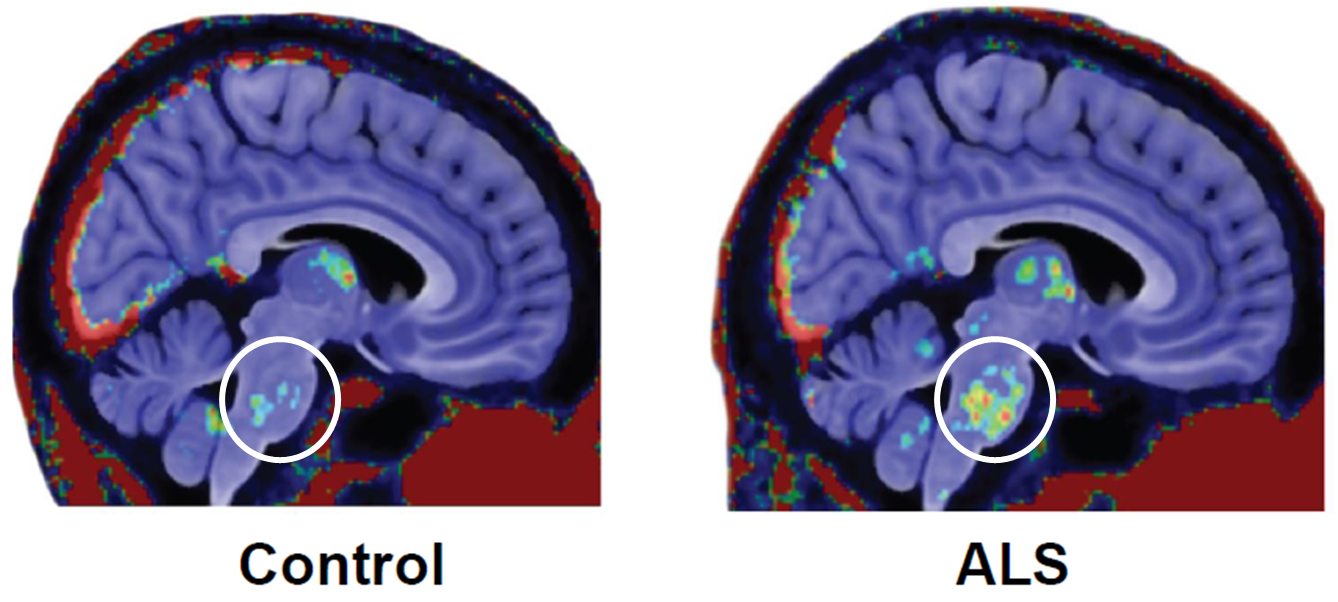
* Post-hoc analysis from expert third-party independent of the study (for informational purposes only and does not constitute official, final data)
About TDP-43
TDP-43 is the main component in inclusions found in the brains of people with FTD, ALS and limbic-predominant age-related TDP-43 encephalopathy (LATE), as well as a co-pathology in Alzheimer’s disease (AD) and Parkinson’s disease (PD). These conditions share many of the same clinical signs and symptoms, making differential diagnosis a difficult and lengthy process in the absence of reliable biomarkers.
About AC Immune SA
AC Immune SA is a clinical-stage biopharmaceutical company and a global leader in precision prevention for neurodegenerative diseases, including Alzheimer’s disease, Parkinson’s disease, and NeuroOrphan indications driven by misfolded proteins. The Company’s two clinically validated technology platforms, SupraAntigen® and Morphomer®, fuel its pipeline of first- and best-in-class assets, which currently features a range of therapeutic and diagnostic programs, including candidates in Phase 2 and Phase 3 development. AC Immune has a strong track record of securing strategic partnerships with leading global pharmaceutical companies, resulting in substantial non-dilutive funding to advance its proprietary programs and >
SupraAntigen® is a registered trademark of AC Immune SA in the following territories: AU, EU, CH, GB, JP, RU, SG and USA. Morphomer® is a registered trademark of AC Immune SA in CA, CN, CH, EU, GB, JP, KR, NO, RU and SG.
The information on our website and any other websites referenced herein is expressly not incorporated by reference into, and does not constitute a part of, this press release.
For further information, please contact:
| SVP, Investor Relations & Corporate Communications Gary Waanders, Ph.D., MBA AC Immune Phone: +41 21 345 91 91 Email: gary.waanders@acimmune.com | |
| International Media Chris Maggos Cohesion Bureau Phone: +41 79 367 6254 Email: chris.maggos@cohesionbureau.com |
Forward looking statements
This press release contains statements that constitute “forward-looking statements” within the meaning of Section 27A of the Securities Act of 1933 and Section 21E of the Securities Exchange Act of 1934. Forward-looking statements are statements other than historical fact and may include statements that address future operating, financial or business performance or AC Immune’s strategies or expectations. In some cases, you can identify these statements by forward-looking words such as “may,” “might,” “will,” “should,” “expects,” “plans,” “anticipates,” “believes,” “estimates,” “predicts,” “projects,” “potential,” “outlook” or “continue,” and other comparable terminology. Forward-looking statements are based on management’s current expectations and beliefs and involve significant risks and uncertainties that could cause actual results, developments and business decisions to differ materially from those contemplated by these statements. These risks and uncertainties include those described under the captions “Item 3. Key Information – Risk Factors” and “Item 5. Operating and Financial Review and Prospects” in AC Immune’s Annual Report on Form 20-F and other filings with the Securities and Exchange Commission. Forward-looking statements speak only as of the date they are made, and AC Immune does not undertake any obligation to update them in light of new information, future developments or otherwise, except as may be required under applicable law. All forward-looking statements are qualified in their entirety by this cautionary statement.
Attachment

FAQ
AI-generated questions and answers. How Rhea-AI works. Not financial advice.