
Ballard FCmove®-SC fuel cell engine makes series-production debut in next-generation Solaris Urbino 12 hydrogen bus
The companies have extended their long-term supply agreement and broadened their cooperation on hydrogen buses.
Sentiment and the balance of points
Rhea-AI Sentiment reads the wording of the document, how positive or negative its language is on a 1 to 5 scale. The balance of points shown with the takes weighs what the document actually discloses, so the two can disagree, for example when a trial that missed its main goal is described in upbeat language.
Rhea-AI Summary
Ballard Power Systems (BLDP) announced that its FCmove-SC fuel cell engine will make its series-production debut in Solaris's new-generation Urbino 12 hydrogen bus. The planned integration follows an extension of the companies' long-term supply agreement and expands their cooperation.
The engine is designed for city transit operations, with integrated power controls and a compact layout. Ballard says the design aims to simplify vehicle integration and servicing while reducing lifecycle costs. Its Fleet360 service offers monitoring and maintenance support, with availability and coverage agreed separately for individual fleets in coordination with the vehicle manufacturer.
How this balance works
Rhea-AI gives every point it takes from this document a weight. Minor counts 1, Moderate 3 and Major 9, so one Major point outweighs several Minor ones. The bar adds up the weights on each side, and when neither side holds more than 65% of the total the balance reads Mixed.
It reads the document as published, with the same rules for every company, and it does not look at what the market expected or at how the stock traded, so a point can be objectively good on a day the stock falls.
Rhea-AI Sentiment measures something else, the tone of the wording.
Hollow bars mark forward-looking points. How the balance works
Positive
- Moderate pointLong-term supply agreement extension broadens Ballard's cooperation with Solaris.
- Minor point. Forward-looking: it has not happened yet and may not happen.Solaris integration will mark the FCmove-SC engine's series-production debut in the new-generation Urbino 12 hydrogen bus.
Negative
- None.
News Explained
Ballard reports a
AI-generated analysis. How Rhea-AI works. Not financial advice.


New purpose-built hydrogen bus platform and transit fuel cell engine combine compact design, improved performance and tailored service support to lower lifecycle costs for public transit operators.
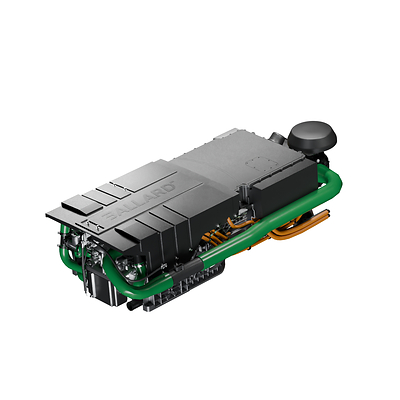
Designed for city transit duty cycles, the FCmove®-SC combines efficient power generation with a compact architecture that simplifies vehicle integration and servicing when in operation. Its design draws on Ballard's extensive operating experience to help manufacturers and operators improve performance and reduce lifecycle costs.
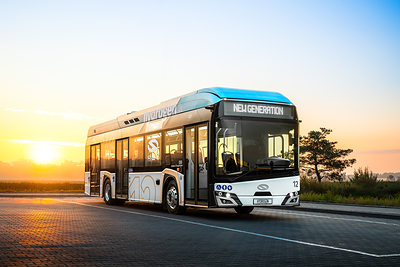
"The FCmove®-SC's first integration into series production brings our latest fuel cell technology into Solaris's new bus platform designed around everyday operational needs," said Oben Uluc, Chief Revenue Officer, Ballard Power Systems. "For manufacturers, that means simpler integration and greater design flexibility. For operators, it means efficiency, serviceability and long-term value - making hydrogen buses an increasingly competitive option for zero-emission public transport."
A new vehicle architecture for hydrogen-powered transit
The new-generation Solaris Urbino 12 hydrogen is built on the unified platform shared by the latest Urbino buses. Removing the conventional engine tower creates space for additional rear seating, while the flexible positioning of roof-mounted components improves service access.
The fuel cell serves as the bus's primary energy source, generating electricity for a centrally mounted traction motor. A supporting traction battery supplies additional power during peak demand and stores energy recovered through regenerative braking.
Fuel cell innovation focused on lifecycle value
The FCmove®-SC introduces several improvements for bus manufacturers and operators:
- More power in a compact package: A
57% increase in volumetric power density through integrated DC/DC packaging. - Simpler vehicle integration: An internal DC/DC converter and power controller reduce external interfaces and consolidate functionality.
- Improved thermal management: Maximum radiator outlet temperature increases from 60°C to 75°C, supporting reduced cooling requirements and greater use of waste heat for cabin heating.
- Easier servicing: A
40% reduction in total part count simplifies the system and helps reduce maintenance requirements. - Enhanced safety: Revised internal stack-enclosure geometry provides passive protection against hydrogen-related risks.
The FCmove®-SC delivers up to 80kW of rated power and
Building on hydrogen bus leadership
As the leading supplier of fuel cell engines for transit vehicles, Ballard has powered more than 2,500 fuel cell buses worldwide, collectively exceeding 300 million kilometres of operation. This experience informs product development and support for manufacturers and fleet operators.
Supporting fleets throughout their operating life
Alongside its fuel cell products, Ballard offers lifecycle support through Ballard Fleet360°. The service offering combines remote performance monitoring, data analytics, maintenance planning and service expertise to help customers anticipate service needs, reduce unplanned downtime and manage fleet performance. Fleet360° availability and coverage are agreed separately for individual fleets in coordination with the vehicle manufacturer.
Ballard's capabilities extend beyond fuel cell engines to include hydrogen production, logistics, refuelling and integrated Energy-as-a-Service solutions. These expanded capabilities strengthen Ballard's ability to provide the technology, services and hydrogen solutions customers need to deploy and operate zero-emission fleets at scale.
About Ballard Power Systems
Ballard Power Systems (NASDAQ: BLDP; TSX: BLDP) is a global leader in zero-emission hydrogen energy solutions and an integrated Energy-as-a-Service (EaaS) provider. Together, with its wholly owned subsidiary, GeoPura Ltd., Ballard delivers turnkey, vertically integrated hydrogen ecosystem solutions spanning hydrogen production, logistics, refuelling, zero-emission fuel cell engines, and stationary Hydrogen Power Units.
Ballard powers critical off-grid, stationary applications – including construction, events, film sets, healthcare, defense, temporary power infrastructure, and supplies fuel cell engines for heavy-duty mobility applications such as bus, rail, and marine. With an EaaS model, combined with cutting-edge technology across the hydrogen value chain, Ballard decarbonizes mission-critical operations worldwide. To learn more about Ballard, visit www.ballard.com.
This release contains forward-looking statements concerning anticipated product and service attributes, product deliveries, and deployments. These forward-looking statements reflect Ballard's current expectations as contemplated under section 27A of the Securities Act of 1933, as amended, and Section 21E of the Securities Exchange Act of 1934, as amended. Any such forward-looking statements are based on Ballard's assumptions relating to its financial forecasts and expectations regarding its product development efforts, manufacturing capacity, and market demand.
These statements involve risks and uncertainties that may cause Ballard's actual results to be materially different, including general economic and regulatory changes, detrimental reliance on third parties, successfully achieving our business plans and achieving and sustaining profitability. For a detailed discussion of these and other risk factors that could affect Ballard's future performance, please refer to Ballard's most recent Annual Information Form. Readers should not place undue reliance on Ballard's forward-looking statements and Ballard assumes no obligation to update or release any revisions to these forward-looking statements, other than as required under applicable legislation.
Further Information
Sumit Kundu – Investor Relations, +1.604.360.9714 or investors@ballard.com
 View original content to download multimedia:https://www.prnewswire.com/news-releases/ballard-fcmove-sc-fuel-cell-engine-makes-series-production-debut-in-next-generation-solaris-urbino-12-hydrogen-bus-302930349.html
SOURCE Ballard Power Systems Inc.
FAQ
AI-generated questions and answers. How Rhea-AI works. Not financial advice.
Which bus will use Ballard's FCmove-SC engine in series production?
Ballard's FCmove-SC will make its series-production debut in the new-generation Solaris Urbino 12 hydrogen transit bus. The integration follows an extension of Ballard and Solaris's long-term supply agreement.