
BP Silver Corp. Returns 1,328 g/t Silver Equivalent over 3.0 Meters at Pocañita Chica Target - Discovers Significant Feeder Structure
The silver-equivalent calculation uses metal recovery assumptions from a separate project rather than Cosuño-specific recoveries.
Sentiment and the balance of points
Rhea-AI Sentiment reads the wording of the document, how positive or negative its language is on a 1 to 5 scale. The balance of points shown with the takes weighs what the document actually discloses, so the two can disagree, for example when a trial that missed its main goal is described in upbeat language.
Rhea-AI Summary
BP Silver (BPSCF) reported initial Phase 2 drill assays from its Cosuño silver project in Bolivia, led by hole CO-0013.
At the Pocañita Chica target, CO-0013 returned 1,328.8 grams per tonne silver equivalent (AgEq) over 3.0 meters, comprising 314.3 g/t silver, 2.62% bismuth and 0.74% antimony. That interval sits within 7.0 meters at 634.1 g/t AgEq and 74.0 meters at 82.3 g/t AgEq. CO-0012 returned 37.0 meters at 27.3 g/t silver and 39.3 g/t AgEq. Results from the two holes extend across approximately 450 meters of strike at Pocañita Chica.
BP Silver has completed 19 Phase 2 holes totaling 2,289.7 meters; assays for 17 are pending, and at least eight more holes remain to be drilled. A magnetic survey covering approximately 37.54 square kilometers is complete, while an induced polarization survey is underway. The reported intervals are core lengths, not confirmed true widths.
How this balance works
Rhea-AI gives every point it takes from this document a weight. Minor counts 1, Moderate 3 and Major 9, so one Major point outweighs several Minor ones. The bar adds up the weights on each side, and when neither side holds more than 65% of the total the balance reads Mixed.
It reads the document as published, with the same rules for every company, and it does not look at what the market expected or at how the stock traded, so a point can be objectively good on a day the stock falls.
Rhea-AI Sentiment measures something else, the tone of the wording.
Hollow bars mark forward-looking points. How the balance works
Positive
- Major pointCO-0013 returned 1,328.8 g/t AgEq over 3.0 meters, including 314.3 g/t silver.
- Moderate pointCO-0012 returned 27.3 g/t silver and 39.3 g/t AgEq over 37.0 meters.
- Minor pointCO-0013 also returned 634.1 g/t AgEq over a broader 7.0-meter interval.
- Minor pointCO-0013 returned 82.3 g/t AgEq across a still broader 74.0-meter interval.
- Minor pointPocañita Chica results span approximately 450 meters of strike.
3 minor points
- Minor point19 Phase 2 holes have been completed, totaling 2,289.7 meters.
- Minor pointJalsuri North surface samples identified anomalous silver mineralization.
- Minor pointMagnetic survey covering approximately 37.54 square kilometers is complete; an induced polarization survey is underway.
Negative
- Minor point. Forward-looking: it has not happened yet and may not happen.17 completed holes still await assay results, and at least eight more holes remain to be drilled.
- Minor pointTrue widths of the reported mineralized intervals have not yet been determined.
- Minor pointAgEq grades use recovery assumptions from another project, rather than measured recoveries at Cosuño.
- Minor pointCO-0008 and CO-0013 antimony values were capped pending re-assays; reported average grades and AgEq values are minimums.
- Minor pointPocañita Grande samples from the northern and southern ends returned relatively low silver values.
AI-generated analysis. How Rhea-AI works. Not financial advice.




Exploration Update Provided
Vancouver, British Columbia--(Newsfile Corp. - September 29, 2026) - BP Silver Corp. (TSXV: BPAG) (OTCQB: BPSCF) ("BP Silver" or the "Company") announces assay results from the first two drill holes of its Phase 2 drill program (the "Program") at the Cosuño Silver Project ("Cosuño") in Bolivia. To date, 19 drill holes have been completed, and additional assay results will be released as they become available.
HIGHLIGHTS
- Hole CO-0013 intersected a high-grade feeder structure grading 314.3 g/t silver,
2.62% bismuth and0.74% antimony over 3.0 m, equivalent to 1,328.8 g/t AgEq, within a broader 7.0 m interval grading 168.8 g/t silver,1.20% bismuth and0.35% antimony, equivalent to 634.1 g/t AgEq (Table 1 and Figure 1). - The high-grade silver-bismuth-antimony mineralization associated with the silver system, demonstrates the potential for multiple critical and strategic metal by-products at Cosuño.
The Company also reports that the high-resolution drone magnetic ("MAG") survey has been completed, covering approximately 37.5 km², and the induced polarization ("IP") survey has commenced. The geophysical surveys are designed to assist in identifying and refining additional mineralized structures and drill targets across the large silver-rich hydrothermal system.
Dr. Stewart D. Redwood, Director and Qualifying Person, stated: "The Pocañita Chica target continues to demonstrate high-grade silver mineralization within feeder structures occurring within broader intervals of silver mineralization. Hole CO-0013 is particularly significant, intersecting a three-meter feeder structure grading 1,328 g/t silver equivalent (AgEq), comprised of high-grade silver, bismuth and antimony. Within a lithocap system, feeder structures can represent important conduits for mineralizing hydrothermal fluids and may connect to broader vein systems at depth. Importantly, elevated bismuth and antimony were also identified in Phase 1 drilling at Cosuño, including in holes CO-0008 and CO-0009. The increasing silver grades observed down-hole in these holes and in the Pocañita Chica area are particularly encouraging and may potentially indicate that higher-grade mineralization continues down dip and at greater depth. Testing this possibility will be an important focus of the ongoing exploration program."
Dr. Redwood continued: "The high-grade bismuth and antimony encountered in CO-0013 are very significant as these metals may represent valuable by-products to the silver mineralization. Bismuth and antimony are classified as critical minerals by the United States government, the Canadian government, the European Union, and other jurisdictions. The world's only primary bismuth deposit, the Tasna bismuth deposit, is located approximately 65 kilometers southeast of the Cosuño Project, further highlighting the presence of significant bismuth mineralization within the broader regional geological setting."
Cosuño's Initial Phase 2 Results
Assay results from the first two drill holes, CO-0012 and CO-0013, continue to demonstrate silver, bismuth and antimony mineralization over approximately 450 meters ("m") of strike at the Pocañita Chica Target (Table 1 and Figure 2 and 3).
These assays provide further evidence of continuity of high-grade feeder structures along strike and highlight the potential significance of bismuth and antimony as critical and strategic metal by-products.
Tim Shearcroft, Founder and CEO, stated: "Hole CO-0013 is the best hole drilled to date at Cosuño. With 19 holes now completed and several more remaining as part of our expanded Phase 2 drill program, the potential at the Pocañita Chica Target and across the broader Cosuño system continues to be very encouraging. We look forward to testing this potential as drilling continues."
DETAIL
The Cosuño Project is an emerging silver-rich polymetallic discovery containing bismuth (Bi), and antimony (Sb). Locally there are enriched areas also containing indium (In), gold (Au), copper (Cu), lead (Pb), zinc (Zn) and tin (Sn). Polymetallic mineralization encountered by the Phase 1 drill program was previously reported in the Company's news releases dated February 2, 2026 and February 27, 2026.
Assay results have been received for the first two holes of the Program. Drill-holes CO-0012 and CO-0013 both drilled at the Pocañita Chica Target (Figure 2).
The most significant result was returned from CO-0013, which intersected 3.0 m @ 314.3 g/t Ag,
The mineralization occurs within a broader 74.0 m interval averaging 31.7 g/t Ag,
Hole CO-0012 intersected broad intervals of lower-grade silver mineralization, including 37.0 m @ 27.3 g/t Ag,
Notably, anomalous to highly anomalous bismuth and antimony were also encountered in holes CO-0008 and CO-0009 ranging from 0.17 to
| Hole No | From m | To m | Interval m | Ag g/t | Bi % | Sb % | AgEq g/t |
| CO-0012 | 9.5 | 46.5 | 37 | 27.3 | 0.0224 | 0.0202 | 39.3 |
| Inc | 16.5 | 21.5 | 5 | 41.6 | 0.0193 | 0.0220 | 52.4 |
| Inc | 39.5 | 42.5 | 3 | 48.5 | 0.0503 | 0.0710 | 85.8 |
| 59.5 | 89.5 | 30 | 25.6 | 0.0038 | 0.0072 | 27.6 | |
| Inc | 65.5 | 75.5 | 10 | 39.6 | 0.0048 | 0.0082 | 28.2 |
| And | 104.5 | 124.5 | 20 | 31 | 0.0031 | 0.0048 | 31.5 |
| 116.5 | 121.5 | 5 | 75.4 | 0.0067 | 0.0104 | 75.9 | |
| CO-0013 | 16 | 90 | 74 | 31.7 | 0.1317 | 0.0406 | 82.3 |
| Inc | 34 | 37 | 3 | 51.8 | 0.1067 | 0.0540 | 99.1 |
| Inc | 56 | 66 | 10 | 127.7 | 0.8635 | 0.2473 | 461.3 |
| Inc | 56 | 63 | 7 | 168.8 | 1.2014 | 0.3458 | 634.1 |
| Inc | 56 | 59 | 3 | 314.3 | 2.6213 | 0.7420 | 1328.8 |
Table 1. Significant intersections of Silver, Bismuth and Antimony
Notes to the table:
(1) Silver equivalent (AgEq) is calculated as follows:
AgEq = (Ag × Ag Recovery) + [Bi × Bi Recovery × (Bi Price / Ag Price)] + [Sb × Sb Recovery × (Sb Price / Ag Price)]
The calculation assumes recoveries of
(2) Metal prices used in the AgEq calculation are US
(3) Reported intervals represent core lengths. True widths have not yet been determined.
(4) Intersections calculated at cutoff grades of 10 g/t Ag with sub-intervals at 30, 60 and 90 g/t Ag. The intervals may include some internal dilution.
(5) The maximum antimony values reported in Holes CO-0008 and CO-0013 exceeds the upper ICP detection limit of 10,000 ppm. As re-assay results are not yet available, the values have been capped at 10,000 ppm (
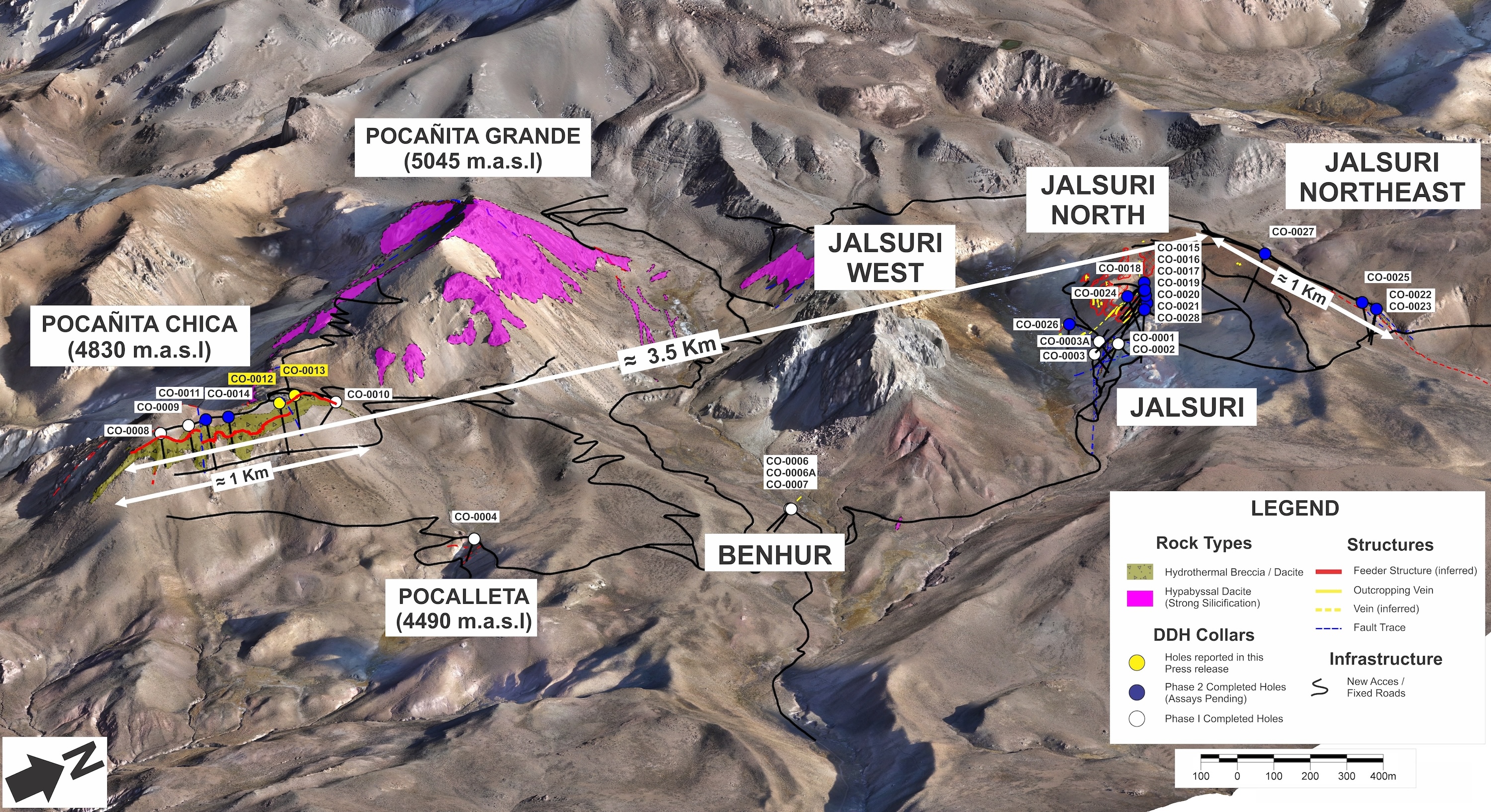
Figure 1. Cosuño Project 3D Plan View Map Showing Drill Collars
To view an enhanced version of this graphic, please visit:
https://images.newsfilecorp.com/files/11890/316496_figure%201.jpg
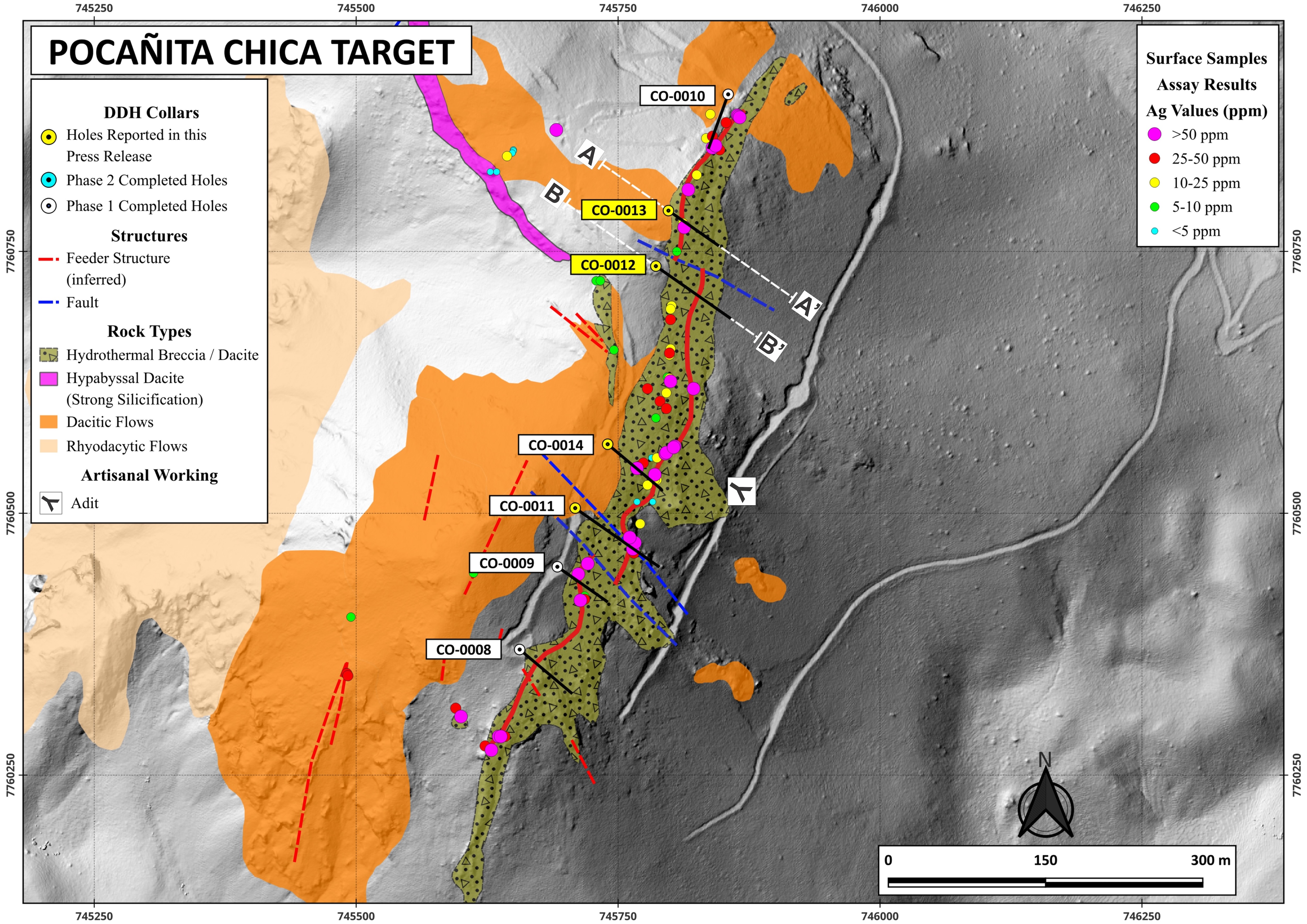
Figure 2. Pocañita Chica Plan Map Showing Cross-Section Lines
To view an enhanced version of this graphic, please visit:
https://images.newsfilecorp.com/files/11890/316496_figure%202.jpg
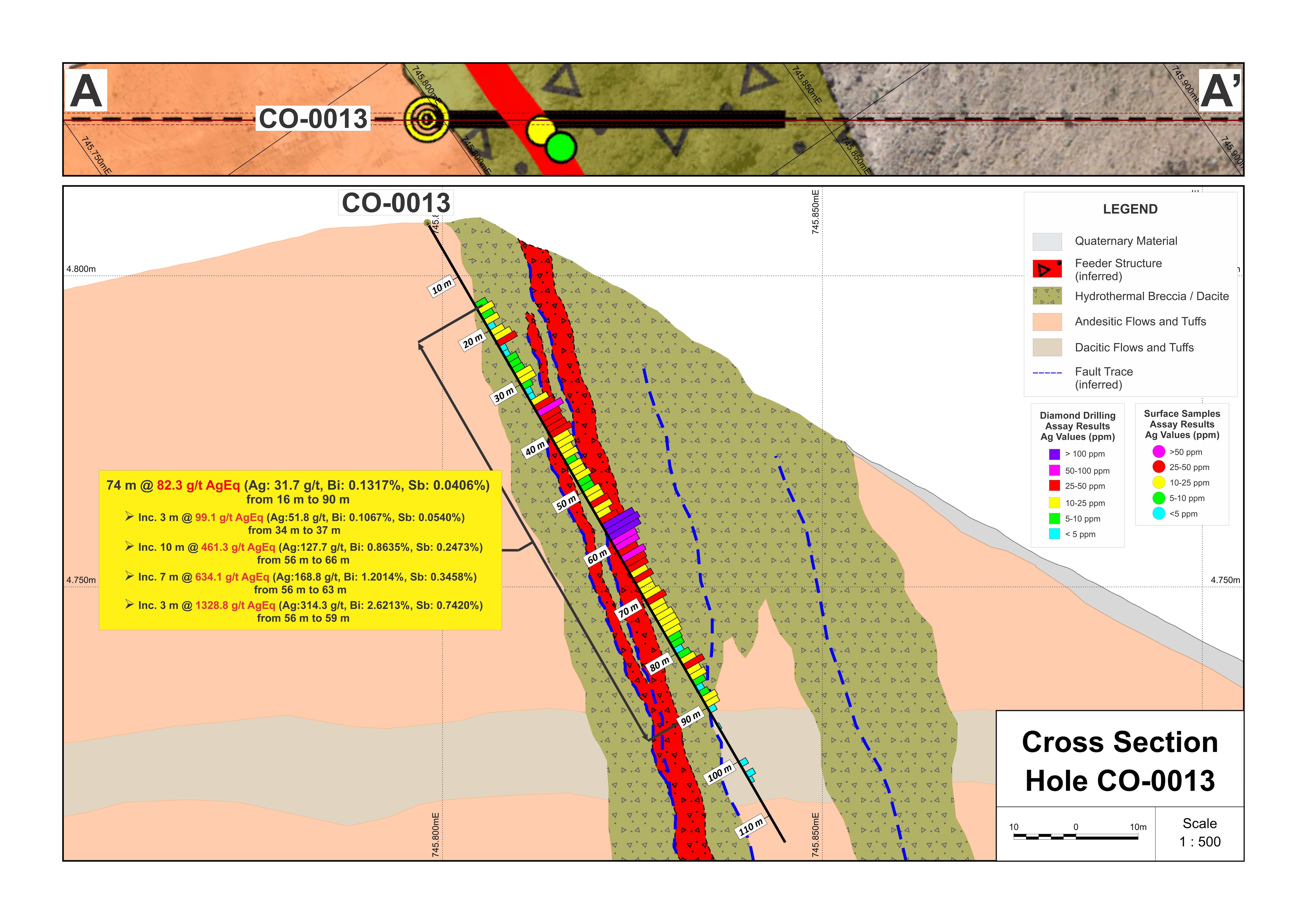
Figure 3. Cross-Section of Drill Hole CO-0013
To view an enhanced version of this graphic, please visit:
https://images.newsfilecorp.com/files/11890/316496_figure%203.jpg
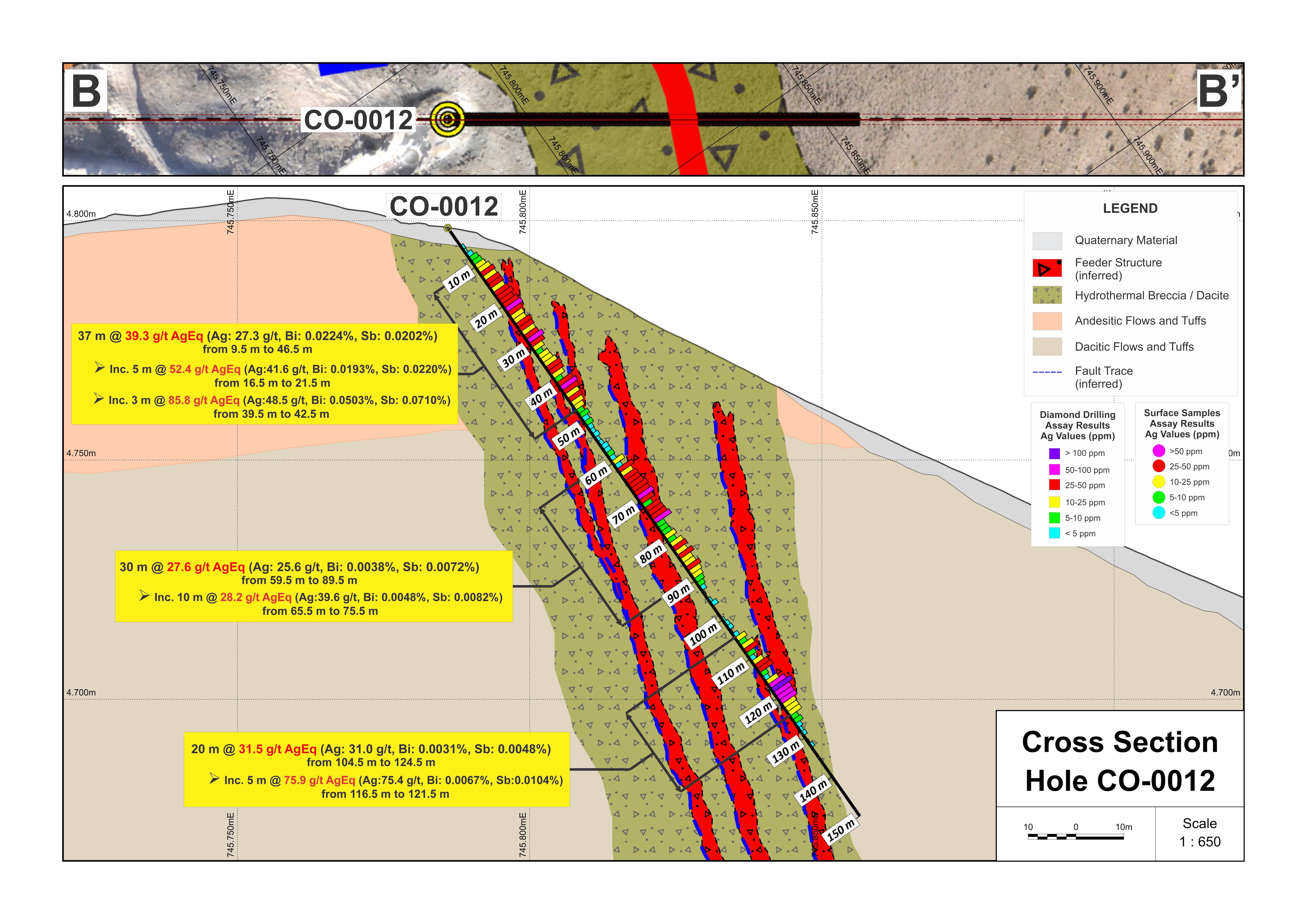
Figure 4. Cross-Section of Drill Hole CO-0012
To view an enhanced version of this graphic, please visit:
https://images.newsfilecorp.com/files/11890/316496_figure%204.jpg
Exploration Update
BP Silver has completed 19 drill holes totaling 2,289.7 m as part of the extended Phase 2 exploration program at Cosuño (Table 2). A minimum of eight additional drill holes remain to be completed under the current program, with drilling continuing to test and expand the mineralized structures identified to date.
In parallel with drilling, geological mapping and surface sampling continue across the project, while an IP geophysical survey is also underway. The Company has now completed its MAG survey, with the data currently being processed and interpreted. Results will be released once the analysis is complete.
Results from a total of 17 completed drill holes are currently pending and are expected to be released as they are received, reviewed and verified by the Company.
| Hole_ID | Target | Easting | Northing | Elevation | Azimuth (°) | Dip (°) | End of Hole |
| CO-0011 | Pocañita Chico | 745708 | 7760508 | 4759 | 125° | -50 | 150.5 |
| CO-0012 | Pocañita Chico | 745784 | 7760737 | 4769 | 125° | -50 | 150 |
| CO-0013 | Pocañita Chico | 745797 | 7760791 | 4778 | 125° | -50 | 115 |
| CO-0014 | Pocañita Chico | 745734 | 7760568 | 4756 | 130 ° | -50 | 105 |
| CO-0015 | Jalsuri North | 746997 | 7763060 | 4684 | 230° | -45 | 201 |
| CO-0016 | Jalsuri North | 746961 | 7763104 | 4680 | 235° | -50 | 100 |
| CO-0017 | Jalsuri North | 747015 | 7763025 | 4678 | 255° | -50 | 102 |
| CO-0018 | Jalsuri North | 746909 | 7763165 | 4684 | 225° | -50 | 102 |
| CO-0019 | Jalsuri North | 746933 | 7763131 | 4670 | 205° | -45 | 102 |
| CO-0020 | Jalsuri North | 746934 | 7763135 | 4670 | 205° | -60 | 150 |
| CO-0021 | Jalsuri North | 747016 | 7763027 | 4678 | 255° | -65 | 150 |
| CO-0022 | Jalsuri Northeast | 747492 | 7763451 | 4660 | 160° | -50 | 102 |
| CO-0023 | Jalsuri Northeast | 747492 | 7763451 | 4660 | 160° | -60 | 102 |
| CO-0024 | Jalsuri North | 746919 | 7763076 | 4677 | 25° | -70 | 150 |
| CO-0025 | Jalsuri Northeast | 747455 | 7763435 | 4668 | 125° | -50 | 110 |
| CO-0026 | Jalsuri | 746841 | 7762920 | 4619 | 150° | -60 | 98.2 |
| CO-0027 | Jalsuri Northeast | 747080 | 7763486 | 4726 | 180° | -50 | 150 |
| CO-0028 | Jalsuri North | 746922 | 7763090 | 4674 | 60° | -70 | 150 |
Table 2: Drill Holes Completed - Cosuño Project
Geochemistry Results
To date, the Company has collected a total of 699 surface samples across the project collected during ongoing geological mapping, as well as from newly exposed outcrops created during the construction of drill roads and drill pads.
The results have identified anomalous silver mineralization at the Jalsuri North target, supporting continued exploration of this area.
At Pocañita Grande, sampling to date has been limited to the northern and southern ends of the target, where silver values have been relatively low. Importantly, the main outcropping vein/breccia structures, consisting of zones of silicification and advanced-argillic alteration and which represent a key area of exploration and geologic interest, have not yet been sampled. Channel sampling will commence as soon as road access is completed, allowing the Company to systematically evaluate this previously unsampled portion of the target.
Geophysical Program Update
The high-resolution drone magnetic survey has been completed. In detail the survey covered a total of 375-line kilometers over an area of approximately 37.54 km² (3,754 hectares). The data is currently being processed and interpreted. It is anticipated that the finalized product will enable the exploration team to better define geological contacts, structural corridors, and the broader architecture of the large hydrothermal system.
The next stage of the geophysical program, which is a patented Arce Geofísicos Distributed Array System (AG-DAS) Induced Polarization survey which is in progress. The IP survey is expected to complement the magnetic dataset by providing additional information on the subsurface response of the principal structural and mineralized corridors. Importantly, the two methods provide different but complementary information: the MAG survey is helping to define the geological and structural architecture of the system, whereas the IP survey is expected to assist in identifying subsurface zones potentially associated with sulfides.
Qualified Person
The technical information contained in this news release has been reviewed and approved by Dr. Stewart D. Redwood, PhD, FIMMM, a Director of the Company and a Qualified Person as defined under National Instrument 43-101 - Standards of Disclosure for Mineral Projects. As Dr. Redwood is a director of the Company, he is not independent under National Instrument 43-101.
QA/QC
The work program was designed and supervised by Gonzalo Lemuz, P.Geo, the Company's Chief Operating Officer, who was responsible for all aspects of the work, including the Quality Assurance and Quality Control (QA/QC) program. On-site personnel at the Project rigorously collect and track samples which are then security sealed and shipped to ALS laboratory in Oruro for sample preparation. The core samples were prepared by ALS at their laboratory in Oruro, Bolivia and the sample pulps were shipped to their laboratory in El Callao, Peru for analysis. ALS is accredited to ISO/IEC 17025:2017 and ISO9001:2015. ALS is independent of BP Silver. Silver and multi-elements were analysed by aqua regia digestion and ICP-MS finish. Gold was analysed by fire assay and AA finish. BPAG inserted certified standard reference materials (CSRM), blanks and duplicates to monitor QAQC. All diamond drill holes were drilled in HQ diameter. The average core recovery was
About BP Silver Corp.
BP Silver Corp. is a Canadian exploration company focused on advancing high-grade silver projects in Bolivia. The Company's flagship asset, the Cosuño Project, is strategically located in the prolific Bolivian silver belt, a region with a rich mining history and significant untapped discovery potential. With a strong technical team and a disciplined exploration strategy, BP Silver is positioned to unlock value for its shareholders through the discovery and development of major silver deposits.
For further information please contact:
Tim Shearcroft, Chief Executive Officer
604-256-5096
Info@BPSilverCorp.com
Cautionary Statement Regarding Forward-Looking Information:
Information set forth in this news release contains forward-looking statements. These statements reflect management's current estimates, beliefs, intentions and expectations; they are not guarantees of future performance. The Company cautions that all forward-looking statements are inherently uncertain and that actual performance may be affected by a number of material factors, many of which are beyond the Company's control. Such factors include, among other things: future prices and the supply of silver and other precious and other metals; future demand for silver and other valuable metals; inability to raise the money necessary to incur the expenditures required to retain and advance the property; environmental liabilities (known and unknown); general business, economic, competitive, political and social uncertainties; results of exploration programs; risks of the mineral exploration industry; delays in obtaining governmental approvals; and failure to obtain necessary regulatory or shareholder approvals. There can be no assurance that such statements will prove to be accurate, as actual results and future events could differ materially from those anticipated in such statements. Accordingly, readers should not place undue reliance on forward-looking statements. The Company disclaims any intention or obligation to update or revise any forward-looking statements, whether as a result of new information, future events or otherwise, except as required by law.
NEITHER THE TSX VENTURE EXCHANGE NOR ITS REGULATION SERVICES PROVIDER (AS THAT TERM IS DEFINED IN POLICIES OF THE TSX VENTURE EXCHANGE) ACCEPTS RESPONSIBILITY FOR THE ADEQUACY OR ACCURACY OF THIS RELEASE.

To view the source version of this press release, please visit https://www.newsfilecorp.com/release/316496
FAQ
AI-generated questions and answers. How Rhea-AI works. Not financial advice.