
STOCK TITAN

Bruker Introduces iNTApharma™, a Label‑Free Platform for Nanoparticle Characterization in mRNA Drug and Gene Therapy Development and QC

Rhea-AI Impact
(Moderate)
Rhea-AI Sentiment
(Very Positive)
Tags

Key Terms

nanoparticle tracking analysis technical
A laboratory method that visualizes and measures tiny particles in a liquid by tracking their movement under a microscope, similar to watching dust motes drift in a sunbeam to judge how many there are and how big they are. Investors care because the technique provides objective counts and sizes for nanomaterial-based products or medicines, affecting quality control, manufacturing consistency, regulatory approval, and the credibility of product claims—factors that influence commercial value and risk.
extracellular vesicle medical
Tiny, membrane-bound particles that cells release to carry proteins, genetic material and other molecules to nearby or distant cells; think of them as sealed biological messages or parcels sent by cells. They matter to investors because they are being developed as new diagnostic markers, drug-delivery systems and therapeutic products — a platform technology with potential for recurring revenue, partnerships, and regulatory milestones that can drive company value.
adenovirus medical
Adenovirus is a family of viruses that commonly cause mild respiratory or eye infections and is also used in medicine as a delivery vehicle to carry genes or vaccine material into cells. Investors monitor developments involving adenoviruses because safety signals, clinical trial results, or regulatory decisions tied to therapies and vaccines that use them can quickly change a company's perceived risks and potential market value—like whether a delivery truck arrives intact determines whether goods reach buyers.
lentiviral vector medical
A lentiviral vector is a laboratory-modified virus used to deliver therapeutic genes into cells, acting like a tiny postal service that inserts new instructions into target cells so they can produce missing or corrected proteins. Investors care because these vectors are a key delivery tool in many gene and cell therapies; their safety, efficiency, manufacturing scalability, and regulatory approval can make or break a treatment’s commercial potential.
lipid nanoparticle medical
A lipid nanoparticle is a tiny, fat‑based microscopic shell that carries and protects delicate molecules (like RNA or drugs) and helps them enter cells, similar to a microscopic delivery bubble. It matters to investors because this delivery method can make new therapies and vaccines possible or more effective, but also affects manufacturing complexity, scalability, regulatory review and cost — all of which influence a biotech company’s commercial prospects.
interferometric scattering technical
Interferometric scattering is an optical sensing method that detects tiny particles or molecules by comparing light they scatter with a reference light beam, amplifying very small signals so otherwise invisible objects become measurable. Investors should care because it enables highly sensitive, label-free detection for diagnostics, drug discovery, and materials research—so companies that build or use this tool can gain advantages in early-stage testing, faster development cycles, and specialty instrument markets.
iscat microscopy technical
iSCAT microscopy is an optical imaging technique that detects tiny particles or single molecules by measuring how they scatter light and interfere with a reference beam, allowing researchers to see and track objects too small for ordinary microscopes. For investors, it matters because this label-free, highly sensitive method can speed up drug discovery, improve diagnostic tests, and enable new lab instruments that companies can commercialize, potentially creating revenue and competitive advantage.

New iNTApharma system enables rapid, native‑state size and concentration measurements with single‑particle sensitivity for viral, vesicle, and nanoscale bioparticle workflows
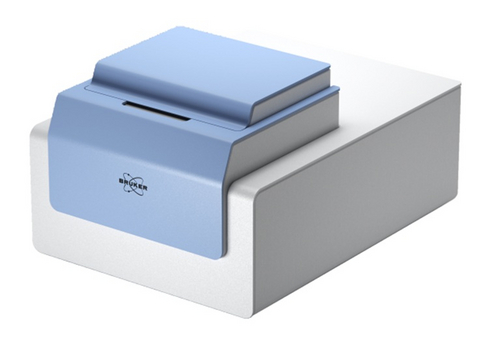
BILLERICA, Mass.--(BUSINESS WIRE)-- Bruker Corporation today announced the launch of iNTApharma, a label‑free characterization platform that provides single‑particle sensitivity for the quantitative analysis of nanoscale bioparticles in native aqueous media. Introduced at SLAS 2026 in Boston, iNTApharma delivers size and concentration measurements within minutes, supporting research, therapy development and quality control workflows that require direct, native‑state assessment of bio-nanoparticle populations without labeling or chemical modifications.

Bruker’s iNTApharma system offers label-free, native characterization of vectors used in gene and cell therapy, and of LNPs used in mRNA drug delivery

Bruker’s iNTApharma system offers label-free, native characterization of vectors used in gene and cell therapy, and of LNPs used in mRNA drug delivery

Quantitative characterization of bioparticles under native buffer conditions is increasingly important in areas such as extracellular vesicle (EV) research, adenovirus (AdV and AAV) development, lentiviral vector analysis, and lipid nanoparticle (LNP) formulation for nucleic‑acid delivery. Native‑state nanoparticle tracking analysis (NTA) is becoming a requirement in biopharma quality control (QC), where reliable assessment of particle size distributions, concentration levels, and subpopulations is essential for process consistency. As mRNA drug development, as well as cell and gene therapy development expand at double‑digit growth rates, demand is increasing for high‑precision, native‑state characterization of viral vectors, LNPs, and other nanoscale bioparticles. iNTApharma addresses these needs through native-state, unlabeled measurements that support analysis across diverse biological matrices.

Optimized for bioparticles from 50 to 300 nanometers, iNTApharma provides measurement conditions well‑suited for lipid nanoparticles, lentiviral vectors, adenoviruses, and extracellular vesicles. The system enables analysis of heterogeneous samples, including the resolution of subpopulations within mixtures. Its built‑in well‑plate reader functionality supports unattended and automated acquisition of datasets in standard laboratory workflows, without specialized sample preparation steps.

iNTApharma builds on optical measurement approaches developed at the Max-Planck-Institute for the Science of Light (MPL) in Erlangen, Germany, which are also used in mass photometry (MP). The platform translates advanced interferometric scattering (iSCAT) detection methods into accessible instrumentation for research, therapy development and QC environments.

“The technology is based on iSCAT microscopy, which has been used in a wide range of quantitative label‑free investigations with single‑molecule sensitivity,” said Prof. Vahid Sandoghdar, Director at the MPL, Germany. “iNTApharma makes these capabilities broadly available and provides researchers with a tool that can deepen our understanding of nanoscale bioparticles.”

“Native‑state, quantitative analysis of lipid nanoparticles, lentiviral vectors, and vesicle‑scale bioparticles is a growing need across biopharma and translational research,” said Jürgen Srega, the President of the Bruker CALID Group. “With iNTApharma, we are introducing a fundamentally new tool that enables precise nanoparticle and bioparticle characterization for mRNA delivery, EV biology, gene therapy development, and nanoscale formulation science.”

Initial systems will be placed with early‑access partners in the first half of 2026 to validate workflows under real‑world conditions. Broader commercial availability is planned for H2 of 2026.

About Bruker Corporation – Leader of the Post-Genomic Era (Nasdaq: BRKR)

Bruker is enabling scientists and engineers to make breakthrough post-genomic discoveries and develop new applications that improve the quality of human life. Bruker’s high-performance scientific instruments and high value analytical and diagnostic solutions enable scientists to explore life and materials at molecular, cellular, and microscopic levels. In close cooperation with customers, Bruker is enabling innovation and customer success in post-genomic life science molecular and cell biology, in disease biology and translational research, in specialty diagnostics, in applied and biopharma applications, as well as in industrial and cleantech research and QC, and in next-gen semiconductor metrology in support of AI. Bruker offers differentiated, high-value life science and diagnostics systems and solutions in preclinical imaging, clinical phenomics research, proteomics and multiomics, spatial and single-cell biology, functional structural and condensate biology, as well as in clinical microbiology, molecular diagnostics and therapeutic drug monitoring. For more information, please visit www.bruker.com.

Media Contact:

Natalie Spahl

Head of Global Marketing Bruker Optics

T: +49 173 96 624 25

E: natalie.spahl@bruker.com

Investor Contact:

Joe Kostka

Director, Investor Relations, Bruker Corporation

T: +1 (978) 313-5800

E: Investor.Relations@bruker.com

Source: Bruker Corporation

Bruker Corp

NASDAQ:BRKR

BRKR Rankings

BRKR Latest News

BRKR Latest SEC Filings

BRKR Stock Data

6.24B
103.37M
31.98%
84.57%
5.51%
Medical Devices
Laboratory Analytical Instruments
Link
United States
BILLERICA
