
CBAK Energy Reports 9.6% Reduction in Greenhouse Gas Emissions at Dalian Facility in 2025
Lower emissions, higher materials recovery and compliant waste management are presented as advantages for battery customers and procurement audits.
Sentiment and the balance of points
Rhea-AI Sentiment reads the wording of the document, how positive or negative its language is on a 1 to 5 scale. The balance of points shown with the takes weighs what the document actually discloses, so the two can disagree, for example when a trial that missed its main goal is described in upbeat language.
Rhea-AI Summary
CBAK Energy (CBAT) reported a 9.6% year-over-year reduction in combined Scope 1, 2 and 3 greenhouse gas emissions at its Dalian manufacturing facility in 2025.
GHG emissions intensity fell 5.9%, beating the site’s 4% annual reduction target by 1.9 percentage points. A 3.9 MWp rooftop solar system generated about 3.5 million kWh, of which roughly 3.2 million kWh (92.5%) was used on site, cutting purchased power needs, with 263,000 kWh exported to the grid. Production upgrades reduced overall manufacturing energy use by more than 10%. Improved material utilization lowered raw-material demand and reduced emissions by an estimated 883.2 metric tons of CO2e. A closed-loop system now recovers over 95% of NMP solvent for 100% reuse in electrode coating, and 978.95 metric tons of waste were handled through compliant channels with no environmental penalties in 2025.
Positive
- Combined Scope 1–3 GHG emissions down 9.6% year over year in 2025
- GHG emissions intensity reduced 5.9%, exceeding the facility’s 4% annual target
- Rooftop solar generated ~3.5 million kWh, with 92.5% used on site in 2025
- Manufacturing energy use cut by more than 10% through equipment and process upgrades
- Improved material utilization cut emissions by an estimated 883.2 metric tons of CO2e
- NMP solvent recovery exceeded 95%, with 100% of recovered NMP reused in coating
- Waste handling covered 978.95 metric tons via compliant channels with no 2025 penalties
Negative
- None.
Details
News Market Reaction – CBAT
On Sep 8, the day this news came out, CBAT closed 1.67% above the previous close.
Data tracked by StockTitan Argus for the Sep 8 session.
Key Figures
- GHG emissions reduction
- 9.6%
- Dalian facility, 2025 year over year
- GHG emissions intensity reduction
- 5.9%
- Dalian facility, 2025; exceeded the 4% annual target
- Manufacturing energy-use reduction
- More than 10%
- Dalian facility, 2025
- Rooftop solar capacity
- 3.9 megawatt-peak
- Dalian manufacturing facility
- Solar electricity generated
- Approximately 3.5 million kWh
- Dalian facility, 2025
- GHG emissions avoided
- 883.2 metric tons of carbon dioxide equivalent
- Associated with improved material utilization; based on internal calculations
- NMP recovery
- More than 95%
- Closed-loop solvent recovery in electrode coating
- Environmental regulatory penalties
- None
- Dalian facility, 2025
Historical Context
-
Reported transitional inefficiencies at new Dalian lines alongside a 2025 operating loss.
24h Move is the share-price change in the day after each event; other market factors may also have contributed.
Key Terms
scope 1 technical
scope 2 technical
lfp technical
carbon dioxide equivalent technical
AI-generated analysis. How Rhea-AI works. Not financial advice.




Manufacturing energy use falls more than
DALIAN, China, Sept. 08, 2026 (GLOBE NEWSWIRE) -- CBAK Energy Technology Limited (NASDAQ: CBAT) (“CBAK Energy” or the “Company”), a leading China-based lithium-ion battery manufacturer and energy solutions provider, today reported that combined Scope 1, Scope 2 and Scope 3 greenhouse gas (“GHG”) emissions associated with its Dalian manufacturing facility fell
Rooftop Solar Reduces Purchased Electricity Needs
The facility’s 3.9-megawatt-peak rooftop solar system generated approximately 3.5 million kilowatt-hours (kWh) of electricity in 2025. Of that total, approximately 3.2 million kWh, or
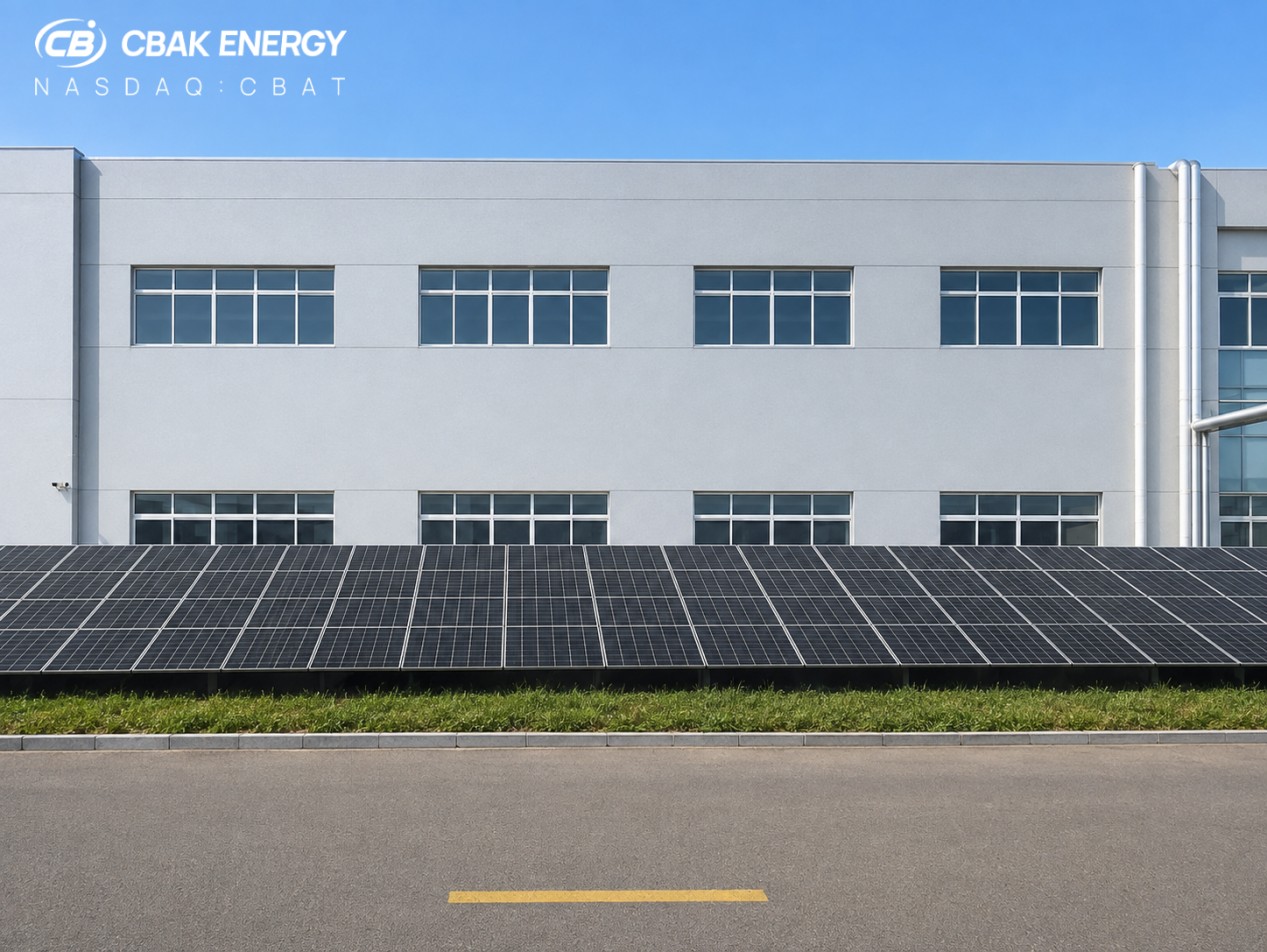
Solar panels at CBAK Energy’s Dalian manufacturing facility.
Reducing Energy Use and Recovering Production Materials
Beyond renewable power, upgrades to production lines and equipment, together with tighter process controls, reduced overall manufacturing energy use by more than
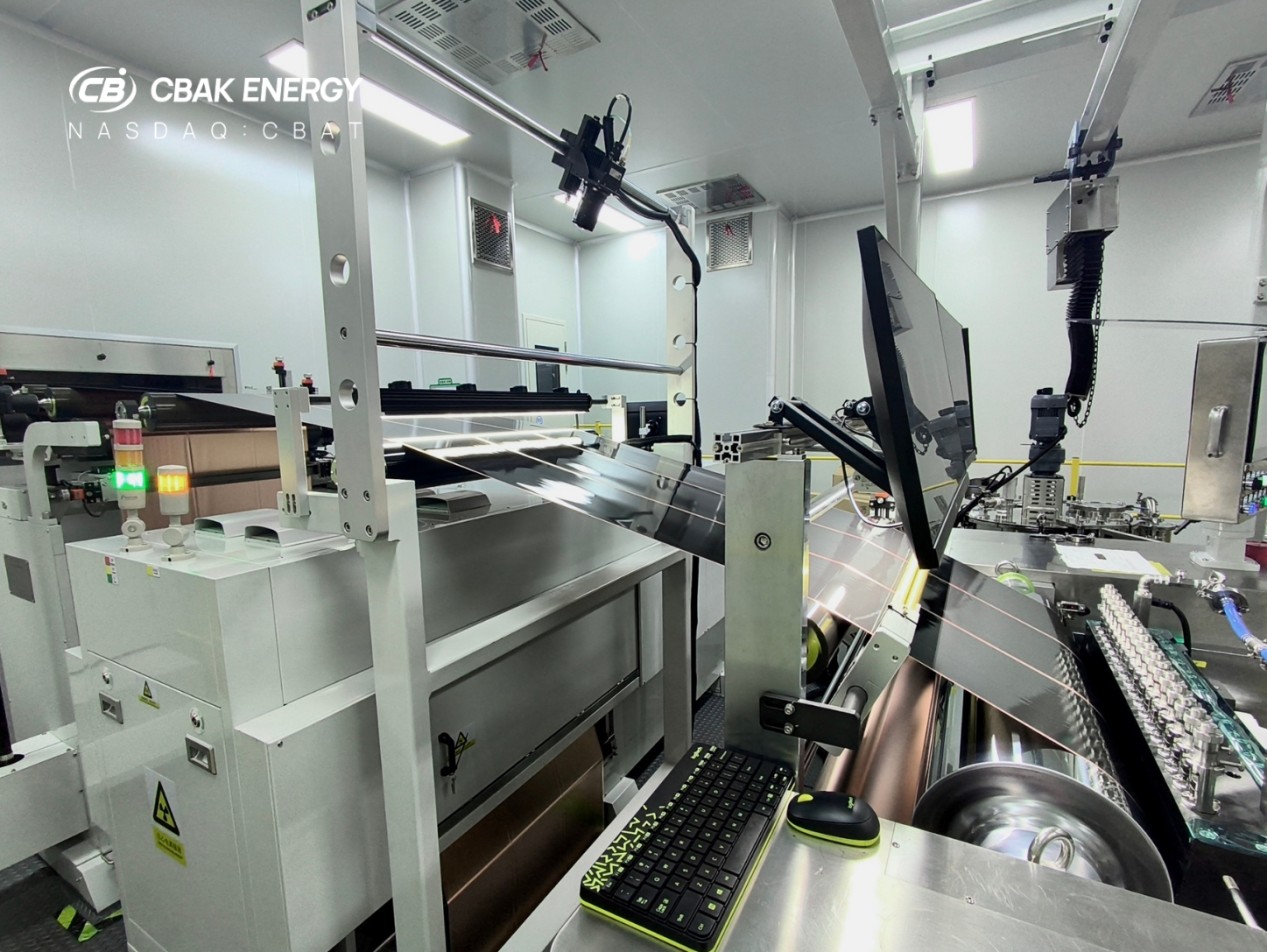
Electrode-coating line optimized for greater material utilization in LFP cylindrical cell production.
Resource efficiency also extends to solvent management in the electrode-coating process. An automated closed-loop system combines multistage condensation, purification and off-gas treatment to recover more than
Beyond in-process material recovery, the facility collected and managed 978.95 metric tons of hazardous waste, general industrial waste and municipal solid waste through compliant treatment and disposal channels during the year. It received no environmental regulatory penalties in 2025.
Supporting Customer Procurement and Supply-Chain Transparency
For customers sourcing LFP cylindrical cells, facility-level records covering GHG emissions, energy use and waste management provide documented information for supplier audits, procurement reviews and sustainability reporting. This gives customers a clearer basis for evaluating the environmental management of their battery supply. The Company believes this transparency can support customer procurement decisions and strengthen its competitiveness as a battery supplier.
“We believe greater energy and material efficiency can strengthen cost control and support our competitiveness,” said Zhiguang Hu, Chief Executive Officer of CBAK Energy. “Our progress in Dalian pairs lower emissions with more efficient use of production resources. We plan to apply these practices more broadly, improve the consistency and comparability of our environmental data, and make resource efficiency a core part of how CBAK Energy grows and serves customers worldwide."
About CBAK Energy
CBAK Energy Technology Limited (NASDAQ: CBAT) is a leading China-based high-tech company engaged in the development, manufacture and sale of high-power lithium-ion and sodium-ion batteries, as well as materials used in the manufacture of high-power lithium-ion batteries. The Company’s battery cell production, research and development, and sales operations are located in Nanjing, Dalian and Shangqiu. The Company also operates battery cell research and development centers in both Nanjing and Dalian. Its raw materials operations, including production, research and development, and sales, are headquartered in Shaoxing. The Company’s products and solutions serve electric vehicles, light electric vehicles, energy storage systems and other high-power applications. In January 2006, CBAK Energy became the first Chinese lithium battery manufacturer to be listed on the Nasdaq Stock Market.
Forward-Looking Statements
This press release contains forward-looking statements within the meaning of the safe harbor provisions of the U.S. Private Securities Litigation Reform Act of 1995. Forward-looking statements in this press release include statements regarding the broader application of the environmental and resource-efficiency practices implemented at the Company’s Dalian manufacturing facility; improvements in the consistency and comparability of the Company’s environmental data; the role of resource efficiency in the Company’s future growth and ability to serve customers worldwide; and the potential benefits of these initiatives for cost control, competitiveness, customer procurement and supply-chain transparency. Forward-looking statements may be identified by words such as “expect,” “anticipate,” “believe,” “intend,” “plan,” “aim,” “may,” “will,” “could,” “should” and similar expressions.
These forward-looking statements are based on the Company’s current expectations and assumptions and involve risks and uncertainties that could cause actual results to differ materially from those expressed or implied. Such risks include changes in production volumes, product mix and capacity utilization; the performance, availability and maintenance of solar-power, water-recovery, solvent-recovery and other environmental systems; the Company’s ability to implement environmental and process improvements across its operations and realize the anticipated operating and commercial benefits; changes in the availability or cost of energy, water, raw materials, equipment and qualified waste-management services; changes in greenhouse gas accounting standards, reporting boundaries, calculation methodologies or data availability; the accuracy and comparability of internally calculated environmental data; changes in customer requirements, environmental laws, regulations or industry standards; supply chain conditions; competition; macroeconomic and market conditions; and other risks described in the Company’s reports filed with or furnished to the U.S. Securities and Exchange Commission.
Readers are cautioned not to place undue reliance on these forward-looking statements, which speak only as of the date of this press release. Except as required by applicable law, the Company undertakes no obligation to update or revise any forward-looking statements, whether as a result of new information, future events or otherwise.
For more information, please visit: https://en.cbak.com.cn/
Email: marketing@cbak.com.cn
LinkedIn: https://www.linkedin.com/company/cbakenergy
X: https://x.com/CBAKEnergy
Stocktwits: https://stocktwits.com/CBAK_Energy
Investor Relations
Email: ir@cbak.com.cn
Website: https://ir.cbak.com.cn/
Photos accompanying this announcement are available at
https://www.globenewswire.com/NewsRoom/AttachmentNg/efa15063-6241-4539-b0cb-b3e5c795e077
https://www.globenewswire.com/NewsRoom/AttachmentNg/c6b16611-e537-4c9d-9e2d-bd0dcc7d2b8e

FAQ
AI-generated questions and answers. How Rhea-AI works. Not financial advice.
How is rooftop solar power used at CBAK Energy’s Dalian facility?
The Dalian facility’s 3.9-megawatt-peak rooftop solar system generated about 3.5 million kWh in 2025. Approximately 3.2 million kWh, or 92.5%, powered on-site processes such as electrode coating, cell formation and grading, reducing the need for purchased electricity in LFP cylindrical cell production. The remaining 263,000 kWh was exported to the local grid.
What measures reduced manufacturing energy use at the Dalian site?
Upgrades to production lines and equipment, along with tighter process controls, reduced overall manufacturing energy use by more than 10%. The facility also upgraded its steam-condensate return system, recovering 48 metric tons of water per day for reuse.
How does CBAK Energy manage NMP solvent in electrode coating?
The facility uses an automated closed-loop system with multistage condensation, purification and off-gas treatment to recover more than 95% of N-methyl-2-pyrrolidone (NMP) used in electrode coating. After purification to required quality specifications, 100% of the recovered NMP is returned directly to the coating process without blending with virgin NMP, reducing solvent losses and waste generation.
What waste management and compliance outcomes were reported for 2025?
The Dalian facility collected and managed 978.95 metric tons of hazardous waste, general industrial waste and municipal solid waste through compliant treatment and disposal channels in 2025. It reported receiving no environmental regulatory penalties during the year.
How might these environmental metrics support CBAK Energy’s customers?
Facility-level records covering GHG emissions, energy use and waste management provide documented information for supplier audits, procurement reviews and sustainability reporting. The company believes this transparency gives customers a clearer basis for evaluating the environmental management of their battery supply and can support procurement decisions.