
Core AI Announces Launch of AI Home Design App: HomeGPT
Core AI (Nasdaq: CHAI) launched HomeGPT, an AI home design and renovation app now available on Apple iTunes and Google Play.
Rhea-AI Summary
Core AI (Nasdaq: CHAI) launched HomeGPT, an AI home design and renovation app now available on Apple iTunes and Google Play.
Open beta users grew from about 2,000 to over 130,000 with paid conversion up ~210% and more than 380,000 AI design tasks completed.
Positive
- HomeGPT open beta users grew from ~2,000 to over 130,000
- Paid conversion rate increased by approximately 210% versus early versions
- Users completed more than 380,000 AI design and renovation tasks
- Multimodal AI platform supports image, video, 3D and conversational workflows
- Subscription-plus-credit model adds multiple monetization layers
- App launched globally on Apple iTunes and Google Play stores
Negative
- None.
Details
News Market Reaction – CHAI
In the Jun 11 session, CHAI gained 9.49%, reflecting a notable positive market reaction.
Data tracked by StockTitan Argus on the day of publication.
Key Figures
- Open beta duration
- 3 months
- HomeGPT open beta period
- Active users start
- approximately 2,000
- HomeGPT active users at beginning of open beta
- Active users end
- more than 130,000
- HomeGPT active users after three-month open beta
- User growth multiple
- over 6x
- Growth in HomeGPT active users during open beta
- Paid conversion change
- approximately 210%
- Increase in paid conversion vs early product versions
- AI design tasks
- more than 380,000
- Total HomeGPT AI design tasks generated by users
- Video duration
- 5- to 10-second
- Planned cinematic video walkthrough length
Previous AI Reports
-
Reported 2025 revenue of $55.2M with 58.6% growth and AI refocus.
-
Formed OptiCore JV to build AI datacenters for 187 R1 universities.
-
Divested Siyata Mobile to cut ~$12M annual cash burn and simplify balance sheet.
-
Scheduled Q3 2025 business update and 2026 outlook investor call.
-
Launched Core Digital subsidiary for AI-driven digital marketing expansion.
24h Move is the share-price change in the day after each event; other market factors may also have contributed.
Key Terms
multimodal generative ai technical
spatial understanding technical
smart layout generation technical
spatial intelligence technical
cloud orchestration technical
subscription-plus-credit model financial
b2b technical
AI-generated analysis. How Rhea-AI works. Not financial advice.




Sees Rapid Growth Across North America, Japan and South Korea as AI Renovation Platform Enters Commercial Scale-Up Phase
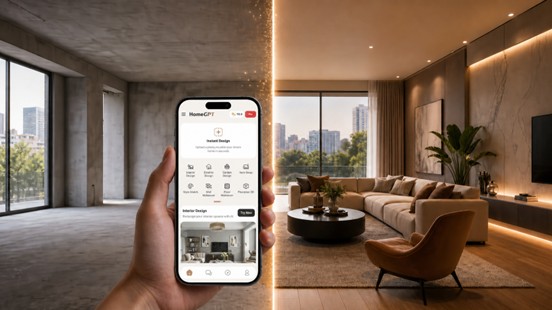
Miami, FL, June 11, 2026 (GLOBE NEWSWIRE) -- Core AI Holdings, Inc. (Nasdaq: CHAI) (“Core AI” or the “Company”), a global AI technology and infrastructure company, today announced the launch of HomeGPT, an AI powered home design and renovation application. As a key part of the company’s vertical AI application strategy, HomeGPT combines multimodal generative AI, spatial understanding, image editing, smart layout generation and AI video capabilities to turn a single home photo into a full design experience.
During the three-months open beta period, despite the lack of extensive marketing, HomeGPT’s active users across North America, Japan and South Korea have grown from approximately 2,000 to more than 130,000 representing over 6x growth. Paid conversion has increased by approximately
“HomeGPT’s growth shows that AI home design is no longer just an image-generation novelty. It is becoming a new entry point for renovation, real estate visualization, home furnishing commerce and professional design services,” said Aitan Zacharin, CEO of Core AI Holdings. “Before users spend thousands of dollars renovating, they want to see what their future home could look like across different styles, budgets and layouts. We are compressing early-stage design exploration from days or weeks into seconds.”
HomeGPT serves homeowners, interior designers, real estate agents and home furnishing brands with features including interior design, exterior design, garden design, smart layout, object replacement, object removal, wall redesign, flooring concepts, window design, reference-style redesign and floor-plan-to-3D generation. Users can upload photos of rooms, gardens, building exteriors or hand-drawn sketches, generate high-quality renovation renderings and continue refining results through natural language conversation.
The latest version further strengthens HomeGPT’s AI designer system with furniture recommendation, multi-image upload, custom remodeling, Auto Match style selection and three levels of design freedom. Users can enter prompts such as “turn this living room into Italian quiet luxury,” “remove the old sofa and replace it with a cream fabric couch,” or “keep the original floor plan but add more storage,” and the AI will redraw the space while preserving key structural elements.
Technology Platform: An AI Design Engine Built for Spatial Intelligence
While HomeGPT’s user growth is attracting market attention, the underlying AI platform is the company’s true differentiator. HomeGPT has built a multimodal AI infrastructure specifically designed for home design workflows, supporting image generation, localized editing, conversational modification, smart layout, 3D conversion and cinematic video walkthroughs.
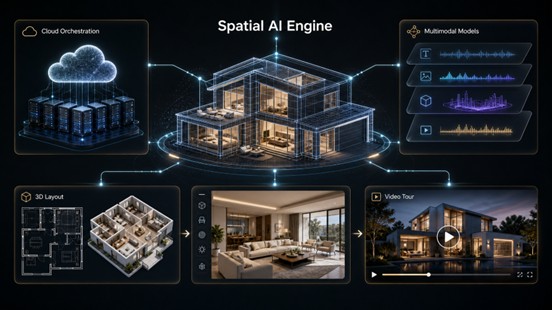
HomeGPT’s AI home design infrastructure is built around three core pillars:
Spatial Understanding and Structure Preservation Engine
This engine identifies walls, windows, floors, furniture, garden boundaries and exterior structures, helping preserve room proportions and layout logic during generation. It reduces common issues found in generic AI image tools, including distorted spaces, unrealistic geometry and non-buildable design outputs.
Multimodal Generative Design Models
The platform processes photos, text prompts, reference images and conversational instructions simultaneously, enabling a complete workflow from Photo-to-Design, Sketch-to-Real and Chat-to-Edit to Style Transfer. The model supports interior, exterior, garden, wall, flooring, window and furniture scenarios, helping users quickly generate personalized renovation concepts.
Cloud Task Orchestration and Monetization System
HomeGPT uses a proprietary task management and cloud orchestration system to dynamically allocate compute resources across image, video, conversation and 3D workloads. This improves generation efficiency while controlling inference costs. The platform uses a subscription-plus-credit model, creating multiple monetization layers around HD downloads, watermark removal, regeneration, video walkthroughs, premium styles and professional design features.
As multimodal image and video models from Google, OpenAI, Kling and other AI leaders continue to advance, AI design is moving from static renderings into immersive spatial experiences. HomeGPT plans to convert static renovation images into 5- to 10-second cinematic video walkthroughs, allowing users to experience future rooms through push-in camera moves, entry perspectives and changing light conditions. The company believes video-based design presentations can materially improve real estate showings, renovation sales, social sharing and home furnishing conversion.
“AI Image & Video has shown how vertical AI content applications can break out in culturally specific markets. HomeGPT is targeting a category with higher transaction value, longer decision cycles and broader commercial extensions,” said Aitan Zacharin. “Home renovation, real estate visualization, furniture shopping and professional design services are all massive markets. HomeGPT is only the beginning. Our goal is to build a global AI spatial intelligence platform.”
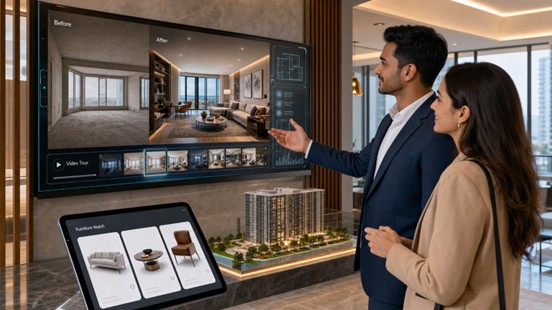
Looking ahead, HomeGPT plans to expand HomeGPT’s professional mode with AI furniture shopping lists, budget-aware design, similar-product e-commerce recommendations, multi-angle room consistency, 360-degree panoramas, simplified construction references and a B2B designer workstation. The company believes that as AI generation costs decline and consumer demand for personalized living spaces rises, AI home design may become one of the most commercially valuable generative AI applications across consumer internet and property technology.
The HomeGPT app is now available for download through the Apple iTunes and Google Play stores.
About Core AI Holdings, Inc.
Core AI Holdings, Inc. (NASDAQ: CHAI) is a global AI technology and infrastructure company focused on identifying, developing, and scaling AI-driven businesses that leverage next-generation technologies to address large, high-growth market opportunities. Core AI's mission is to harness artificial intelligence to create transformative, scalable solutions across multiple verticals and drive long-term shareholder value. Through its subsidiary, Core Gaming, the Company operates an AI-driven mobile game development and publishing business which has generated over 800 million downloads, and built a global user base of more than 40 million players across over 140 countries.
Core AI Investor Relations
ir@coregaming.co
www.coregaming.co
Forward-Looking Statements
This press release contains forward-looking statements within the meaning of the Private Securities Litigation Reform Act of 1995, including statements regarding the anticipated benefits of the advisory appointment, the joint venture between Core AI and Allianca, expected market opportunities, infrastructure demand, project pipeline, development strategy, and execution capabilities. These forward-looking statements are based on Core AI’s current expectations and assumptions and are subject to risks, uncertainties, and changes in circumstances that may cause actual results to differ materially, including the parties’ ability to implement the contemplated joint venture strategy, market conditions, customer demand, power availability, supply chain conditions, labor availability, project timing, financing conditions, and regulatory matters, as well as other risks described under “Risk Factors” in Core AI’s Annual Report on Form 20-F filed with the U.S. Securities and Exchange Commission on May 15, 2026, and in subsequent SEC filings. Except as required by law, Core AI undertakes no obligation to update these forward-looking statements.
Attachment

FAQ
AI-generated questions and answers. How Rhea-AI works. Not financial advice.