
LightSolver Files U.S. Provisional Patent Application Expanding its Photonic Computing Platform to Advanced Scientific and Engineering Simulations
LightSolver views the filing as part of its long-term intellectual property strategy supporting its commercialization path.
Sentiment and the balance of points
Rhea-AI Sentiment reads the wording of the document, how positive or negative its language is on a 1 to 5 scale. The balance of points shown with the takes weighs what the document actually discloses, so the two can disagree, for example when a trial that missed its main goal is described in upbeat language.
Rhea-AI Summary
CollPlant Biotechnologies (CLGN) announced that its subsidiary LightSolver has filed a U.S. provisional patent application for its laser-based computing platform.
The application covers a method for configuring a programmable analog processor to solve physical and engineering problems. LightSolver said the invention broadens the platform's potential simulation capabilities by incorporating boundary conditions and other problem parameters directly into computation. It addresses partial differential equations, mathematical equations describing phenomena such as heat transfer, diffusion, electrostatics and fluid flow, including complex geometries and boundary conditions.
Positive
- Minor pointU.S. patent application filed for LightSolver's method of solving physical and engineering simulation problems.
Negative
- Minor pointProvisional application status means the announced milestone is a filing, not a granted patent.
Historical Context
-
Emulator study projected acceleration on sparse linear-equation workloads, not LPU hardware results.
24h Move is the share-price change in the day after each event; other market factors may also have contributed.
Key Terms
provisional patent application regulatory
uspto regulatory
partial differential equations technical
boundary conditions technical
AI-generated analysis. How Rhea-AI works. Not financial advice.




CollPlant Advances its Photonic Computing Strategy Through LightSolver's Growing IP Portfolio
REHOVOT,
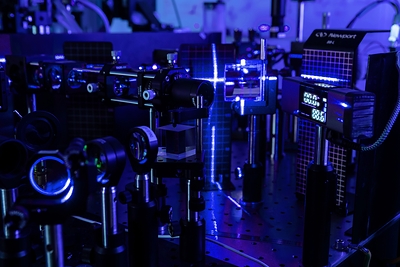
The provisional application, titled "Configuring a Programmable Analog Processor to Solve Inhomogeneous Boundary Value Problems," details a proprietary method for solving a broad class of complex physical and engineering problems. The invention broadens the range of scientific and engineering simulations that can be addressed by LightSolver's platform. It enables the platform to directly address partial differential equations (PDEs) underlying heat transfer, diffusion, electrostatics and fluid-flow phenomena, including those involving complex geometries and boundary conditions.
A key innovation enables the platform to incorporate boundary conditions and other problem parameters directly into the computation. By making these elements part of the solving process, the invention expands the range of complex scientific and engineering simulations that can be addressed by LightSolver's technology.
"This provisional patent application filing represents a key milestone in our long-term intellectual property strategy, designed to secure our core technological innovations as we build out our photonic computing platform," said Dr. Ruti Ben-Shlomi, CEO and Co-Founder of LightSolver. "By systematically expanding the addressable problem-space of our Laser Processing Unit (LPU), we are broadening its potential applicability across a wider range of workloads, while continuing to strengthen the intellectual property underlying our strategic commercialization path."
This filing strengthens LightSolver's intellectual property portfolio and supports the company's strategy to deliver material performance advantages for demanding computational tasks in industry and research.
About CollPlant
CollPlant (Nasdaq: CLGN) is an innovative technology company operating at the intersection of deep-tech computing and advanced biotechnology. Through its subsidiary LightSolver, CollPlant is advancing the development of proprietary all-optical laser based computing architectures designed to resolve the world's most demanding computational bottlenecks across artificial intelligence, aerospace, financial engineering, and high-performance computing. Concurrently, CollPlant remains a leader in regenerative medicine, pioneering plant-derived recombinant human collagen technologies for 3D bioprinting of tissues and organs and medical aesthetics.
Forward-Looking Statements
This press release contains forward-looking statements within the meaning of the Private Securities Litigation Reform Act of 1995. Forward-looking statements include, but are not limited to, statements regarding the potential scope, functionality, performance and applications of the invention described in LightSolver's provisional patent application; the ability of the invention to expand the range of problems addressable by LightSolver's LPU technology; the development and commercialization of the LPU; LightSolver's ability to obtain, maintain and enforce intellectual-property protection; and the future prospects, business plans and growth strategies of CollPlant and LightSolver., business plans and growth strategies of CollPlant and LightSolver. Forward-looking statements can be identified by words such as "anticipate," "believe," "expect," "intend," "plan," "may," "should," "could," "might," "seek," "target," "will," "project," "continue" and similar expressions or the negative of such terms. These forward-looking statements are based on assumptions and assessments made in light of management's experience and perception of historical trends, current conditions, expected future developments and other factors believed to be appropriate. Forward-looking statements are not guarantees of future performance and are subject to risks and uncertainties, many of which are outside of our control. Many factors could cause our actual activities or results to differ materially from the activities and results anticipated in forward-looking statements, including, but not limited to, the risk that the anticipated benefits of the transaction are not realized, or are not realized within the expected timeframe; risks associated with integrating LightSolver's business, operations and personnel; LightSolver's ability to achieve anticipated technological and commercial milestones; uncertainties regarding market acceptance and adoption of LightSolver's technology; the ability to develop and commercialize LightSolver's products and technology successfully; the ability to establish and expand strategic collaborations and commercial relationships; competition and technological developments; intellectual property risks; the availability of capital; CollPlant's ability to maintain compliance with Nasdaq listing requirements; general market, industry, economic and geopolitical conditions; and other risks and uncertainties described in CollPlant's filings with the U.S. Securities and Exchange Commission, including its most recent Annual Report on Form 20-F and subsequent Reports on Form 6-K. Forward-looking statements speak only as of the date of this press release. CollPlant undertakes no obligation to update or revise any forward-looking statements, whether as a result of new information, future events or otherwise, except as required by applicable law.
Contact Information:
CollPlant
Eran Rotem
Deputy CEO & CFO
eran@collplant.com
+972.73.232.5600
LightSolver
Dr. Ruti Ben-Shlomi
Co-Founder & CEO
ruti@lightsolver.com

 View original content to download multimedia:https://www.prnewswire.com/news-releases/lightsolver-files-us-provisional-patent-application-expanding-its-photonic-computing-platform-to-advanced-scientific-and-engineering-simulations-302899664.html
SOURCE CollPlant
FAQ
AI-generated questions and answers. How Rhea-AI works. Not financial advice.
What does CollPlant subsidiary LightSolver's new patent application cover?
The provisional patent application covers a method for configuring a programmable analog processor to solve physical and engineering problems. LightSolver said it expands the simulations its laser-based platform can address by incorporating boundary conditions and other problem parameters directly into computation.