
DoorDash Brings Office Ordering to the AI Tools Teams Already Use
DoorDash plans to use participating teams' feedback to improve the experience before expanding connector access further.
Sentiment and the balance of points
Rhea-AI Sentiment reads the wording of the document, how positive or negative its language is on a 1 to 5 scale. The balance of points shown with the takes weighs what the document actually discloses, so the two can disagree, for example when a trial that missed its main goal is described in upbeat language.




A new connector lets companies build internal AI tools for team lunches and office restocking, with a broader beta waitlist opening September 30
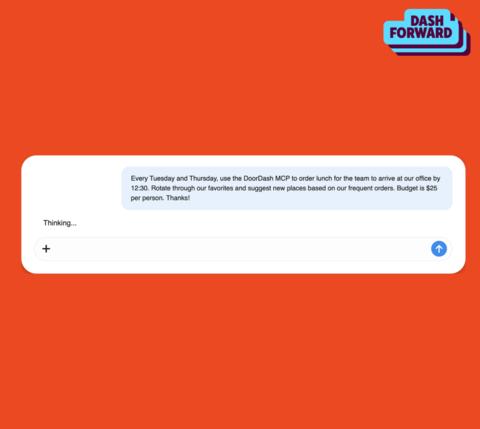
Today, we're introducing a DoorDash connector for corporate ordering. Companies can connect DoorDash to compatible internal AI tools their teams already use, or to agents they build themselves, so employees can arrange deliveries as part of their workday. SpaceXAI, Vercel, Cognition, Tempo, and Mercor are among our early beta partners using the connector for employee ordering.
The connector gives those agents the ability to find items on DoorDash, build a cart, place an order, and track its arrival. An employee can ask an agent to find a new lunch based on previous orders or set up a recurring daily meal delivery using an eligible corporate meal benefit. Local businesses fulfill the orders, with delivery through DoorDash.
Companies can also build shared tools around the way their teams work. A Slack bot, for example, could collect daily lunch requests in a thread and place the order for the group. Colleagues could add what they want in the conversation, with the bot handling the steps to get it delivered.
For teams keeping an office stocked, a company could connect an agent to its own inventory information and have it reorder snacks, drinks, or supplies through DoorDash as they run low. The company provides the context and instructions, and the connector gives its agent a way to act on them through DoorDash.
For local businesses, these connections offer another way for customers to find and order from them. A team can discover a restaurant for its next lunch through a workplace tool, with the order still running through DoorDash.
The connector uses the Model Context Protocol, or MCP, an open standard for connecting AI applications to external services. Companies can use it with compatible agents, including ones they develop in-house. Access begins at the company level, and employees sign in to their own DoorDash accounts and agree to the terms before connecting an agent to act on their behalf.
We're starting with a limited beta focused on companies ordering for their own employees. We'll use feedback from participating teams to improve the experience before expanding access further.
Beginning September 30, companies can join the waitlist https://developer.doordash.com/en-US/mcp/. We're also expanding beta access to the DoorDash command-line interface, or CLI, for individual developers building agents for personal use.
View source version on businesswire.com: https://www.businesswire.com/news/home/20260930349991/en/
Source: DoorDash