
HPE Spaceborne Computer to Power High Performance Computing and AI on the Moon
NASA plans an experiment demonstrating coordination of three AI models trained on Earth, Moon and International Space Station data.
Sentiment and the balance of points
Rhea-AI Sentiment reads the wording of the document, how positive or negative its language is on a 1 to 5 scale. The balance of points shown with the takes weighs what the document actually discloses, so the two can disagree, for example when a trial that missed its main goal is described in upbeat language.


NASA, Deloitte, and HPE to deploy AI workloads on HPE’s Spaceborne Computer-4 to maximize the mission’s scientific discovery
- With 70 years of leadership in space exploration, HPE ushers in a new era by providing the advanced computing foundation for the emerging lunar economy
- HPE Spaceborne Computer-4 plans to power the first high performance computing benchmarks on the lunar surface
- HPE Spaceborne Computer-4 will test large language model (LLM) retrieval-augmented generation, vision inference, and LiDAR data for reliable deployment of AI on the Moon
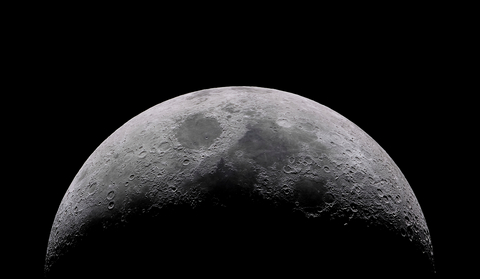
HPE Spaceborne Computer-4, an advanced compute module built for space environments, plans to power artificial intelligence (AI) and the first high performance computing (HPC) benchmarks on the surface of the Moon.
“For more than 70 years, HPE innovation has supported some of the world’s most important space missions. The next chapter of lunar exploration will depend on the ability to turn data into insights at the point of discovery,” said Scott Wiest, vice president, fellow and global sales chief technologist, HPE. “With HPE Spaceborne Computer-4, we are bringing AI and high performance computing to the lunar edge, helping the acceleration of scientific discovery and building the infrastructure for the next era of exploration.”
The mission is intended to launch in late 2026 as part of NASA’s Commercial Lunar Payload Services (CLPS) initiative. After touching down near the lunar South Pole region, Voyager Technologies’ Griffin-1 lander will transport Astrolab’s FLIP rover, carrying HPE Spaceborne Computer-4 as a payload.
“The Moon presents a challenging environment for advanced computing, and we’re pleased to provide HPE with an opportunity to demonstrate its technology on the lunar surface,” said Jaret Matthews, founder and CEO of Astrolab. “Our FLIP rover is designed to accommodate a variety of payloads, and this mission will demonstrate how commercial lunar mobility platforms can support technology development and scientific research.”
AI workloads and first-ever HPC to run on the Moon’s surface
During the mission, HPE Spaceborne Computer-4 is scheduled to run core AI applications and the first high performance computing2 benchmarks on the Moon. The test results from these experiments will help create the technological foundation required for future missions and research on the Moon’s surface. Large language models (LLM) will deliver insights, analyze visual data, and support autonomous monitoring at the lunar edge. Additional tests will process LiDAR data for mapping, navigation, terrain analysis and infrastructure development, while an AI services container will demonstrate reliable deployment of scalable AI service applications on the Moon.
HPE Spaceborne Computer-4 is purpose-built as a lightweight, self-contained, and fanless compute module designed to survive the harsh environment of the lunar South pole. It is equipped with both a low-power central process unit (CPU) and graphics processing unit (GPU). The compute module utilizes flash memory storage inside solid state drives from KIOXIA, continuing a long-standing collaboration with the HPE Spaceborne program to support the missions’ activities and tests with high performance data storage under lunar conditions. HPE also assembled an extensive software suite that optimizes the required interaction with Earth-based resources and enables secure delivery of insights and results from the Moon back to Earth.
In addition, HPE will support Astrolab’s mission control in
Private-public partnerships help maximize the mission’s scientific return
NASA and Deloitte are set to join HPE Spaceborne Computer-4 to deploy AI workloads on the Moon and perform advanced solutions critical for maximizing the scientific return, underpinning the success of the emerging lunar economy.
- Utilizing the Federated Learning for Unbounded and Intelligent Decentralization (FLUID) experiment, NASA will run an AI neural net model trained on data from Earth, the Moon, and on the International Space Station, demonstrating coordination of three separate AI models. NASA will also conduct a tuned LLM test with semantic processing abilities to assist in searching and interpreting onboard documents.
- Deloitte's Silent Shield™, a new system to detect cyber intrusions, will provide near real-time, predictive cyber-analytics and anomaly detection.
Building on the years of successful deployment on the International Space Station, HPE Spaceborne Computer-4 is the latest successor to the HPE Spaceborne Computer project that will deliver real-time, advanced data processing to the newest frontiers of far-edge computing.
About HPE
HPE (NYSE: HPE) is a leader in essential enterprise technology, bringing together the power of AI, cloud, and networking to help organizations achieve more. As pioneers of possibility, our innovation and expertise advance the way people live and work. We empower our customers across industries to optimize operational performance, transform data into foresight, and maximize their impact. Unlock your boldest ambitions with HPE. Discover more at www.hpe.com.
___________________________
1 Based on analysis of publicly available information as of October 20, 2026, no other company or organization has conducted the specific HPC benchmarks that HPE plans to execute on the surface of the Moon, nor will any planned mission with HPC by other parties take place on the Moon prior to HPE’s mission.
2 HPE Spaceborne Computer-4 to run high-performance LINPACK (HPL) and high-performance conjugate gradient (HPCG) on the surface of the Moon.
As used in this document, “Deloitte” means Deloitte Consulting LLP, a subsidiary of Deloitte LLP. Please see www.deloitte.com/us/about for a detailed description of our legal structure. Certain services may not be available to attest clients under the rules and regulations of public accounting.
View source version on businesswire.com: https://www.businesswire.com/news/home/20261020987784/en/
Media Contact:
Maggie Wainscott
maggie.wainscott@hpe.com
Source: Hewlett Packard Enterprise