
Leidos Selects X-Bow to Provide Rocket Motors for U.S. Army's Low-Cost Cruise Missile
The booster agreement requires design and qualification testing before full-rate production can begin.
Sentiment and the balance of points
Rhea-AI Sentiment reads the wording of the document, how positive or negative its language is on a 1 to 5 scale. The balance of points shown with the takes weighs what the document actually discloses, so the two can disagree, for example when a trial that missed its main goal is described in upbeat language.
Rhea-AI Summary
Leidos (LDOS) selected X-Bow Systems to develop and produce booster motors for the U.S. Army's Low-Cost Containerized Munition program. Under the agreement, X-Bow will complete design, qualification testing and stationary motor firings before planned full-rate booster production in 2027. Leidos will produce the munitions in large quantities under the Department of War's “Arsenal of Freedom” initiative.
How this balance works
Rhea-AI gives every point it takes from this document a weight. Minor counts 1, Moderate 3 and Major 9, so one Major point outweighs several Minor ones. The bar adds up the weights on each side, and when neither side holds more than 65% of the total the balance reads Mixed.
It reads the document as published, with the same rules for every company, and it does not look at what the market expected or at how the stock traded, so a point can be objectively good on a day the stock falls.
Rhea-AI Sentiment measures something else, the tone of the wording.
Hollow bars mark forward-looking points. How the balance works
Positive
- Moderate pointBooster supply agreement selects X-Bow Systems to develop and produce motors for Leidos' Army munition program.
- Moderate point. Forward-looking: it has not happened yet and may not happen.Leidos plans large-quantity munition production under the Department of War's “Arsenal of Freedom” initiative.
- Minor point. Forward-looking: it has not happened yet and may not happen.X-Bow's planned full-rate booster production in 2027 supports the Leidos munition program.
Negative
- Minor point. Forward-looking: it has not happened yet and may not happen.Full-rate booster production requires design, qualification testing and stationary motor firings first.
Key Figures
- Full-rate production milestone
- 2027
- Planned full-rate production of booster motors at scale
- Propulsion programs selected
- 6 programs
- X-Bow selections in 2026 across the Navy, Army, and Missile Defense Agency
- Motors delivered
- More than 2,100 motors
- Completed first major production contract
Key Terms
solid rocket motors technical
qualification testing technical
static fires technical
full-rate production technical
AI-generated analysis. How Rhea-AI works. Not financial advice.




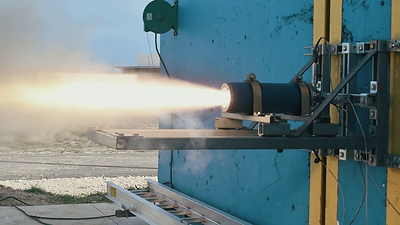
Under the agreement, X-Bow will move through design, qualification testing, and static fires ahead of full-rate production of booster motors at scale in 2027.
The award places X-Bow inside one of the fastest-growing segments of
"Modern conflict is decided by how many rounds you can put downrange, not how exquisite each one is," said X-Bow Founder and Chief Executive Officer Jason Hundley. "Partnering with Leidos on the Army's low-cost cruise missile lets us do what we were built to do—turn out combat-ready rocket motors at production scale, fast."
The award is the latest of six new propulsion programs X-Bow has been selected for in 2026, spanning the Navy, Army, and the Missile Defense Agency. This builds on the company's recently completed first major production contract, which delivered more than 2,100 combat-ready rocket motors.
Meet with X-Bow at AUSA, Oct. 12-14 at the Walter E. Washington Convention Center in
About X-Bow Systems
X-Bow is solving the nation's munitions crisis by breaking the 50-year bottleneck in solid rocket motor (SRM) production. The company leverages its proprietary additive manufacturing to produce affordable, scalable SRMs that power a new generation of missiles, interceptors, and space launch vehicles. Reflecting strong demand, the company's revenue and backlog have more than doubled since 2023. Backed by prominent aerospace and venture capital investors, the company is headquartered in Albuquerque, New Mexico, with advanced manufacturing and test sites across the country. For more information, visit www.XBowSystems.com.
 View original content to download multimedia:https://www.prnewswire.com/news-releases/leidos-selects-x-bow-to-provide-rocket-motors-for-us-armys-low-cost-cruise-missile-302905355.html
SOURCE X-Bow Systems
FAQ
AI-generated questions and answers. How Rhea-AI works. Not financial advice.
Who will supply booster motors for Leidos' Low-Cost Containerized Munition program?
X-Bow Systems was selected to develop and produce booster motors for the U.S. Army's Low-Cost Containerized Munition. Leidos will produce the munitions in large quantities.
When is full-rate booster production planned for Leidos' Army munition program?
Full-rate booster production by X-Bow is planned for 2027. Design, qualification testing and stationary motor firings will precede production at scale.