STOCK TITAN

Lockheed Martin Announces Successful Static-Fire Test of Next Generation Interceptor's Stage 2 Motor

(Neutral)
(Positive)
Tags

Lockheed Martin (NYSE: LMT) reported a successful static-fire test of the L3Harris Technologies Stage 2 rocket motor for the Next Generation Interceptor (NGI) program inside a high-vacuum chamber simulating low-Earth orbit. The test validated key performance metrics, supports progress toward Critical Design Review, and aligns with plans to field NGI by 2030, while capital investments in Alabama facilities and nationwide supply chain support aim to meet future missile defense production demands.

Loading...
Loading translation...

Positive

  • None.

Negative

  • None.

Market Context

The July 23 earnings event recorded a 10.54% 24-hour reaction, adding historical context to this ope...
Analysis

The July 23 earnings event recorded a 10.54% 24-hour reaction, adding historical context to this operational milestone. The active S-3ASR concerns debt securities, and no recent insider activity was reported.

Key Figures

Target fielding year: 2030
1 metrics
Target fielding year 2030 NGI program

Historical Context

5 past events · Latest: Aug 04 (Positive)
Pattern 5 events
Date Event Sentiment 24h Move Catalyst
Aug 04 Space cybersecurity partnership Positive +0.5% Resecurity joined Space ISAC to strengthen information sharing for space infrastructure
Aug 04 AI autonomy demonstration Positive +0.5% Skunk Works demonstrated sensor-powered AI autonomy across eight X-62 flights
Jul 29 Multiyear missile contract Positive +0.9% U.S. government awarded up to $53.86 billion for PAC-3 MSE production
Jul 23 Second-quarter earnings Positive +10.5% Second-quarter sales, earnings, orders, backlog, and 2026 guidance increased
Jul 22 Dividend declaration Positive +10.5% Board authorized a third-quarter 2026 dividend of $3.45 per share

24h Move is the share-price change in the day after each event; other market factors may also have contributed.

Pattern Detected

The five selected historical events all showed positive 24-hour reactions, so the platform record showed alignment rather than divergence.

Key Terms

static-fire test, high-vacuum chamber, combustion stability, critical design review
4 terms
static-fire test technical
"Lockheed Martin Announces Successful Static-Fire Test of Next Generation Interceptor's Stage 2 Motor"
A static-fire test is a ground-based check where a rocket or spacecraft fires its engines while held securely on the launch pad, so the vehicle doesn’t lift off. It verifies propulsion performance, fuel and pressurization systems, and launch sequencing under real conditions—like revving a car’s engine while the brakes are on—to catch problems before flight. For investors, static-fire results are milestones that affect project schedules, safety assessments, regulatory clearance, and the likelihood of on-time launches, which can influence costs and market value.
high-vacuum chamber technical
"completed a static fire test inside a high-vacuum chamber"
An enclosed, sealable chamber designed to reduce air pressure to very low levels, creating an environment with few gas molecules. Scientists and manufacturers use high-vacuum chambers to test materials and devices, simulate outer-space conditions, perform precision coatings, and run processes that must avoid contamination. For investors, presence or use of such chambers signals advanced manufacturing or testing capabilities, potential capital expenditures, and relevance to industries like semiconductors, aerospace, and medical devices.
combustion stability technical
"key performance metrics such as thrust, chamber pressure and combustion stability"
The ability of a burner, engine, turbine or furnace to maintain a steady, controlled flame or combustion process across different operating conditions without flameout, flashback, large oscillations, or unintended emissions. Like a candle that stays lit despite gusts, combustion stability affects operational reliability, efficiency, emissions and safety; unstable combustion can lead to higher maintenance, unplanned downtime, regulatory violations and variable performance that investors watch as risks to cash flow and asset value.
critical design review technical
"milestone on the path to the Critical Design Review"
A critical design review (CDR) is a formal, high‑level assessment where engineers and independent reviewers confirm a product or system’s detailed plans meet required performance, safety and regulatory needs before committing to full-scale production or implementation. For investors it signals reduced technical and schedule risk—like approving a final blueprint before construction—so passing a CDR often increases confidence in a project’s timeline, budget predictability and likelihood of commercial success.

AI-generated analysis. How Rhea-AI works. Not financial advice.

See more from StockTitan in Google Search and AI answers. Adds StockTitan as a preferred source · opens Google
Add on Google

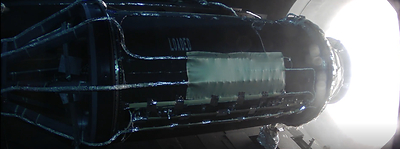
HUNTSVILLE, Ala., Aug. 10, 2026 /PRNewswire/ -- Lockheed Martin (NYSE: LMT) has announced the Stage 2 rocket motor for the Next Generation Interceptor (NGI) program has successfully completed a static fire test inside a high-vacuum chamber that replicates the conditions of low-Earth orbit, preparing it for its intended future missile defense mission.

L3Harris conducts successful hot fire test of the Stage 2 solid rocket motor for Lockheed Martin’s Next Generation Interceptor program. (IMAGE COURTESY L3HARRIS TECHNOLOGIES)

The test demonstrated the L3Harris Technologies' Stage 2 motor will sustain the extreme thermal and pressure stresses expected during interceptor missions, confirming key performance metrics such as thrust, chamber pressure and combustion stability.

"This successful static fire test is a significant milestone on the path to the Critical Design Review and confirms our confidence that the NGI motor will meet the demanding performance envelope required for fielding by 2030," Christopher Jewell, Lockheed Martin NGI vice president said. "The data gathered will directly inform the final interceptor design and accelerate integration with the Ground-Based Midcourse Defense architecture."

Why It Matters
An on-time fielding of NGI answers the call for an advanced missile defense capability. A successful outcome of the static-fire test reflects the program's forward trajectory, hitting a key milestone to CDR. Other factors pushing NGI toward deployment completion include:

  • Advanced design and speed: Leveraging NGI's "born‑digital" foundation, designs that once required years of physical iteration are now produced, fabricated and validated in a matter of months. 
  • Capital investments: Lockheed Martin is investing millions to construct or expand purpose-built manufacturing facilities in Alabama. This includes incorporating advanced manufacturing techniques, production lines, tooling and plant layouts to meet urgent production demand.
  • Whole of Industry Support: Lockheed Martin is leveraging significant supply chain capabilities across the nation to deliver NGI.

About NGI
NGI is being built to enable a much more capable Ground-Based Midcourse Defense architecture and will serve as a critical piece of a next generation missile defense solution. NGI greatly increases the nation's firepower against the most destructive ballistic missile threats to the nation.

About Lockheed Martin
Lockheed Martin is a global defense technology company driving innovation and advancing scientific discovery. Our all-domain mission solutions and 21st Century Security® vision accelerate the delivery of transformative technologies to ensure those we serve always stay ahead of ready. More information at www.Lockheedmartin.com


Lockheed Martin Logo.

Cision View original content to download multimedia:https://www.prnewswire.com/news-releases/lockheed-martin-announces-successful-static-fire-test-of-next-generation-interceptors-stage-2-motor-302847234.html

SOURCE Lockheed Martin

FAQ

What did Lockheed Martin (LMT) announce about the Next Generation Interceptor Stage 2 motor on August 10, 2026?

Lockheed Martin announced that the Next Generation Interceptor Stage 2 rocket motor successfully completed a static-fire test in a high-vacuum chamber. According to Lockheed Martin, this test validated key metrics like thrust, chamber pressure and combustion stability under low-Earth-orbit-like conditions, supporting NGI’s future missile defense mission.

Why is the NGI Stage 2 static-fire test important for Lockheed Martin (LMT) investors?

The NGI Stage 2 static-fire test marks a key technical milestone toward Critical Design Review. According to Lockheed Martin, the resulting data will inform the final interceptor design and accelerate integration with the Ground-Based Midcourse Defense architecture, supporting progress toward planned NGI fielding by 2030.

How does the NGI program’s "born-digital" design approach benefit Lockheed Martin (LMT)?

The NGI program uses a "born-digital" foundation to speed design and validation. According to Lockheed Martin, designs that once required years of physical iteration can now be produced, fabricated and validated in months, potentially shortening development cycles and supporting timely delivery of missile defense capability.

What manufacturing investments is Lockheed Martin (LMT) making to support the NGI program?

Lockheed Martin is investing millions of dollars in purpose-built manufacturing facilities in Alabama for the NGI program. According to Lockheed Martin, these investments include advanced manufacturing techniques, new production lines, tooling and plant layouts designed to meet urgent missile defense production demand for the interceptor.

How is industry collaboration supporting Lockheed Martin’s (LMT) Next Generation Interceptor program?

The NGI effort is supported by a broad industry supply chain across the United States. According to Lockheed Martin, the company is leveraging significant supplier capabilities nationwide to deliver the interceptor, complementing internal design advances and manufacturing investments to help achieve on-time fielding of NGI missile defense capability.