
Survey: Only 6% of organizations have the talent they need to complete priority projects
Robert Half (RHI) survey on Feb. 9, 2026 finds widening skills gaps and hiring complexity as businesses enter 2026.
Sentiment and the balance of points
Rhea-AI Sentiment reads the wording of the document, how positive or negative its language is on a 1 to 5 scale. The balance of points shown with the takes weighs what the document actually discloses, so the two can disagree, for example when a trial that missed its main goal is described in upbeat language.
Rhea-AI Summary
Robert Half (RHI) survey on Feb. 9, 2026 finds widening skills gaps and hiring complexity as businesses enter 2026. 62% of 2,000 hiring managers say skills gaps worsened year-over-year and only 6% have needed talent for priority projects.
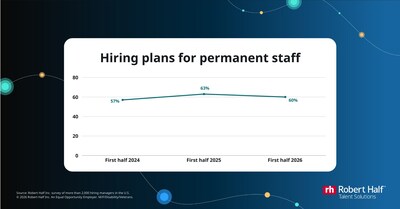
Discipline lows: Legal 1%, Marketing 4%, Finance 6%, Healthcare 7%, HR 7%, Technology 7%, Admin 12%. Employers remain optimistic: 83% confident in 2026 outlook; 60% plan permanent hires in H1 2026 and 55% expect more contract hiring. 65% say GenAI makes hiring harder; 58% report greater difficulty identifying qualified candidates.
Positive
- Employer confidence at 83% for 2026 business outlook
- 60% of managers plan to add permanent staff in H1 2026
- 55% of managers expect to increase contract hiring in 2026
Negative
- Only 6% of managers report having needed talent for priority projects
- GenAI makes hiring harder for 65% of managers
- 58% of managers report increased difficulty identifying qualified candidates
- Extreme talent shortages in key areas: Legal 1%, Marketing 4%
Details
News Market Reaction – RHI
On Feb 9, the day this news came out, RHI closed 7.26% below the previous close.
Data tracked by StockTitan Argus for the Feb 9 session.
AI-generated analysis. How Rhea-AI works. Not financial advice.




- More than half of managers said they plan to hire permanent and contract professionals to close skills gaps in 2026
- GenAI is making it harder to evaluate candidates and assess real-world skills
Skills gaps are widespread
Talent shortages are common, and only a small percentage of managers across several key disciplines reported having the talent they need to complete priority projects:
- Legal—
1% - Marketing and creative—
4% - Finance and accounting—
6% - Healthcare—
7% - Human resources—
7% - Technology—
7% - Administrative and customer support—
12%
Employers remain confident and are taking action
Despite these gaps, employers are optimistic about the year ahead. More than 8 in 10 managers (
"As skills gaps continue to widen, employers aren't standing still," said Dawn Fay, operational president of Robert Half. "Organizations are leaning into a mix of permanent and contract hiring to close critical gaps, stay agile and keep priority initiatives moving forward."
GenAI is making hiring more complex
While hiring plans remain strong, the process itself is becoming more difficult. Nearly two-thirds of managers (
As generative AI tools enable candidates to produce highly polished resumes, applications and work samples, employers are spending more time validating qualifications and job readiness, adding friction to the hiring process and increasing the risk of misalignment.
"Generative AI has changed how employers evaluate talent," Fay added. "When applications appear strong on the surface but don't always reflect real capabilities, it becomes much harder to assess skills and make confident hiring decisions. More organizations are increasingly relying on partners who can rigorously evaluate talent and help them hire with greater certainty."
For more insights into 2026 employment and job market trends, including which professionals are hardest to hire, visit Robert Half's Demand for Skilled Talent report.
About the research
The research was gathered from a survey developed by Robert Half and conducted by an independent research firm in November 2025. The survey contains responses from more than 2,000 hiring managers in
About Robert Half
Robert Half (NYSE: RHI) is the world's first and largest specialized talent solutions and business consulting firm, connecting highly skilled job seekers with rewarding opportunities at great companies. We offer contract talent and permanent placement solutions in the fields of finance and accounting, technology, marketing and creative, legal, and administrative and customer support, and we also provide executive search services. Robert Half is the parent company of Protiviti®, a global consulting firm that delivers internal audit, risk, business and technology consulting solutions. In the past 12 months, Robert Half, including Protiviti, has been named one of the Fortune® Most Admired Companies™ and 100 Best Companies to Work For. Explore talent solutions, research and insights at roberthalf.com.

 View original content to download multimedia:https://www.prnewswire.com/news-releases/survey-only-6-of-organizations-have-the-talent-they-need-to-complete-priority-projects-302681546.html
SOURCE Robert Half
FAQ
AI-generated questions and answers. How Rhea-AI works. Not financial advice.