Rhea-AI Sentiment reads the wording of the document, how positive or negative its language is on a 1 to 5 scale. The balance of points shown with the takes weighs what the document actually discloses, so the two can disagree, for example when a trial that missed its main goal is described in upbeat language.
Rocket Lab will launch a microwave oven-sized CubeSat dubbed CAPSTONE to a never-before-flown orbit around the Moon, blazing a new efficient deep space route that NASA hopes to use for future human spaceflight missions
LONG BEACH, Calif.--(BUSINESS WIRE)--
Rocket Lab USA, Inc. (Nasdaq: RKLB) (“Rocket Lab” or “the Company”), a leading launch and space systems company, is preparing to launch a satellite to the Moon for NASA as early as June 27th.
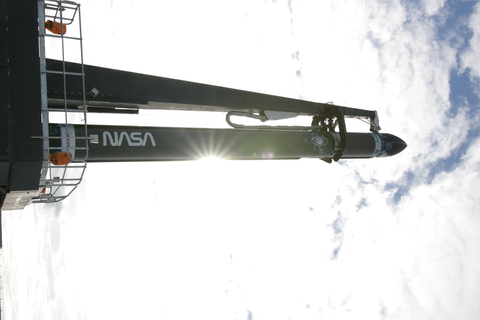
Electron Launch Vehicle at Rocket Lab Launch Complex 1 for the NASA CAPSTONE lunar mission. (Photo: Business Wire)
The launch will take place from Rocket Lab Launch Complex 1 on New Zealand’s Mahia Peninsula. The launch window opens 09:50 UTC on June 27th (21:50 NZST, June 27th). Back-up opportunities are available through July 27th to accommodate potential weather or technical delays to the launch.
Designed and built by Tyvak Nano-Satellite Systems, a Terran Orbital Corporation, and owned and operated by Advanced Space on behalf of NASA, the Cislunar Autonomous Positioning System Technology Operations and Navigation Experiment (CAPSTONE) CubeSat will be the first spacecraft to test the Near Rectilinear Halo Orbit (NRHO) around the Moon. Researchers expect this orbit to be a gravitational sweet spot in space – where the pull of gravity from Earth and the Moon interact to allow for a nearly-stable orbit – allowing physics to do most of the work of keeping a spacecraft in orbit around the Moon. NASA has big plans for this unique type of orbit. The agency hopes to park bigger spacecraft – including the lunar-orbiting space station Gateway – in an NRHO around the Moon, providing astronauts with a base from which to descend to the lunar surface as part of the Artemis program.
CAPSTONE will be launched to an initial low Earth orbit by Rocket Lab’s Electron launch vehicle and then placed on a ballistic lunar transfer by Rocket Lab’s Lunar Photon spacecraft bus. Unlike the Apollo lunar missions of the 1960s and 70s, which took a free return trajectory to the Moon, this fuel efficient ballistic lunar transfer makes it possible to deploy CAPSTONE to such a distant orbit using a small launch vehicle. Standing at just 59 feet tall, Electron is the smallest rocket to attempt a launch to the Moon.
Rocket Lab founder and CEO, Peter Beck, said: “This is Rocket Lab’s most ambitious mission yet. For the first time, Electron and Photon are going far beyond standard mission profiles, pushing the envelope of what’s possible for interplanetary small spacecraft missions. No spacecraft has ever been placed in this type of orbit, so it’s exciting to be working with such innovative partners in NASA, Advanced Space, and Terran Orbital to make this ground-breaking mission possible.”
Founded in 2006, Rocket Lab is an end-to-end space company with an established track record of mission success. We deliver reliable launch services, satellite manufacture, spacecraft components, and on-orbit management solutions that make it faster, easier and more affordable to access space. Headquartered in Long Beach, California, Rocket Lab designs and manufactures the Electron small orbital launch vehicle and the Photon satellite platform and is developing the Neutron 8-ton payload class launch vehicle. Since its first orbital launch in January 2018, Rocket Lab’s Electron launch vehicle has become the second most frequently launched U.S. rocket annually and has delivered 146 satellites to orbit for private and public sector organizations, enabling operations in national security, scientific research, space debris mitigation, Earth observation, climate monitoring, and communications. Rocket Lab’s Photon spacecraft platform has been selected to support NASA missions to the Moon and Mars, as well as the first private commercial mission to Venus. Rocket Lab has three launch pads at two launch sites, including two launch pads at a private orbital launch site located in New Zealand and a second launch site in Virginia, USA which is expected to become operational in 2022. To learn more, visit www.rocketlabusa.com.