
Soluna Finishes Kati 1 and Secures Conditional Base Load Position for All 166 MW in ERCOT
Soluna boosts operating capacity to about 206 MW and secures a conditional Base Load position for its full 166 MW Kati campus in ERCOT.
Sentiment and the balance of points
Rhea-AI Sentiment reads the wording of the document, how positive or negative its language is on a 1 to 5 scale. The balance of points shown with the takes weighs what the document actually discloses, so the two can disagree, for example when a trial that missed its main goal is described in upbeat language.




Final 14 MW energized on time, lifting company-wide operating capacity to 206 MW
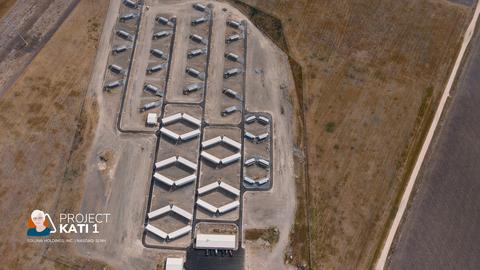
Soluna Finishes Project Kati 1 and Secures Conditional Base Load Position for All 166 MW in ERCOT
With Project Kati 1 complete, Soluna's total operating capacity increases to approximately 206 MW, delivering on the timeline the Company outlined on its second-quarter earnings call. Every phase of Project Kati 1 was delivered on time with infrastructure costs on budget.
Batch Zero is ERCOT's transitional process for evaluating large load interconnection requests on a system-wide basis, replacing the prior project-by-project approach. A Base Load classification means a project's interconnection capacity is preserved on the basis of prior study work, and that the project is not subject to further reliability evaluation or megawatt allocation within the Batch Zero study. According to ERCOT, more than 438,000 MW of large load interconnection requests had entered the queue as of mid-2026, with nearly 90 percent coming from data centers.
The classification is conditional pending completion of ERCOT's ongoing verification process, under which ERCOT may remove a project from Batch Zero if the applicant does not respond to its information requests. Soluna is participating in the verification process and expects the full 166 MW to be confirmed as Base Load.
"This is proof that the Soluna model works," said John Belizaire, CEO of Soluna. "We build where the power already is and we bring generation with us, and ERCOT's framework recognizes exactly that. Kati 1 is finished and energized today, and our full 166 megawatts is positioned as Base Load while much of the market is still waiting to learn what it will be allocated."
Project Kati is a 166 MW wind-powered campus in
Energization of Kati 1 began in February 2026 following ERCOT approval and proceeded in phases. Kati 1A completed its 48 MW on April 1, filled by Galaxy Digital, with the remaining 35 MW energized in phases through the summer. The co-mining agreement with Bitdeer (NASDAQ: BTDR) announced in August is now underway, with equipment being delivered and deployed.
Soluna continues to advance a development pipeline of approximately 6.3 GW, including more than 650 MW of AI and high-performance computing capacity in development at Kati 2 and Project Dorothy 3.
For more information, visit www.solunacomputing.com.
Safe Harbor Statement
This announcement contains forward-looking statements. These statements are made under the "safe harbor" provisions of the U.S. Private Securities Litigation Reform Act of 1995. These forward-looking statements include all statements, other than statements of historical fact, regarding our current views and assumptions with respect to future events regarding our business, including the anticipated timing and completion of the deployment described in this release, the expected hash rate and capacity contribution of that deployment, the final classification of the Project Kati campus in ERCOT's Batch Zero process, the development of Project Kati 2, and the Company's development pipeline. These forward-looking statements can be identified by terminology such as "will," "expects," "anticipates," "future," "intends," "plans," "believes," "estimates," "confident," and similar statements. Soluna may also make written or oral forward-looking statements in its periodic reports to the U.S. Securities and Exchange Commission ("SEC"), in its annual report to shareholders, in press releases and other written materials, and in oral statements made by its officers, directors, or employees to third parties. Statements that are not historical facts, including but not limited to statements about Soluna's beliefs and expectations, are forward-looking statements. Forward-looking statements involve inherent risks and uncertainties, further information regarding which is included in the Company's filings with the SEC. All information provided in this press release is as of the date of the press release, and Soluna undertakes no duty to update such information, except as required under applicable law.
About Soluna Holdings, Inc. (Nasdaq: SLNH)
Soluna is on a mission to make renewable energy a global superpower, using computing as a catalyst. The Company designs, develops, and operates digital infrastructure that transforms surplus renewable energy into global computing resources. Soluna’s pioneering data centers are strategically co-located with wind, solar, or hydroelectric power plants to support high-performance computing applications, including Bitcoin Mining, Generative AI, and other compute-intensive applications. Soluna’s proprietary software MaestroOS™ helps energize a greener grid while delivering cost-effective and sustainable computing solutions and superior returns. To learn more, visit solunacomputing.com and follow us on:
LinkedIn: linkedin.com/company/solunaholdings
X (formerly Twitter): x.com/solunaholdings
YouTube: youtube.com/c/solunacomputing
Newsletter: bit.ly/solunasubscribe
Resource Center: solunacomputing.com/resources
Soluna regularly posts important information on its website and encourages investors and potential investors to consult the Soluna investor relations and investor resources sections of its website regularly.
View source version on businesswire.com: https://www.businesswire.com/news/home/20260908967115/en/
Public Relations
West of Fairfax for Soluna
Soluna@westof.co
Source: Soluna Holdings, Inc.