
Teradata Delivers Autonomous Knowledge and Data Sovereignty Without Compromise
Teradata (NYSE:TDC) introduced the Teradata Factory, an on-premises deployment of the Teradata Autonomous Knowledge Platform built on Dell Technologies infrastructure.
Sentiment and the balance of points
Rhea-AI Sentiment reads the wording of the document, how positive or negative its language is on a 1 to 5 scale. The balance of points shown with the takes weighs what the document actually discloses, so the two can disagree, for example when a trial that missed its main goal is described in upbeat language.
Rhea-AI Summary
Teradata (NYSE:TDC) introduced the Teradata Factory, an on-premises deployment of the Teradata Autonomous Knowledge Platform built on Dell Technologies infrastructure. It unifies EDW, Lakehouse, and advanced AI workloads, integrating AI Studio, GPUs, modular scaling, and autonomous Tera agents for hybrid, private AI and data sovereignty.
General availability is expected in Q3 2026.
Details
News Market Reaction – TDC
On May 19, the day this news came out, TDC closed 0.37% below the previous close.
Data tracked by StockTitan Argus for the May 19 session.
Key Figures
- Teradata Factory availability
- Q3 2026
- Expected availability for the on-premises Teradata Factory deployment
Historical Context
-
ISG Buyers Guides rated Teradata Exemplary across seven AI and data categories.
-
Introduced Teradata Autonomous Knowledge Platform unifying AI, analytics, and data.
-
Reported growth in total ARR, public cloud ARR, revenue, and EPS for Q1 2026.
-
Named a Leader in Nucleus Research 2026 DSML Platform Technology Value Matrix.
-
Showcased over 150 AI-focused customer engagements across major industries.
24h Move is the share-price change in the day after each event; other market factors may also have contributed.
Key Terms
data sovereignty regulatory
agentic ai technical
llms technical
ml/dl technical
apache iceberg technical
delta lake technical
s3-compatible object storage technical
AI-generated analysis. How Rhea-AI works. Not financial advice.




The on-premises deployment of the Teradata Autonomous Knowledge Platform — private AI and enterprise-grade performance across hybrid environments
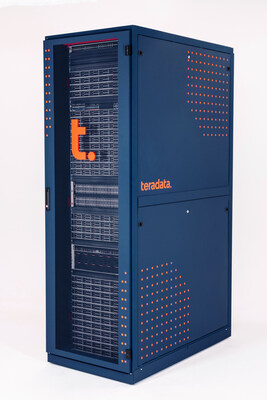
Teradata (NYSE: TDC) today announced the Teradata Factory, extending the Teradata Autonomous Knowledge Platform with a fully integrated on-premises foundation for enterprises running AI and analytics in hybrid environments. Built on Dell Technologies enterprise compute and storage, it unifies the complete Teradata software stack — including AI Studio — within a single management plane, supporting EDW, Lakehouse, and advanced AI workloads with enterprise-grade performance, private AI, and hybrid/multi-cloud flexibility built in.
What is Autonomous Knowledge?
Autonomous Knowledge is the ability of an enterprise software platform to turn structured and unstructured data, operating models and experience into trusted, governed understanding, decisions and actions. Grounded in industry-specific data, semantics, and lineage, it provides the business context for agentic AI to sense, decide, and act reliably and repeatedly across systems and tools — with minimal human intervention — while learning and improving over time.
Teradata Autonomous Knowledge Platform: On-Premises Deployment Highlights
The Factory runs EDW, Lakehouse, and advanced AI workloads on a single, integrated system. It includes the complete Teradata software suite introduced with the Teradata Autonomous Knowledge Platform — including AI Studio — ensuring consistent capabilities, governance, and management across cloud and on-premises deployments. Key elements include:
- On-premises foundation for an AI-native, agentic enterprise
- Integrated and ready to run with CPUs and GPUs
- Modular scale with predictable economics
- Workload management between mission-critical and experimental
- Open and hybrid by default with OTF support
Dell Technologies is a strategic collaborator for this on-premises deployment. Teradata integrates with the Dell AI Factory and Dell AI Data Platform — enabling the underlying data management foundation to ensure enterprise data is AI-ready: curated, governed, and accessible at the speed AI demands.
Teradata delivers the fully integrated software stack, management plane, and customer experience as a complete Teradata product — the on-premises element that complements cloud deployments and extends Teradata's trusted analytics footprint into the AI era.
Why It Matters
As AI and agentic workloads move into production, the infrastructure calculus is changing — GPU consumption, continuous inference, and data-intensive analytics are exposing the limits of public cloud economics in ways that traditional workloads never did. For regulated industries and the public sector, the pressure is even greater — hybrid and private AI are becoming requirements as organizations balance local control and data residency with multi-cloud flexibility. And as agentic AI moves from pilot to production, the real challenge is operationalizing it within the constraints that matter — governance, reliability, and cost control.
Why Teradata
Most on-premises AI infrastructure approaches shift cost and complexity rather than eliminate it — requiring enterprises to assemble, integrate, and maintain separate components across compute, storage, GPUs, database engines, AI tooling, and orchestration, each with its own pricing model and integration risk. The on-premises deployment of the Teradata Autonomous Knowledge Platform takes a different approach: one pre-engineered system, one management plane, and a fully integrated software and hardware stack delivered as a Teradata product — with the open architecture, performance, and cost control that AI at scale demands.
Executive Quotes
"The data platform and the AI platform are converging — yet most enterprises are still running AI far from their most critical data. The Teradata Factory brings EDW reliability, Lakehouse flexibility, and AI horsepower together in a single on-premises system — so enterprises get the full performance of the Teradata Autonomous Knowledge Platform wherever their data, regulations, and agents require."
— Sumeet Arora, Chief Product Officer, Teradata
"Data sovereignty is evolving beyond just a compliance requirement. It is becoming a core architectural decision as AI moves from pilot to production. Enterprises are realizing that where AI runs can be as important as how it runs. This on-premises deployment of the Teradata Autonomous Knowledge Platform can give enterprises a more direct path to run private AI on-premises, keeping it close to the data and under their governance, while maintaining the control, consistency, and performance needed at scale."
— Robert B. Kramer, Managing Partner, KramerERP
Platform Capabilities: On-Premises
On-premises foundation for an AI-native, agentic enterprise: This deployment is designed to deliver on-premises AI without compromise — the private AI controls, governance, and hybrid deployment model that make agents possible in regulated, mission-critical environments. Central to that is AI Studio, pre-integrated and ready to run on day one — bringing the full AI lifecycle on-premises, from data to models to agents to applications, with no data movement required. AI that runs where the data lives delivers fundamentally different performance, governance, and context than AI operating at a distance from it. As part of the Teradata Autonomous Knowledge Platform, this deployment provides a clear modernization path to an AI-native infrastructure foundation — ensuring enterprises have consistent governance, connected data, and agentic UX across cloud and on-premises environments as they scale.
Integrated and Ready to Run with GPUs: The on-premises deployment of the Teradata Autonomous Knowledge Platform delivers Dell enterprise compute and storage, AI Studio, and the complete Teradata software suite as a single pre-engineered system — running GenAI, LLMs, ML/DL, and classic analytics side-by-side, on-premises, ready from day one across EDW, Lakehouse, and advanced AI workloads. Customers don't source, integrate, or validate these components independently, reducing setup time and eliminating dependency sprawl while delivering a high-performing foundation for analytics and AI operations.
Modular Scale with Predictable Economics: A new management cluster and converged Ethernet fabric unify compute, storage, GPU, and networking under a single management plane, supporting modular expansion from pilot to production on the enterprise's timeline. Fixed infrastructure economics eliminate per-query, per-GPU, and data movement fees — designed specifically for analytics and AI at scale.
Autonomous Platform Management with Tera Agents: The Teradata Autonomous Knowledge Platform includes Tera — a set of pre-built platform agents that perform infrastructure and operational tasks autonomously, continuously and without manual intervention. Tera agents monitor and manage compute resources, optimize query execution, process telemetry, and control cloud and on-premises spend, reducing IT operational burden while keeping performance and cost on target.
Workload Management Between Mission-Critical and Experimental: Active System Management automatically maintains performance and SLAs for vital analytics while AI teams run exploratory or resource-intensive tasks — no resource contention, no trade-offs. The result is the control and compliance of private AI with enterprise-grade performance — keeping revenue-critical operations protected and compliant.
Open and Hybrid by Default: Support for Apache Iceberg, Delta Lake, and S3-compatible object storage reduces lock-in, protects existing investments, and links to the Connected Data Foundation and the Teradata Cloud — ensuring data is stored once and accessed consistently across cloud and on-premises environments.
Availability
The Teradata Factory is expected to be available in Q3 2026.
About Teradata
Teradata empowers enterprises to turn intelligence into autonomous action, grounding AI agents in deep business context and trusted data. As AI agents multiply, Teradata is the context foundation, governance layer, and performance backbone that companies need now. The Teradata Autonomous Knowledge Platform puts AI into production across cloud, on-premises, and hybrid environments.
The Teradata logo is a trademark, and Teradata is a registered trademark of Teradata Corporation and/or its affiliates in the
MEDIA CONTACT
Jennifer Donahue
Jennifer.Donahue@Teradata.com
 View original content to download multimedia:https://www.prnewswire.com/news-releases/teradata-delivers-autonomous-knowledge-and-data-sovereignty-without-compromise-302776583.html
SOURCE Teradata
FAQ
AI-generated questions and answers. How Rhea-AI works. Not financial advice.