
Teradyne Introduces UltraFLEXplus S Series for Edge AI Applications
Teradyne (TER) launched the UltraFLEXplus S series of semiconductor test systems for edge AI applications, extending its existing UltraFLEXplus platform.
Sentiment and the balance of points
Rhea-AI Sentiment reads the wording of the document, how positive or negative its language is on a 1 to 5 scale. The balance of points shown with the takes weighs what the document actually discloses, so the two can disagree, for example when a trial that missed its main goal is described in upbeat language.




New Series of Testers Extend the UltraFLEXplus Architecture to Deliver Superior Floor Space Economics for High-Mix, Variable-Volume Manufacturing
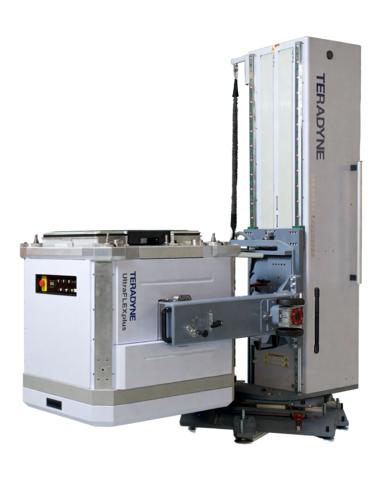
Teradyne UltraFLEXplus S series for edge AI applications extends the UltraFLEXplus architecture to deliver superior floor space economics for high-mix, variable-volume manufacturing.
The single-module UltraFLEXplus S series is positioned alongside the quad-module UltraFLEXplus Q series as part of Teradyne’s scalable UltraFLEXplus platform strategy. As demand grows at the edge, manufacturers face economic constraints, supply chain dynamics, device volumes, and product mixes that differ from those in data center and cloud applications, making cost effectiveness across both capital and operating expenses critical to success. The UltraFLEXplus S delivers an efficient option for these devices built on the same architecture and IG-XL software foundation.
"Floor space is one of the biggest hidden costs in high-mix manufacturing, and UltraFLEXplus S is built to optimize it," said Roy Chorev, vice president and general manager of the Compute Test division at Teradyne. "As AI moves from the data center to the edge, customers need a platform that fits their facilities today and scales with them tomorrow, without giving up the rigor and reliability they already trust from UltraFLEXplus."
Key Features and Benefits
- Right-Sized Footprint: A compact system that reduces floor space and facilities overhead without compromising test capability.
- Workflow Continuity: Utilizes the same instrument module ecosystem, IG-XL software environment, and test program library as the UltraFLEXplus Q series, allowing customers to reuse existing engineering investment.
- Optimized Economics: Engineered to maximize utilization, overall equipment effectiveness (OEE), and output per unit of floor space, the metrics that matter most in high-mix, variable-volume production environments.
- Scalable Platform: UltraFLEXplus S24 is the first member of the S series, offering customers an entry point into the UltraFLEXplus platform architecture.
- Broad Application Coverage: Supports both engineering and production test insertions, including tri-temperature testing, for microcontrollers (MCUs), multimedia, and edge AI devices across automotive, industrial, and consumer end markets.
With the introduction of UltraFLEXplus S series, Teradyne extends the reach of its proven UltraFLEXplus architecture to tackle emerging edge applications. By leveraging existing test development infrastructure, such as test program libraries, and the IG-XL software environment, UltraFLEXplus S supports Teradyne’s continued investment in helping customers scale test operations while improving engineering efficiency and quality to meet the evolving market demand.
For more information, visit us at booth #1143 at SEMICON West, October 13-15, 2026, in
About Teradyne
Teradyne (NASDAQ: TER) designs, develops, and manufactures automated test equipment and advanced robotics systems. Its semiconductor and electronics test solutions span the full AI device supply chain, from wafer to data center, enabling customers to meet the quality and reliability standards the AI era demands. Its advanced robotics business deploys intelligent automation across manufacturing, logistics, and data center operations for customers worldwide. For more information, visit teradyne.com. Teradyne® is a registered trademark of Teradyne, Inc., in the U.S. and other countries.
View source version on businesswire.com: https://www.businesswire.com/news/home/20261012117050/en/
For more information
Amy McAndrews
Investor Relations
Tel 978.370.3945
investor.relations@teradyne.com
Source: Teradyne, Inc.