
The University of Chicago, Toyota Collaborate to Advance Quantum Technologies for Future Mobility and Transportation
The first research phase will fund up to eight UChicago graduate students across theoretical and experimental laboratories.
Sentiment and the balance of points
Rhea-AI Sentiment reads the wording of the document, how positive or negative its language is on a 1 to 5 scale. The balance of points shown with the takes weighs what the document actually discloses, so the two can disagree, for example when a trial that missed its main goal is described in upbeat language.
Rhea-AI Summary
Toyota (TM) and the University of Chicago have entered a multi-year research agreement to develop quantum technologies for future transportation systems. The initiative will launch with five collaborative research projects spanning sensing, secure communications, materials discovery, theoretical modeling and electronic properties. The parties aspire to build a joint research portfolio supported by annual Toyota funding of up to $1 million.
The research will explore potential vehicle sensing improvements, protection of data transmissions and materials for energy storage systems. It takes a long-term approach, with energy-storage analysis goals extending over a 20-year horizon. A joint steering committee will coordinate the initial projects. UChicago is already hosting two Toyota researchers as visiting scientists.
Positive
- Minor pointMulti-year UChicago research agreement establishes five initial collaborative projects on quantum technologies for transportation.
- Minor point. Forward-looking: it has not happened yet and may not happen.Up to eight graduate students will receive first-phase funding and exposure to industrial research challenges.
- Minor pointTwo Toyota researchers are already hosted as visiting scientists in UChicago laboratories.
Negative
- Minor point. Forward-looking: it has not happened yet and may not happen.Up to $1 million in annual Toyota funding would support the joint portfolio the parties aspire to build.
News Explained
Under the multi-year agreement, the first phase will fund up to eight UChicago graduate students across theoretical and experimental labs, specifying student support as one part of the program.
AI-generated analysis. How Rhea-AI works. Not financial advice.


Multi-year research agreement will address key challenges in sensing, communication and energy storage
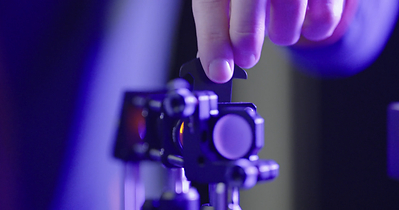
The collaboration bridges foundational quantum science at UChicago with Toyota's industrial expertise to explore applications across quantum sensing, secure communications and novel materials discovery. These applications could include new technology for vehicles to better sense their environments; ways to protect vehicle data transmissions; and new materials for energy storage systems.
The initiative will launch with five collaborative research projects, drawing heavily on the faculty and resources of UChicago's Pritzker School of Molecular Engineering (UChicago PME). Over the course of the agreement, the parties aspire to build a joint research portfolio supported by annual funding of up to
The collaboration initially focuses on five key areas:
- Communication;
- Sensing;
- Materials discovery;
- Theoretical modeling and prediction; and
- Electronic properties.
"By pairing academic discovery with industrial insights, we can accelerate the timeline for bringing quantum technologies out of the lab and into real-world transportation systems," said David Awschalom, Director of the Chicago Quantum Institute, the Liew Family Professor of Molecular Engineering at UChicago PME, and the lead researcher on the initiative. "This collaboration with Toyota offers extraordinary opportunities to push the boundaries of research in science and engineering."
The initiative is also intended to build the future quantum workforce by embedding UChicago PME students into projects that bridge academic research and industry needs.
"Toyota's collaboration with the University of
Translating quantum science to the road
Scientists and engineers believe quantum technologies could redefine future mobility systems and help support infrastructure by bypassing the physical limitations of classical technology.
The research under this initiative takes a long-term approach to foundational challenges in transportation, including:
- Extremely precise sensing: Quantum sensors can measure environmental changes with unprecedented accuracy in laboratory environments. Researchers will investigate translating this technology to potentially improve vehicle capabilities beyond what is possible with current sensor systems.
- Secure communications: Researchers will investigate methods to convey and help protect data transmission between vehicles, roadside infrastructure, and regional data and control centers.
- Material discovery: Using computational techniques based on quantum simulations, the teams aim to explore novel materials for the design of quantum sensors, transceivers and data links.
"The goal is to address deep technical questions that could help shape the analysis of energy storage systems over a 20-year horizon," said Giulia Galli, the Liew Family Professor of Molecular Engineering at UChicago PME and a leader on the theory science team on the initiative. "Through advanced computational modeling, we can predict and design materials with novel electronic properties for quantum sensing, helping detailed monitoring of energy storage systems."
Investing in the next generation
The first phase of the research initiative will fund up to eight UChicago graduate students across both theoretical and experimental labs, giving them direct exposure to industrial research challenges as advanced mobility systems are designed from the ground up.
"What makes this collaboration uniquely impactful is its direct investment in our students and postdoctoral researchers. Virtually all this funding will embed next-generation quantum scientists into collaborative, high-impact research from day one," Awschalom said. "Working alongside Toyota engineers gives our students a rare opportunity to see how fundamental quantum mechanics can be scaled to solve massive, real-world transportation and energy challenges."
A joint steering committee composed of representatives from UChicago and the Toyota Research Institute of
TMNA R&D
For more than 50 years, Toyota's Research & Development groups in
Contact
Dan Nied
Toyota Motor North America
Mobility Communications Manager
(310) 408-6381
Daniel.Nied@Toyota.com

 View original content to download multimedia:https://www.prnewswire.com/news-releases/the-university-of-chicago-toyota-collaborate-to-advance-quantum-technologies-for-future-mobility-and-transportation-302927370.html
SOURCE Toyota Motor North America
FAQ
AI-generated questions and answers. How Rhea-AI works. Not financial advice.
What will Toyota and the University of Chicago research under their quantum technology agreement?
The collaboration will begin with five research projects covering communications, sensing, materials discovery, theoretical modeling and electronic properties. Potential transportation applications include vehicle sensing, protection of data transmissions and new materials for energy storage systems.
How much funding does Toyota envision for its University of Chicago quantum research collaboration?
The parties aspire to build a joint research portfolio supported by Toyota funding of up to $1 million annually over the agreement. This is an intended funding framework, rather than a stated total commitment for the multi-year collaboration.