
Omdia: 65-Inch LCD TV Panel Cost to Rise 6.5% in 4Q26 Amid Higher PCB Prices
Sentiment and the balance of points
Rhea-AI Sentiment reads the wording of the document, how positive or negative its language is on a 1 to 5 scale. The balance of points shown with the takes weighs what the document actually discloses, so the two can disagree, for example when a trial that missed its main goal is described in upbeat language.




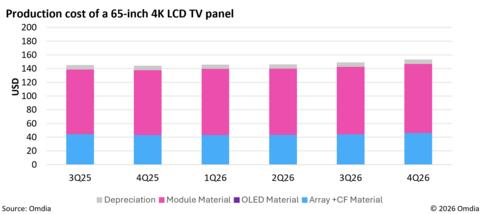
Production cost of a 65-inch 4K LCD TV panel
The display industry faces broader inflationary pressures in 2026. Ongoing tensions in the
Weaker yen eases the impact of higher LCD glass prices
Many materials used in array and color filter manufacturing processes are still trading in Japanese yen. Display glass is the most expensive material in the production process. Between 2023 and 2026, display glass prices rose around
The main components used in display module products are the backlight, polarizer, driver IC, and PCB. Chinese manufacturers are increasing their market share of polarizers and driver ICs. Most manufacturers of polarizer sub-films are Japanese companies. They raised film prices by
PCB prices rise as AI server investment tightens supply
PCB prices rose significantly in 2026. Glass cloth, a material used in PCBs, is also in short supply because there are few alternative sources.
If polarizers and driver IC prices rise, the YoY increase in panel production cost will exceed
“Chinese panel makers are seeking higher prices, while TV brands and original equipment manufacturers (OEMs) are already paying more for the semiconductors used in TV boards,” said Tadashi Uno, Research Manager at Omdia. “This has made negotiations over future panel prices difficult.”
What will shape your business in 2027? Explore Omdia’s The Forces Shaping 2027 for research and insights on AI monetization, supply chain disruption, digital sovereignty, and physical AI, and the opportunities and challenges they present for the year ahead.
ABOUT OMDIA
Omdia, part of TechTarget, Inc. d/b/a Informa TechTarget (Nasdaq: TTGT), is a technology research and advisory group. Our deep knowledge of tech markets grounded in real conversations with industry leaders and hundreds of thousands of data points, makes our market intelligence our clients’ strategic advantage. From R&D to ROI, we identify the greatest opportunities and move the industry forward.
View source version on businesswire.com: https://www.businesswire.com/news/home/20261124838230/en/
Fasiha Khan: fasiha.khan@omdia.com
Eric Thoo: eric.thoo@omdia.com
Source: Omdia