
Omdia: AMOLED Smartphone Display Shipments Expected to Decline Sharply in 2026
TTGT - Omdia forecasts a sharp slowdown in the AMOLED smartphone display market for 2026.
Sentiment and the balance of points
Rhea-AI Sentiment reads the wording of the document, how positive or negative its language is on a 1 to 5 scale. The balance of points shown with the takes weighs what the document actually discloses, so the two can disagree, for example when a trial that missed its main goal is described in upbeat language.




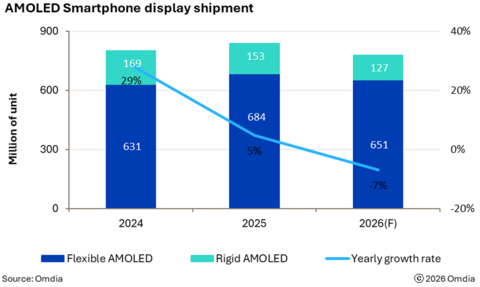
AMOLED smartphone display shipment
A surge in memory prices since the second half of 2025 has significantly increased component costs for smartphones putting pressure on pricing for new models in 2026. Chinese smartphone brands, whose competitive strength lies in offering a broad portfolio at aggressive price points, are expected to face particular challenges as component costs rise. Concerns that higher prices could dampen demand have already led to many of these vendors to revise their smartphone plans downward.
In contrast, Apple is well positioned to capture additional market share, supported by its stable semiconductor supply chain and higher product margins. A narrowing price gap between Apple and competing devices is expected to support a more aggressive sales strategy in 2026.
Broader macroeconomic factors are also weighing on the market. Ongoing geopolitical tensions and global economic pressures have contributed to rising energy costs and supply chain disruptions. Increases in petrochemical raw materials prices, alongside higher logistics and transportation costs, are further driving up expenses across the value chain and adding to overall market uncertainty.
These dynamics are expected to have a direct impact on the smartphone display market. Omdia forecasts that AMOLED smartphone display shipments in 2026 will fall to 778 million units in 2026, a
Brian Huh, Principal Analyst in Omdia’s Display research practice, said, “Despite Apple’s more aggressive iPhone sales strategy, the global AMOLED display market is expected to decline in 2026 due to weakening demand from Chinese smartphone brands. Paradoxically, softer demand may prompt Chinese AMOLED panel makers to adopt more aggressive pricing strategies to maintain their fab utilization rates.”
ABOUT OMDIA
Omdia, part of TechTarget, Inc. d/b/a Informa TechTarget (Nasdaq: TTGT), is a technology research and advisory group. Our deep knowledge of tech markets grounded in real conversations with industry leaders and hundreds of thousands of data points, make our market intelligence our clients’ strategic advantage. From R&D to ROI, we identify the greatest opportunities and move the industry forward.
View source version on businesswire.com: https://www.businesswire.com/news/home/20260417708632/en/
Fasiha Khan: fasiha.khan@omdia.com
Eric Thoo: eric.thoo@omdia.com
Source: Omdia