
Omdia: Premium TV Shipment to Grow 9.3% in 2027 as Global TV Shipments Decline
Omdia sees premium TVs as better able to absorb rising component costs than entry-level models.
Sentiment and the balance of points
Rhea-AI Sentiment reads the wording of the document, how positive or negative its language is on a 1 to 5 scale. The balance of points shown with the takes weighs what the document actually discloses, so the two can disagree, for example when a trial that missed its main goal is described in upbeat language.




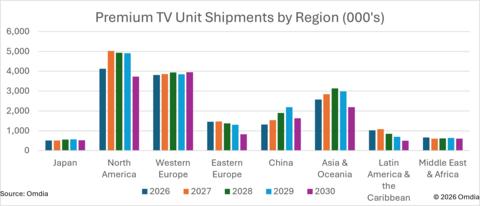
Premium TV unit shipments by region (000's)
Rising memory costs put pressure on entry-level TVs
Rising component costs and memory shortage are putting pressure on TV manufacturers’ margins, particularly in entry-level models. For a 65-inch LCD TV with an ASP of
With component supplies constrained, leading brands are prioritizing allocation to premium models to protect Enterprise Lifetime Value (ELTV) and hardware profitability. This is encouraging manufacturers to adjust their product portfolios and place greater emphasis on higher-value TVs.
"Component supply constraints are influencing TV manufacturers’ product strategies," said Patrick Horner, Practice Leader | TV Set Research – Consumer at Omdia. "Rising memory puts additional pressure on low-margin models, encouraging brands to prioritize premium TVs. Display innovations such as RGB LED backlights support this strategy by giving consumers a clearer reason to upgrade."
RGB LED backlights to account for
Display innovation is supporting the shift toward premium TVs. Brands are expanding the commercialization of RGB LED backlight architectures, offering improvements in color volume, localized dimming precision, and peak brightness levels to support higher price points.
Omdia forecasts that RGB LED backlights will account for
The outlook highlights the importance of technology upgrades and higher-value models as overall TV demand slows. North America’s projected premium shipment growth points to continued demand for advanced display features among higher-spending consumers. Manufacturers’ ability to manage component supplies and expand their premium portfolios will be important to capture this opportunity.
ABOUT OMDIA
Omdia, part of TechTarget, Inc. d/b/a Informa TechTarget (Nasdaq: TTGT), is a technology research and advisory group. Our deep knowledge of tech markets grounded in real conversations with industry leaders and hundreds of thousands of data points, make our market intelligence our clients’ strategic advantage. From R&D to ROI, we identify the greatest opportunities and move the industry forward.
View source version on businesswire.com: https://www.businesswire.com/news/home/20260929076423/en/
Fasiha Khan: fasiha.khan@omdia.com
Eric Thoo: eric.thoo@omdia.com
Source: Omdia