
Omdia survey finds phishing attacks top smartphone security concern for consumers
Omdia's latest survey reveals phishing attacks as the primary security threat for smartphone users, with 24% of respondents falling victim to such scams.
Sentiment and the balance of points
Rhea-AI Sentiment reads the wording of the document, how positive or negative its language is on a 1 to 5 scale. The balance of points shown with the takes weighs what the document actually discloses, so the two can disagree, for example when a trial that missed its main goal is described in upbeat language.
Rhea-AI Summary
Omdia's latest survey reveals phishing attacks as the primary security threat for smartphone users, with 24% of respondents falling victim to such scams. The study, conducted in October 2024 across 1,572 consumers globally, identifies malware, viruses, and physical theft as other major concerns.
In device security testing, Google Pixel 9 Pro and Samsung Galaxy S24 outperformed competitors, including Apple's iPhone 16 Pro. While Android devices successfully flagged spam calls, the iPhone 16 Pro lacked voice call protection. No device fully detected phishing emails, though Google Safe Browsing offered some protection against malicious links.
Consumer trust has been significantly impacted, with 73% reporting decreased confidence in smartphone brands and operating systems following security incidents. Security experts emphasize the need for improved baseline phishing protection and increased consumer awareness efforts from manufacturers.
Details
News Market Reaction – TTGT
The recorded move for TTGT in the trading session of this news was +2.82%.
Data tracked by StockTitan Argus. Session date unavailable.
AI-generated analysis. How Rhea-AI works. Not financial advice.




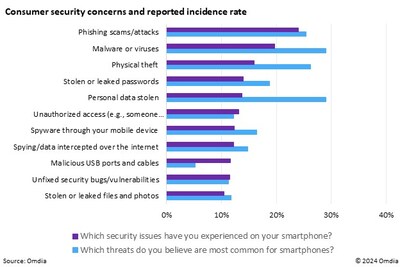
Omdia surveyed 1,572 consumers across the
In Omdia's recent assessment of leading premium smartphones, Google's Pixel 9 Pro and Samsung's Galaxy S24 outperformed Apple's iPhone 16 Pro and other Android-based devices, including the OnePlus 12, Xiaomi 14, and Honor Magic 6 Pro. Anti-phishing protection proved to be a weak spot across all devices, as none successfully intercepted all phishing texts, calls and emails.
Simulated spam calls revealed that all Android devices from Google, Xiaomi, OnePlus, Honor, and Samsung successfully flagged suspected spam calls before users answered, while the iPhone 16 Pro lacked similar voice call protection.
None of the tested devices fully No device flagged simulated phishing emails from Gmail as phishing, only identifying them as spam when sent from Google's SMTP.
Despite gaps in detecting phishing texts and emails, devices with Google Safe Browsing protections successfully blocked the link from opening, displaying a warning screen and requiring user confirmation to proceed. Performance across browsers varied significantly: Samsung Internet effectively blocked most links, including advanced custom URLs, while Xiaomi Mii and OnePlus Internet browsers failed to warn users about known malicious links, underscoring inconsistencies in Android device's security.
"The lack of security protection, particularly against the growing threat of phishing attacks, is eroding consumer trust," said Omdia Senior Analyst, Aaron West. "When consumers were asked if their trust following a security issue increased (due to how well the issue was handled) or decreased,
"Despite the latest protections in place by some manufacturers, it is difficult to protect
ABOUT OMDIA
Omdia, part of Informa TechTarget, Inc. (Nasdaq: TTGT), is a technology research and advisory group. Our deep knowledge of tech markets combined with our actionable insights empower organizations to make smart growth decisions.
Contact
Fasiha Khan: fasiha.khan@omdia.com

 View original content to download multimedia:https://www.prnewswire.com/news-releases/omdia-survey-finds-phishing-attacks-top-smartphone-security-concern-for-consumers-302355218.html
SOURCE Omdia
FAQ
AI-generated questions and answers. How Rhea-AI works. Not financial advice.