
United States Antimony Provides Update on Mining Success at Stibnite Hill, Montana
United States Antimony (NYSE:UAMY) reported continued mining success at its Stibnite Hill property near Thompson Falls, Montana, following the restart of operations in April 2026.
Sentiment and the balance of points
Rhea-AI Sentiment reads the wording of the document, how positive or negative its language is on a 1 to 5 scale. The balance of points shown with the takes weighs what the document actually discloses, so the two can disagree, for example when a trial that missed its main goal is described in upbeat language.
Rhea-AI Summary
United States Antimony (NYSE:UAMY) reported continued mining success at its Stibnite Hill property near Thompson Falls, Montana, following the restart of operations in April 2026. The company has moved 42 truckloads of stibnite ore, averaging about 14 tons per truck and approximately 10% antimony content, totaling roughly 576 tons so far in 2026.
Current mining and haulage are running at about three truckloads, or 42 tons of ore, per operating day. According to the company, this daily rate is more than double its 2025 mining campaign, when approximately 800 tons were transported over 45 days. Ore from Stibnite Hill is processed at the Radersburg, Montana flotation mill and then shipped as antimony concentrate to smelters in Thompson Falls, Montana, or Madero, Mexico to produce finished antimony products. The progress supports US Antimony’s strategy to increase domestically sourced antimony feedstock and reduce reliance on third‑party and foreign ore purchases.
Positive
- 576 tons of high-grade stibnite ore transported year-to-date 2026
- Daily ore movement of about 42 tons, roughly double 2025’s rate
- Stibnite ore averaging approximately 10% antimony content in 2026 campaign
- Domestic Stibnite Hill output supports strategy to cut third-party ore purchases
Negative
- None.
Details
News Market Reaction – UAMY
On Aug 25, the day this news came out, UAMY closed 1.86% above the previous close. Argus tracked a peak move of +3.1% during that session. Our momentum scanner recorded 21 alerts in the available session data. Relative volume reached 1.6x the daily average during tracking.
Data tracked by StockTitan Argus for the Aug 25 session.
Key Figures
- Ore truckloads
- 42 truckloads
- 2026 mining campaign to date
- Ore per truck
- approximately 14 tons per truck
- 2026 Stibnite Hill operations
- Antimony content
- approximately 10%
- Stibnite ore transported in 2026
- Ore transported
- approximately 576 tons
- 2026 mining campaign to date
- Daily haulage rate
- approximately three truckloads per operating day
- Current Stibnite Hill operations
- Daily ore rate
- approximately 42 tons of ore per day
- Current Stibnite Hill operations
- 2025 ore transported
- approximately 800 tons
- 2025 mining campaign
- 2025 campaign duration
- 45-day period
- 2025 mining campaign
Historical Context
-
Board authorized a share repurchase program for up to $100 million
-
Revenue declined and full-year guidance was reduced amid weaker antimony prices
-
CEO was scheduled for a Bloomberg Television interview
-
CEO was scheduled for a FOX Business television appearance
-
Company scheduled its second-quarter results webcast for August 11
24h Move is the share-price change in the day after each event; other market factors may also have contributed.
Key Terms
stibnite technical
flotation mill technical
antimony concentrate technical
AI-generated analysis. How Rhea-AI works. Not financial advice.




"The Critical Minerals and ZEO Company"
~ Antimony, Gold, Tungsten, and Zeolite ~
DALLAS, TX / ACCESS Newswire / August 25, 2026 / United States Antimony Corporation ("USAC," "US Antimony," or the "Company"), (NYSE:UAMY)(NYSE Texas:UAMY), a leading producer and processor of antimony, zeolite, and other critical minerals, and the only fully integrated antimony company in the world outside of China and Russia, is pleased to announce the successful continuation of mining operations at its Stibnite Hill property in Thompson Falls, Montana.
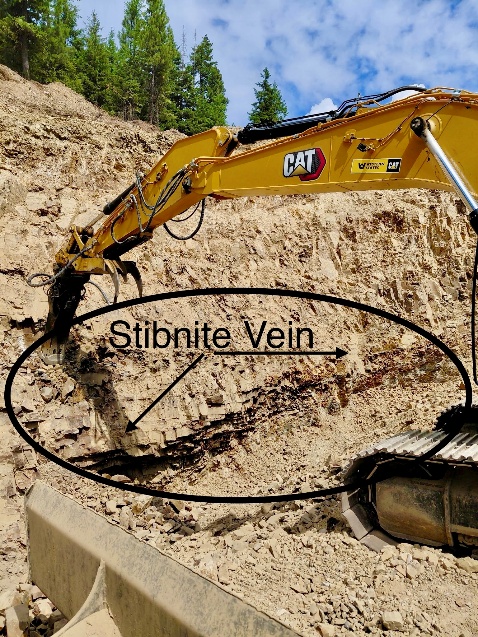
Since resuming mining operations this past spring in April, USAC has continued to advance its domestic antimony mining program at Stibnite Hill in Montana. To-date in 2026, the Company has transported 42 truckloads of stibnite ore from the mine, averaging approximately 14 tons per truck and approximately
Mining and haulage operations are currently progressing at a rate of approximately three truckloads per operating day, or approximately 42 tons of ore per day. The current pace represents a significant increase compared with the Company's 2025 mining campaign, when USAC transported approximately 800 tons of antimony ore over a 45-day period. At its present operating rate, the 2026 campaign is moving ore down the mountain at over two times faster than last year's daily rate.
Material mined at Stibnite Hill is transported for processing to the Company's Radersburg, Montana flotation mill, with the resulting antimony concentrate then being shipped to either USAC's Thompson Falls smelter or the Madero smelter located in Mexico for conversion into finished antimony products, including mill spec material.
The continued progress at Stibnite Hill represents another important step in USAC's previously announced strategy to expand its access to domestically sourced antimony feedstock and begin reducing its reliance on third-party and foreign ore purchases. The Company restarted mining operations at Stibnite Hill in April 2026 after winter weather brought the previous year's campaign to a close in November 2025.
Commenting on the current mining operations at Stibnite Hill, Montana, Mr. Joseph Bardswich, P.E., Executive Vice President and Chief Mining Engineer, stated, "We continue to improve our operations on Stibnite Hill by moving rock off the mountain over twice as fast as we did last year. Our contractors are becoming more efficient and we are fortunate to be able to continue mining antimony within the vein systems we have been excavating. We anticipate accomplishing similar results soon in Alaska."
About USAC:
United States Antimony Corporation and its subsidiaries in the U.S., Mexico, and Canada ("USAC," "U.S. Antimony," the "Company," "Our," "Us," or "We") sell antimony, zeolite, and precious metals primarily in the U.S., Mexico, and Canada. The Company mines, purchases, and processes ore primarily into antimony oxide, antimony metal, antimony trisulfide, and precious metals at its facilities located in Montana and Mexico. Antimony oxide is used to form a flame-retardant system for plastics, rubber, fiberglass, textile goods, paints, coatings, and paper, as a color fastener in paint, and as a phosphorescent agent in fluorescent light bulbs. Antimony metal is used in bearings, storage batteries, and ordnance. Antimony trisulfide is used as a primer in ammunition. The Company also recovers precious metals, primarily gold and silver, at its Montana facility from third party ore. At its Bear River Zeolite ("BRZ") facility located in Idaho, the Company mines and processes zeolite, a group of industrial minerals used in water filtration, sewage treatment, nuclear waste and other environmental cleanup, odor control, gas separation, animal nutrition, soil amendment and fertilizer, and other miscellaneous applications. Beginning in 2024 and continuing in 2025, the Company acquired mining claims, real properties (patented claims) and leases located in Alaska, Montana, and Ontario, Canada in an effort to reduce the cost of third-party antimony ore purchases and to expand its product offerings.
Learn more about United States Antimony Corporation at www.usantimony.com.
Forward-Looking Statements:
This press release contains forward-looking statements within the meaning of the Private Securities Litigation Reform Act of 1995, including, without limitation, statements regarding the Company's future operations, production levels, financial performance, business strategy, market conditions, demand for antimony, zeolite, other critical minerals, and precious metals, expected costs, and other statements that are not historical facts. These statements are based on current expectations, estimates, forecasts, and projections about the industries in which the Company operates, as well as management's beliefs and assumptions. Words such as "anticipates," "expects," "intends," "plans," "believes," "seeks," "estimates," "may," "will," "should," "could," and variations of these words or similar expressions are intended to identify such forward-looking statements.
Forward-looking statements are subject to certain risks and uncertainties that could cause actual results to differ materially from those indicated in such statements, including, but not limited to: fluctuations in the market prices and demand for antimony and zeolite; changes in domestic and global economic conditions; operational risks inherent in mining and mineral processing; geological or metallurgical conditions; availability and cost of energy, equipment, transportation, and labor; the Company's ability to maintain or obtain permits, licenses, and regulatory approvals; changes in environmental and mining laws or regulations; competitive factors; the impact of geopolitical developments; and the effects of weather, natural disasters, or health pandemics on operations and supply chains. Additional information regarding risk factors that could cause actual results to differ materially is included in the Company's filings with the U.S. Securities and Exchange Commission, including its Annual Report on Form 10-K and Quarterly Reports on Form 10-Q.
The Company undertakes no obligation to publicly update or revise any forward-looking statements, whether as a result of new information, future events, or otherwise, except as required by law. Readers are cautioned not to place undue reliance on these forward-looking statements, which speak only as of the date hereof.
Investor Relations Contact:
Jonathan Miller, VP, Investor Relations
United States Antimony Corporation
4438 W. Lovers Lane, Unit 100
Dallas, Texas 75209
Phone: 406-606-4117
Email: Jmiller@usantimony.com
Media Relations Contact:
Anthony D. Andora
Edge Consulting, Inc.
1560 Market Street, Ste. 701
Denver, Colorado 80202
Phone: 720-317-8927
Email: Anthony@EdgeConsultingSolutions.com
SOURCE: United States Antimony Corporation
View the original press release on ACCESS Newswire
FAQ
AI-generated questions and answers. How Rhea-AI works. Not financial advice.