Rhea-AI Sentiment reads the wording of the document, how positive or negative its language is on a 1 to 5 scale. The balance of points shown with the takes weighs what the document actually discloses, so the two can disagree, for example when a trial that missed its main goal is described in upbeat language.
Peter Geronimo to amplify and streamline payments offerings to large business and institutional clients; Raj Gazula to lead strategy as Chief Administrative Officer
MINNEAPOLIS--(BUSINESS WIRE)--
U.S. Bank has named two new senior leaders to its Payments: Merchant and Institutional (PMI) team as the company continues to bolster and transform its Payments businesses.
Peter Geronimo
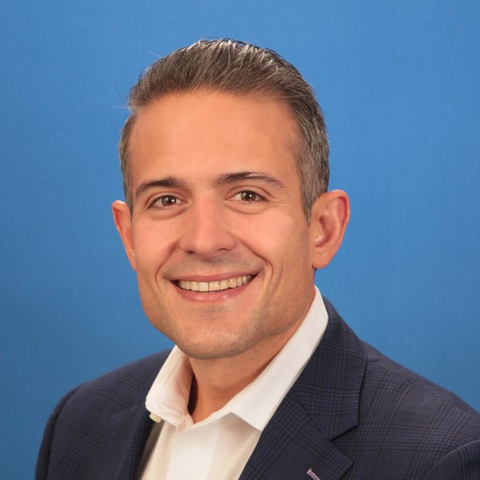
Peter Geronimo has joined U.S. Bank to lead the company’s new PMI Sales Distribution team. This new team will further enable U.S. Bank to deliver a holistic approach to clients, combining exceptional relationship management and payments expertise to best serve clients’ needs.
Geronimo most recently served as Managing Director and Head of North American Sales for Commercial Bank, Services at Citi. In addition to his 16 years of experience in treasury, payments and working capital, he has a successful track record for driving strategic growth through an engaging sales culture, navigating complex organizations to deliver exceptional client experiences. Geronimo is based in New York City.
Raj Gazula has also joined the bank to lead strategy and serve as the Chief Administrative Officer for PMI. Gazula brings nearly 30 years of experience to the role, with deep payments and strategy experience. He led Wholesale Payments at Truist including treasury solutions, merchant acquiring and commercial cards. Prior to that, he led the strategy and transformation work for the Corporate and Institutional Group when Sun Trust integrated with BB&T. Gazula is based in Atlanta.
Both Geronimo and Gazula will report to Mark Runkel, vice chair and head of PMI at U.S. Bank.
“I’m delighted to welcome Peter and Raj to the PMI team,” said Runkel. “U.S. Bank has deep experience, diverse global capabilities and longevity in payments. Peter and Raj are joining at an important time in our transformation journey. The work we’ve done over the past year has allowed us to reimagine how we harness our payments capabilities, simplify and streamline the client experience and more effectively meet our clients’ needs now and as they grow.”
Payments transformation has been one of three strategic growth priorities at U.S. Bank over the past year, along with organic growth and expense management. PMI is a global business encompassing merchant acquiring, card issuing and money movement for mid-market to large institutional companies.
About U.S. Bancorp
U.S. Bancorp, with approximately 70,000 employees and $692 billion in assets as of December 31, 2025, is the parent company of U.S. Bank National Association. Headquartered in Minneapolis, the company serves millions of customers locally, nationally and globally through a diversified mix of businesses including consumer banking, business banking, commercial banking, institutional banking, payments and wealth management. U.S. Bancorp has been recognized for its approach to digital innovation, community partnerships and customer service, including being named one of Fortune’s most admired superregional banks. Learn more at usbank.com/about.
The treasury is the department or area within a government or organization responsible for managing its money, finances, and financial strategies. It handles tasks like collecting revenue, paying bills, and planning for future financial needs, much like a household manages its budget. For investors, understanding the treasury is important because it influences interest rates, government spending, and overall economic stability.
merchant acquiringfinancial
Merchant acquiring is the process by which businesses accept electronic payments from customers, typically through credit or debit cards. It involves a partnership with a financial service provider that handles the technology and security needed to process these transactions. For investors, merchant acquiring is important because it generates steady revenue streams for financial companies and indicates the health of consumer spending activity.
commercial cardsfinancial
Commercial cards are payment cards issued to businesses for expenses like supplier purchases, travel, fuel and other operational costs; think of them as company credit cards that replace invoices and petty cash. They matter to investors because they create steady fee and interest income for banks and payment processors, provide insight into corporate spending trends and cash flow, and can affect credit risk and profitability for firms that issue or service them.
restricted stockfinancial
Shares granted to an individual that carry limits on transfer or sale until certain conditions are met, such as staying with the company for a set time or hitting performance targets. Think of them as a locked gift that gradually opens; for investors they matter because they affect how many shares may enter the market later, signal management incentives and potential dilution, and reveal confidence in future company performance.
rule 144regulatory
Rule 144 is a U.S. securities regulation that sets conditions under which restricted or insider-held shares can be legally resold to the public, such as required holding periods, availability of public information, limits on how much can be sold at once, and certain filing requirements. For investors it matters because it determines when previously locked-up shares can enter the market — like a release valve that can increase supply, affect share price, and signal insider intent.
A senior unsecured medium-term note is a company-issued IOU that promises to pay interest and return principal after a few to several years; “senior” means it gets paid before lower-priority creditors, “unsecured” means it isn’t backed by specific assets, and “medium-term” refers to its multi-year maturity. For investors, these notes balance higher yields than short-term cash with more risk than secured debt, and their payment priority matters if the issuer faces financial trouble—think of joining an orderly repayment line but without collateral as a safety net.
fdicregulatory
The Federal Deposit Insurance Corporation (FDIC) is a U.S. government agency that protects individual and business bank deposits by insuring accounts up to a set limit, acting like a safety net for savers if a bank fails. It matters to investors because FDIC insurance reduces the chance of sudden losses for depositors, supports confidence in the banking system, and can influence the perceived risk and stock value of banks and financial firms.
change in controlregulatory
A "change in control" occurs when the ownership or management of a company shifts significantly, such as through a merger, acquisition, or sale of a large part of its assets. This change can impact how the company is run and may influence its future direction. For investors, it matters because it can affect the company's stability, strategy, and value, often signaling potential changes in investment risk or opportunity.