
XTEND AI Robotics, Inc. Secures U.S. Patent for Smart Payloads Capable of Actively Directing Missions
The patent expands protection for the underlying mechanisms that let payloads shape robotic platform behavior.
Sentiment and the balance of points
Rhea-AI Sentiment reads the wording of the document, how positive or negative its language is on a 1 to 5 scale. The balance of points shown with the takes weighs what the document actually discloses, so the two can disagree, for example when a trial that missed its main goal is described in upbeat language.




Powered by XOS, the patented system lets a smart payload steer the platform in real time, while the operator remains in command of every decision
XTEND AI Robotics, Inc. (NYSE: XTND), a leader in software systems and Physical AI, today announced that the United States Patent and Trademark Office has granted
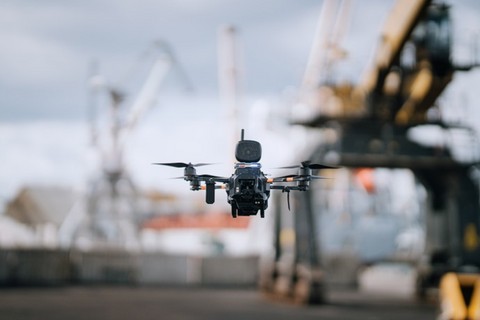
That capability runs through XOS, XTEND's proprietary operating system. A payload adaptor forms the physical and communications link between a smart payload and the platform's controller, and XOS is what turns the payload's signal a navigation instruction, such as avoiding a road or another UAV, into the platform's actual flight-control response. Through XOS, the payload can actively direct the mission.
Beyond navigation, and while the operator remains in command throughout, XOS applies the same principle to other in-field behavior, including allowing a payload to switch the operator's display view or triggering defense-oriented modes like evasion, interception, or countermeasures.
The
The same architecture is also what opens XTEND’s platforms to the wider industry through the XOS Marketplace, XTEND’s open ecosystem. Much like an app store, it lets third-party developers and manufacturers offer new capabilities to XTEND’s customers, covering hardware as well as software. Through the XTEND Generic Payload Hub, a common interface on XTEND platforms, manufacturers of sensors, cameras, communications systems and mission modules, can design a payload and install it across the XTEND fleet, without a separate integration for each airframe. The patented architecture is what makes those payloads more than accessories. Through XOS, a partner’s payload can take part in the mission itself, shaping how the platform navigates and responds, while the operator stays in command.
“Every mission is different, and until now, adapting a platform to a new mission meant an operator had to stop and reconfigure it by hand,” said Aviv Shapira, Co-Founder and CEO of XTEND. “With this patent, the platform adapts on its own, in real time, based on what it's carrying, while the operator still commands every decision that matters.”
Forward-Looking Statements
This press release contains forward-looking statements within the meaning of the Private Securities Litigation Reform Act of 1995, including statements regarding the capabilities and anticipated benefits of XOS, the patented smart-payload architecture, the XOS Marketplace and the XTEND Generic Payload Hub, and XTEND's intellectual property strategy and continued investment in XOS and the robotic platforms built on it. These statements are based on current expectations and assumptions and involve risks and uncertainties that could cause actual results to differ materially, including XTEND's ability to obtain, maintain and enforce protection for its intellectual property, XTEND's ability to attract third-party developers and manufacturers to the XOS ecosystem, market acceptance of XTEND's products, the timing and size of orders from government and defense customers, and the other risks described under "Risk Factors" in the registration statement on Form S-4 filed with the SEC in connection with the business combination and in XTEND's other filings with the SEC, available at www.sec.gov. Readers are cautioned not to place undue reliance on forward-looking statements, which speak only as of the date of this press release. XTEND does not undertake any obligation to update or revise any forward-looking statement, whether as a result of new information, future events, or otherwise, except as required by applicable law.
About XTEND AI Robotics, Inc.
XTEND AI Robotics, Inc. (the “Company”) operates under two distinct business strategies. Through its wholly owned subsidiary XTEND Reality Expansion Ltd. (“XTEND”), the Company develops and sells software and advanced robotic hardware solutions for high-threat, complex operational environments where human exposure carries significant risk. Powered by its proprietary XTEND Operating System (“XOS”), these solutions are designed to provide autonomy at the edge. Through its wholly owned subsidiary JFB Construction Holdings (“JFB”), the Company operates a commercial and residential real estate construction and development strategy, delivering services including retail corporate buildouts, multifamily developments and luxury residential homes. The Company was formed through the combination of XTEND and JFB, uniting two complementary businesses to pursue shared technology and market opportunities, including applying XTEND's AI-enabled drone technology to jobsite security, land surveying, building inspections and monitoring on JFB's real estate projects, and leveraging JFB's construction expertise to help reduce the cost of XTEND's U.S. manufacturing expansion. For more information, visit www.XTEND.me.
View source version on businesswire.com: https://www.businesswire.com/news/home/20261005052051/en/
Media Contacts
XTEND AI Robotics, Inc.
Investor Relations:
MZ North America
Shannon Devine
203-741-8811, XTND@mzgroup.us
Media:
Headline Media
Sarah Small
929-255-1449, sarah@headline.media
Source: XTEND AI Robotics, Inc.