
Touchscreen MacBook Pro: Starts at $2,899 and Arrives November 6


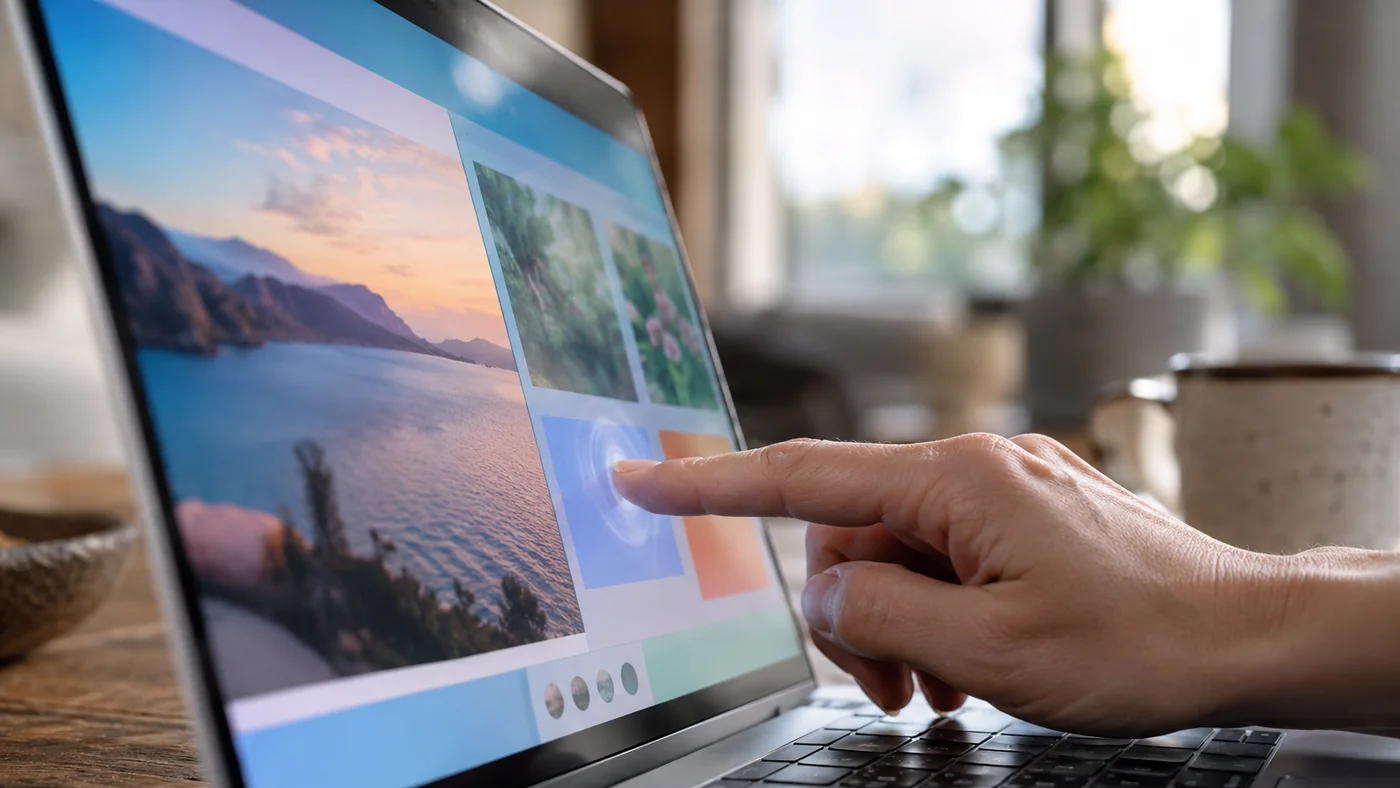
Apple’s first touch screen Mac, a MacBook Pro whose OLED screen has tiny dots that make their own light, opened for orders October 28 from $2,899 and arrives November 6. On Apple’s US store, by our count, it costs exactly $400 more than a regular-screen model with the same chip, memory and storage.
The short answer. Apple has put a touch screen on a Mac for the first time, inside a thinner and lighter MacBook Pro sold in two sizes. For a laptop shopper, tapping a Mac screen is now possible, but only on models from $2,899, while the $1,999 MacBook Pro of a day earlier has no touch. This guide sets both laptops side by side and finds the touch and OLED package priced $400 above a regular-screen laptop matched on chip, memory and storage.
The touch MacBook Pro in three numbers
On this page
- What the new MacBook Pro touch screen does
- MacBook Pro touch screen price and release date
- MacBook Pro M6 vs the touchscreen MacBook Pro
- How much more the touch screen MacBook Pro costs
- What the MacBook Pro OLED screen is
- MacBook Pro touch screen battery life and weight
- Apple Mac sales and the touch MacBook Pro
- Frequently asked questions
What the new MacBook Pro touch screen does
You can now tap, swipe and pinch right on the screen of a Mac, the way you would on an iPhone. The keyboard and trackpad stay, and Apple says many apps work with touch from the first day because the Mac treats a tap like a click.
Apple calls the feature Touch, and it is the headline of the October 28 announcement. You scroll a web page with a swipe, pinch to zoom into a photo, drag slides between presentations, and double-tap a window to make it fill the screen. Apple says the touch sensor is built into the display panel itself, which it says cuts the delay between your finger and what happens on screen.
Johny Srouji, Apple’s chief hardware officer, called the laptop “a monumental step forward for the Mac,” and said touch gives pros “a whole new way” to work with their content. Apple also redesigned the hinge so the screen holds steadier when you press on it.
The glass has a coating that resists fingerprints, according to Apple’s technical specifications. The same page lists AssistiveTouch and Touch Accommodations among the laptop’s accessibility features, the settings that help people with disabilities use a device.
Apps are where it gets less certain. Apple says “many existing apps work with Touch right away, because macOS automatically translates touches into clicks,” so a tap acts like a mouse click even in an app nobody rewrote. Apps built for touch go further, and Apple names Zoom, Canva, Microsoft Word and Excel, Adobe Lightroom and Blender among them, though its own footnote says the apps it lists “will be available later this year.”
The top of the screen also gets the Dynamic Island, the pill-shaped area from the iPhone that shows live updates such as a song playing or a call coming in. Apple says Spotlight, the Mac’s built-in search box, only moves there when Siri AI is available and turned on, and Siri AI is still a test version, a beta, in macOS 27.2.
The announcement leaves out the stylus question. Neither the release nor Apple’s technical specifications page says anything about Apple Pencil or any stylus; the specifications list only “Multi-Touch gesture support.” Touch has also been on a MacBook Pro once before, in a smaller way. On October 27, 2016, Apple introduced the Touch Bar, a thin touch display that replaced the row of function keys. The new model makes the whole screen touchable.
MacBook Pro touch screen price and release date
The smaller touch model starts at $2,899 and the bigger one at $3,399. Orders opened on October 28, and the first laptops reach buyers and Apple Stores on Friday, November 6.

Show the data
| Category | Value |
|---|---|
| M6 | $1,999 |
| M5 Pro regular screen | $2,499 |
| M5 Pro touch | $2,899 |
| M5 Max regular screen | $4,099 |
| M5 Max touch | $4,499 |
Each size comes with one of two chips, the M5 Pro or the more powerful M5 Max, and the M5 Max versions start well above $4,000. College students and educators pay less through Apple’s education pricing, from $2,749 for the 14-inch model.
Orders are open in 30 countries and regions, including the US, Apple says. The cheaper M6 MacBook Pro is sold in 35, and the releases do not list which places differ.
Apple’s own releases put the 14-inch touch model at £2,899 in the UK and C$3,999 in Canada, with the same November 6 date.
Apple also offers a lease through Klarna, a pay-over-time company, from $55.99 a month on the $2,899 model. Apple’s terms call it a lease, not a purchase, and the laptop becomes yours at the end only if you pay its purchase option.
Apple’s store offers AppleCare+, its paid repair plan, on the touch models from $149.99 a year. With it, accidental damage to the screen is fixed for a $99 fee, the same fee Apple lists for nearly every other Mac.
Some touch features Apple showed off, in apps such as Final Cut Pro and Logic Pro, come with Apple Creator Studio. Apple says its updates reach the App Store in November, and the subscription costs new subscribers $12.99 a month after a free trial.
| Model | Chip | Starting price | Education price |
|---|---|---|---|
| 14-inch | M5 Pro | $2,899 | $2,749 |
| 16-inch | M5 Pro | $3,399 | $3,199 |
| 14-inch | M5 Max | $4,499 | $4,199 |
| 16-inch | M5 Max | $4,799 | $4,499 |
Source: Apple announcement, October 28, 2026, US prices. Lease: 36 months, excluding taxes and trade-in credit.
MacBook Pro M6 vs the touchscreen MacBook Pro
The $1,999 MacBook Pro from October 27 has Apple’s newest chip, the M6, but no touch and no OLED screen. The touch model costs $900 more, starts with more memory and cores, and runs on the larger M5 Pro chip that Apple first put in laptops in March.
That can sound backward, so it helps to know what each chip is. The M6 is Apple’s first chip made with 2-nanometer technology, a smaller and newer way of making chips, and it first appeared in the Mac mini on August 25. The M5 Pro came out on March 3 and is the bigger chip. It has up to 18 processor cores, the parts of a chip that work on tasks side by side, against 12 for the M6.
The starting models differ by more than the chip. The M6 laptop starts with less memory and fewer cores than the touch model, as the table below shows, and both start with 1TB of storage.
| 14 inch M6 | 14 inch M5 Pro regular screen | 14 inch M5 Pro touch | |
|---|---|---|---|
| Chip | M6 | M5 Pro | M5 Pro |
| Processor cores at the starting price | 12 | 15 | 15 |
| Memory and storage at the starting price | 16GB / 1TB | 24GB / 1TB | 24GB / 1TB |
| Screen | Liquid Retina XDR (regular screen) | Liquid Retina XDR (regular screen) | PROLED XDR (OLED) |
| Touch screen | No | No | Yes |
| Starting US price | $1,999 | $2,499 | $2,899 |
| Weight | 3.4 pounds | 3.5 pounds | 3.0 pounds |
| Web browsing battery (Apple rating) | Up to 16 hours | Up to 14 hours | Up to 14 hours |
| Fast USB-C ports | 3 Thunderbolt 4 | 3 Thunderbolt 5 | 3 Thunderbolt 5 |
Newer and bigger pull in different directions, and neither of this week’s releases tests the M6 against the M5 Pro. Apple’s M6 announcement compares the M6 with the plain M5 and the older M1, claiming up to 30% faster graphics than the M5. So neither release says which of the two laptops is faster at a given job.
Apple pitches the two at different buyers. It names college students and business users for the M6 model, which Shelly Goldberg, Apple’s vice president of Hardware Engineering, said offers “a fantastic combination of performance, capability, and value.” Apple aims the touch model at professionals such as photographers and designers. It has faster Thunderbolt 5 ports and support for three extra monitors, against Thunderbolt 4 and two monitors on the M6.
How much more the touch screen MacBook Pro costs
The touch and OLED version costs $400 more than a regular-screen MacBook Pro with the same chip, memory and storage. On the cheapest model, that is about 16% on top of the regular laptop’s price, and it also buys a lighter body and the Dynamic Island.
Apple keeps selling the regular-screen MacBook Pro beside the new one, so the two can be set side by side on its US store. The gap is the same in each of the four matched pairs of starting models, and Apple does not price touch on its own.

Show the data
| Item | Regular screen | Touch and OLED | Change |
|---|---|---|---|
| 14 inch M5 Pro | $2,499 | $2,899 | +$400 |
| 16 inch M5 Pro | $2,999 | $3,399 | +$400 |
| 14 inch M5 Max | $4,099 | $4,499 | +$400 |
| 16 inch M5 Max | $4,399 | $4,799 | +$400 |
That gap buys a package. It includes the OLED screen, touch, the Dynamic Island and a lighter body. The 14-inch M5 Pro touch model weighs 3 pounds, against 3.5 pounds for the regular-screen M5 Pro. The new screen and touch come together, and Apple lists no model that has one of them alone.
The nano-texture glass, a matte finish that cuts glare, costs $150 extra on both lines, so it leaves the gap unchanged.
Show the data
| Matched model | Regular screen | Touch and OLED | Difference |
|---|---|---|---|
| 14-inch, M5 Pro, 15 processor cores, 24GB memory, 1TB storage | $2,499 | $2,899 | $400 |
| 16-inch, M5 Pro, 18 processor cores, 24GB memory, 1TB storage | $2,999 | $3,399 | $400 |
| 14-inch, M5 Max, 32 graphics cores, 36GB memory, 2TB storage | $4,099 | $4,499 | $400 |
| 16-inch, M5 Max, 32 graphics cores, 36GB memory, 2TB storage | $4,399 | $4,799 | $400 |
Source: Apple US store, MacBook Pro and MacBook Pro with PROLED XDR Display pages, read October 28, 2026; standard glass; difference is our calculation.
What the MacBook Pro OLED screen is
OLED is a kind of screen where each tiny dot makes its own light, so a dark dot can go fully black. On Apple’s own figures, the new screen has ten times the contrast of its current laptop screen.
Apple calls the new screen PROLED XDR. It rates the screen’s contrast ratio at 10,000,000 to 1, meaning its whitest white is ten million times brighter than its darkest black. The M6 model’s screen is rated at 1,000,000 to 1.
The new screen also has a higher peak brightness, 2,000 nits, a unit of brightness, against 1,600 for the current screen. Both screens are rated at up to 1,000 nits when the whole screen stays bright. So the difference is in the brightest spots and in sunlight, where Apple says the new screen stays easy to read.
Apple adds a wider range of colors used by photographers and printers, called Adobe RGB, and says the OLED screen’s thinner build is what lets the new laptops slim down. The bigger model’s screen grows to 16.3 inches from 16.2, while the smaller one stays at 14.2 inches.
MacBook Pro touch screen battery life and weight
The “up to 24 hours” Apple quotes is a video figure for the bigger touch model with the M5 Pro chip. For web browsing, Apple rates the smaller touch model lower than the cheaper M6 laptop.
Apple publishes two battery numbers for each model, one for streaming video and one for browsing the web over Wi-Fi. For web browsing, it rates the 14-inch touch model with the M5 Pro at 14 hours. That matches the regular-screen model with that chip, while the M6 model gets 16. These are Apple’s own tests, run on different setups, so they do not show how much of any gap comes from the screen or from the chip. Real use varies with brightness and apps.

Show the data
| Category | Value |
|---|---|
| 14 inch M6 | 16 |
| 14 inch M5 Pro, regular screen | 14 |
| 14 inch M5 Pro, touch | 14 |
| 14 inch M5 Max, touch | 13 |
| 16 inch M5 Pro, touch | 17 |
| 16 inch M5 Max, touch | 16 |
Charging has a catch on the cheapest touch model. The $2,899 version comes with a 70-watt charger, watts being how much power a charger can send. Apple’s specifications list fast charging for the 14-inch model with a charger of 96 watts or more.
At 3 pounds, the 14-inch touch model with the M5 Pro is lighter than every other MacBook Pro on Apple’s specification pages, including the M6 model at 3.4 pounds. Apple says the bigger touch model with the M5 Pro is 0.7 pounds lighter than before.
Show the data
| Model | Web browsing | Video streaming | Weight |
|---|---|---|---|
| 14-inch M6, regular screen | 16 hours | 24 hours | 3.4 pounds |
| 14-inch M5 Pro, regular screen | 14 hours | 22 hours | 3.5 pounds |
| 14-inch M5 Pro, touch | 14 hours | 22 hours | 3.0 pounds |
| 14-inch M5 Max, touch | 13 hours | 20 hours | 3.1 pounds |
| 16-inch M5 Pro, regular screen | 17 hours | 24 hours | 4.7 pounds |
| 16-inch M5 Pro, touch | 17 hours | 24 hours | 4.0 pounds |
| 16-inch M5 Max, touch | 16 hours | 22 hours | 4.1 pounds |
Source: Apple technical specifications for the PROLED XDR and Liquid Retina XDR MacBook Pro, read October 28, 2026; battery figures are Apple’s maximum ratings from its own tests.
Apple Mac sales and the touch MacBook Pro
Macs are a growing business for Apple. The touch model adds a new, pricier choice at the top of the MacBook Pro range, and the regular models stay on sale beside it.
Apple sold $10.35 billion of Macs in the three months to June 27, 2026, up 29% from a year earlier, according to its third quarter results. That is the business the touch model joins.
Our reading of Apple’s store is that touch arrives as an extra, pricier tier while the regular models stay on sale. A buyer can still pick the same chip with the regular screen, or the newer M6 chip, for less. Apple reports Mac sales as one total, so its results will not show how many buyers pay for touch. How Apple shares traded on announcement day is in our live market coverage for October 28, and the company’s page is on StockTitan’s Apple overview.
What to watch
- When touch updates for outside apps such as Zoom and Lightroom arrive, which Apple puts at later this year: each developer’s release notes and App Store listing.
- When Siri AI, which Spotlight needs before it moves into the Dynamic Island, stops being a test version (beta): Apple’s macOS release notes, after the beta in macOS 27.2.
Our numbers
- $400 more for the touch and OLED version: each touch model’s price minus the regular-screen model matched on chip, memory and storage, on Apple’s US store on October 28, 2026.
- About 16% more: $400 divided by the $2,499 price of the regular-screen 14-inch M5 Pro.
- $900 gap to the M6 model: the $2,899 touch model’s starting price minus the $1,999 starting price of the 14-inch M6 model.
Frequently asked questions
Does the new MacBook Pro have a touch screen?
Only some models. The MacBook Pro with PROLED XDR Display, announced October 28, 2026, has a touch screen. The 14-inch MacBook Pro with the M6 chip, announced October 27, and the regular-screen M5 Pro and M5 Max models do not.
When is the MacBook Pro touch screen coming out?
Orders opened on October 28, 2026, in 30 countries and regions. Apple says the first laptops reach buyers, Apple Stores and authorized resellers starting Friday, November 6.
Does the touchscreen MacBook Pro work with Apple Pencil?
Apple has not said. Its announcement and its technical specifications page do not mention Apple Pencil or any stylus.
Does the M6 MacBook Pro have a touch screen?
No. Apple’s October 27 announcement of the 14-inch MacBook Pro with M6 describes a Liquid Retina XDR screen and mentions no touch. Apple’s comparison page lists touch only for the PROLED XDR models.
Does Apple offer a touch screen upgrade for older MacBooks?
None of Apple’s announcements describes one. Apple sells touch only on the new MacBook Pro with the PROLED XDR display.
Is the MacBook Pro touch screen the same as the Touch Bar?
No. The Touch Bar, introduced in 2016, was a thin touch strip that took the place of the row of function keys. On the new model the whole screen responds to touch.
Sources
- Apple: MacBook Pro with PROLED XDR Display and Touch, October 28, 2026
- Apple: new 14-inch MacBook Pro with M6, October 27, 2026
- Apple: M6 and M5 Ultra, August 25, 2026
- Apple: MacBook Pro with M5 Pro and M5 Max, March 3, 2026
- Apple: third quarter fiscal 2026 results, July 30, 2026
- StockTitan: Apple overview
- Apple US store: MacBook Pro, read October 28, 2026
- Apple US store: MacBook Pro with PROLED XDR Display, read October 28, 2026
- Apple: MacBook Pro with PROLED XDR Display technical specifications
- Apple: MacBook Pro with Liquid Retina XDR Display technical specifications
- Apple: compare Mac models
- Apple UK: MacBook Pro with PROLED XDR Display, October 28, 2026
- Apple Canada: MacBook Pro with PROLED XDR Display, October 28, 2026
- Apple: MacBook Pro with Touch Bar, October 27, 2016
The information provided in this article is for educational and informational purposes only. It does not constitute financial advice, investment recommendation, or an endorsement of any particular investment strategy. Past performance does not guarantee future results. Investors should conduct their own research and consult with a qualified financial advisor before making investment decisions.