
Boeing: Global Freighter Fleet to Exceed 4,000 Airplanes as Air Cargo Traffic Doubles by 2045
Boeing forecasts express operators' share of global air cargo traffic will rise to nearly 25% in 2045.
Sentiment and the balance of points
Rhea-AI Sentiment reads the wording of the document, how positive or negative its language is on a 1 to 5 scale. The balance of points shown with the takes weighs what the document actually discloses, so the two can disagree, for example when a trial that missed its main goal is described in upbeat language.
Rhea-AI Summary
Boeing (NYSE: BA) projects the global freighter fleet will exceed 4,000 airplanes by 2045 as air cargo traffic doubles over 20 years. Its 2026 World Air Cargo Forecast puts the fleet at 4,010 airplanes, up 67% from 2,395 in 2025, with annual traffic growth of 3.5% over the next two decades.
Boeing expects operators to need 2,930 new and converted freighters over the next 20 years: about 55% for capacity growth and approximately 45% to replace older airplanes. Two-thirds of deliveries would be converted passenger airplanes, with the remainder new-production freighters. Trade flows touching Asia are forecast to represent approximately 60% of the global market.
Global air cargo traffic reached an annual record in 2025, growing nearly 5% year over year. Boeing identifies e-commerce, supply-chain diversification and demand for advanced manufacturing and AI hardware as growth drivers.
Key Figures
- Air cargo traffic
- Will double over the next 20 years
- Boeing 2026 World Air Cargo Forecast
- Annual air cargo traffic growth
- 3.5% annually
- Over the next two decades
- Global freighter fleet
- 2,395 airplanes in 2025 to 4,010 in 2045; 67% growth
- Worldwide fleet forecast
- Freighters needed
- 2,930 new and converted freighters
- Over the next 20 years, for growth and replacement
- Deliveries for added capacity
- About 55%
- Share of projected deliveries
- Deliveries replacing older freighters
- Approximately 45%
- Share of projected deliveries
- Converted passenger airplanes
- Two-thirds of deliveries
- Projected freighter delivery mix
Key Terms
cargo tonne-kilometers technical
forward-looking statements regulatory
AI-generated analysis. How Rhea-AI works. Not financial advice.


- Supply-chain diversification, e-commerce and AI-driven technology demand are driving growth and reshaping air cargo flows
- Nearly 3,000 new and converted freighters will be required over the next 20 years
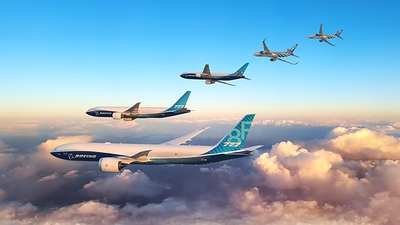
Boeing released its biannual forecast today at The International Air Cargo Association's Air Cargo Forum in
Market snapshot
- Record traffic: Global air cargo traffic reached a new annual record in 2025, growing nearly
5% year over year from 2024, despite trade volatility and geopolitical disruptions. - Network resilience: Air cargo networks are adapting to changing trade flows, rerouting challenges and shifting production locations while continuing to provide speed, reliability and security.
- Key demand drivers: E-commerce, direct-to-consumer business model and demand for high-tech goods are fueling air cargo growth. According to IATA, more than
70% of AI-related goods were transported by air in 2025.
World Air Cargo Forecast highlights and insights
- Fundamentals: Structural growth drivers and proven resilience are expected to support air cargo traffic growth of
3.5% annually over the next two decades, outpacing long-term economic and trade growth. Trade flows touchingAsia will lead growth and represent approximately60% of the global market. - Freighter fleet growth: The worldwide fleet is expected to grow
67% by 2045 from 2,395 airplanes in 2025 to 4,010 airplanes. Dedicated freighters are expected to carry more than half of global air cargo traffic in the long term. - Growth and replacement: Operators will need 2,930 new and converted freighters over the next 20 years to support traffic growth and replace retiring airplanes. About
55% of deliveries will add capacity; approximately45% will replace older, less efficient freighters. Two-thirds of deliveries will be converted passenger airplanes and the remainder will be new-production freighters. - Market mix: Nearly one-third of all air cargo revenues are earned by airlines with passenger belly cargo capacity as well as dedicated main deck freighters to serve a broad network and diverse markets. Growing demand for express services will lift integrators' (time-definite and express operators) share of global air cargo traffic to nearly
25% in 2045.
"Air cargo's adaptability and speed are strategic advantages enabling reliable transport, dynamic rerouting and critical support for evolving supply chains," said Darren Hulst, Boeing vice president of Commercial Marketing. "As global trade patterns change and demand for time-sensitive, high-value goods grows, dedicated freighters will remain essential to global commerce."
About the global air cargo market
- Goods transported by air tend to be perishable, high-value and time-sensitive. Though they represent less than
1% of global trade by volume, they account for roughly one-third of global trade value. - Approximately
55% of global air cargo traffic, measured in cargo tonne-kilometers, has historically been transported by main-deck freighters, underscoring the importance of dedicated aircraft to global trade. - In 2025, airlines with freighter operations, including cargo-only and passenger airlines, accounted for approximately
90% of air cargo industry revenue of approximately$170 billion .
The full 2026 World Air Cargo Forecast is available at boeing.com/wacf.
A leading global aerospace company and top U.S. exporter, Boeing develops, manufactures and services commercial airplanes, defense products and space systems for customers in more than 150 countries. Our U.S. and global workforce and supplier base drive innovation, economic opportunity, sustainability and community impact. Boeing is committed to fostering a culture based on our core values of safety, quality and integrity.
Caution Concerning Forward-Looking Statements
This document contains "forward-looking statements" within the meaning of the Private Securities Litigation Reform Act of 1995. Words such as "may," "will," "should," "expects," "intends," "projects," "plans," "believes," "estimates," "targets," "anticipates," and other similar words or expressions, or the negative thereof, generally can be used to help identify these forward-looking statements. Examples of forward-looking statements include statements relating to future demand for commercial airplanes and aviation personnel, as well as any other statement that does not directly relate to any historical or current fact. Forward-looking statements are based on expectations and assumptions that we believe to be reasonable when made, but that may not prove to be accurate. These statements are not guarantees and are subject to risks, uncertainties, and changes in circumstances that are difficult to predict. Many factors, including economic conditions in the United States and globally, general industry conditions as they may impact us or our customers, and other important factors disclosed previously and from time to time in our filings with the U.S. Securities and Exchange Commission, could cause actual results to differ materially and adversely from these forward-looking statements. Any forward-looking statement speaks only as of the date on which it is made, and we assume no obligation to update or revise any forward-looking statement, whether as a result of new information, future events or otherwise, except as required by law.
Contact
Boeing Media Relations
media@boeing.com
 View original content to download multimedia:https://www.prnewswire.com/news-releases/boeing-global-freighter-fleet-to-exceed-4-000-airplanes-as-air-cargo-traffic-doubles-by-2045--302921696.html
SOURCE Boeing
FAQ
AI-generated questions and answers. How Rhea-AI works. Not financial advice.