
HONEYWELL AND MIT FIND DIGITAL TECHNOLOGIES CAN HELP INCREASE ENERGY SUPPLY, REDUCE ENERGY PRODUCTION COST BY TENS OF BILLIONS ANNUALLY
Honeywell (NASDAQ: HON) and the MIT Center for Sustainability Science and Strategy released the Accelerating Energy Expansion report, modeling how digital and AI-enabled technologies could lower fuel production costs.
Sentiment and the balance of points
Rhea-AI Sentiment reads the wording of the document, how positive or negative its language is on a 1 to 5 scale. The balance of points shown with the takes weighs what the document actually discloses, so the two can disagree, for example when a trial that missed its main goal is described in upbeat language.
Rhea-AI Summary
Honeywell (NASDAQ: HON) and the MIT Center for Sustainability Science and Strategy released the Accelerating Energy Expansion report, modeling how digital and AI-enabled technologies could lower fuel production costs.
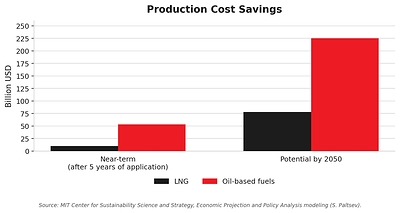
The study projects up to $225B in annual savings for oil-based fuels and $80B for LNG by 2050, alongside benefits from on-site power, energy storage, and alternative fuels for energy security.
Details
News Market Reaction – HON
On Jun 24, the day this news came out, HON closed 2.27% above the previous close.
Data tracked by StockTitan Argus for the Jun 24 session.
Key Figures
- Oil-based fuel cost savings
- $225 billion
- Projected maximum annual production cost reduction by 2050 using AI-enabled tech
- LNG cost savings
- $80 billion
- Projected maximum annual LNG production cost reduction by 2050 using AI-enabled tech
- Near-term fuel savings
- $55 billion
- Potential annual production cost reduction for oil-based fuels within five years of AI deployment
- Near-term LNG savings
- $15 billion
- Potential annual LNG production cost reduction after five years of AI deployment
- U.S. LNG price impact
- 1.1%
- Illustrative potential reduction in U.S. LNG prices by 2050 with AI deployment
- Global LNG price impact
- 4.5%
- Illustrative potential reduction in long-term global LNG prices by 2050 with AI deployment
Historical Context
-
Modular technology selected to power and automate Acelen Renewables biofuels plant.
-
Board approves Honeywell Aerospace spin-off and outlines share distribution mechanics.
-
Introduced three-year framework targeting organic growth, margin expansion and earnings growth.
-
Reaffirmed 2026 guidance and initiated outlook for post-spin Honeywell Technologies.
-
Set record date and timing for Aerospace spin-off and 1-for-2 reverse stock split.
24h Move is the share-price change in the day after each event; other market factors may also have contributed.
Key Terms
lng technical
sustainable aviation fuel technical
battery energy storage technical
feedstocks technical
biomass technical
fuel-cell-based systems technical
AI-generated analysis. How Rhea-AI works. Not financial advice.




Honeywell analysis and MIT Center for Sustainability Science and Strategy modeling project annual savings of up to
The report addresses three focus areas and the supporting policies needed to help achieve energy security and affordability: increasing energy supply, efficiently managing demand, and diversifying energy resources and feedstocks.
"Meeting the world's growing energy needs will require both investment in new technologies to broaden feedstock options and more efficient use of today's energy infrastructure," said Ken West, President and CEO of Honeywell Process Technology. "Honeywell is helping customers apply AI, automation, digital and connected solutions to help get more out of their existing assets while also increasing reliability and throughput. The MIT analysis highlights the significant cost-reduction opportunities AI-enabled technologies can unlock in fuel production, which is top of mind for consumers and policymakers alike as we navigate increasingly complex geopolitical dynamics."
"Energy demand is rising quickly, and many organizations are looking for practical ways to add power without waiting years for new generation to come online," said Jim Masso, President and CEO of Honeywell Process Automation. "On-site power generation and energy storage can help operators add capacity where it's needed most, helping to support the growing demands of AI infrastructure and reduce reliance on already stretched grids. As a result, this enables them to scale more quickly and efficiently."
Based on Honeywell analysis and modeling by the MIT Center for Sustainability Science and Strategy, key themes and findings revealed through the research include:
Digital Technologies, Including AI, Help Increase Energy Supply and Reduce Production Costs
- Energy producers are increasingly using physical AI to improve efficiency, reliability and performance across existing infrastructure.
- When applied to traditional oil-based fuels, AI-enabled technologies can reduce global annual production costs by up to
$55 billion $225 billion - For LNG, global production costs could be reduced by
$15 billion $80 billion U.S . alone, for example, this could help reduce LNG prices by1.1% by 2050; and, if applied globally, long-term LNG prices could be reduced by4.5% .
Scaling Power for a New Era of Energy Demand Begins with Improving Existing Infrastructure
- With rising electricity demand creating new challenges for energy infrastructure, improving the efficiency and performance of existing infrastructure may be one of the fastest ways to add available energy supply while enabling improved affordability and energy security as longer-term fuel generation projects are developed.
- On-site energy production can help heavy energy users increase supply by adding power faster, improving reliability and supporting AI infrastructure growth. Conventional gas-turbine solutions for this purpose currently face permitting and equipment delays, making emerging technologies like fuel-cell-based systems more attractive, as they can be deployed quickly and with lower carbon emissions.
- Intelligent energy storage technology can also help address energy demand and resilience through improving grid flexibility and reliability by managing periods of peak demand. By shifting energy to align with periods of high demand, battery energy storage can reduce the need for costly incremental grid and additional fuel generation investments while helping operators manage growing electricity loads more effectively.
Achieving Regional Energy Security by Diversifying Energy Resources with Alternative Fuels
- Meeting rising energy demand and addressing energy security will require adding new sources, such as sustainable aviation fuel, to the energy mix at a faster rate.
- Technology will play a central role in advancing regional energy security. By creating fuels from a broad range of local feedstocks, regions can make good use of abundantly available biomass, waste oils and non-edible crops for scalable fuel solutions.
- Developing resilient regional energy infrastructure helps countries reduce reliance on imports and protects against geopolitical volatility.
The Accelerating Energy Expansion report was released at Honeywell's 2026 Future of Energy Summit, an annual event that brings together industry leaders, policymakers and technology experts to discuss strategies for strengthening energy security, affordability and competitiveness while meeting growing global energy demand.
About Honeywell
Honeywell is an integrated operating company serving a broad range of industries and geographies around the world, with a portfolio that is underpinned by our Honeywell Accelerator operating system and Honeywell Forge platform. As a trusted partner, we help organizations solve the world's toughest, most complex challenges, providing actionable solutions and innovations for aerospace, building automation, industrial automation, process automation, and process technology, that help make the world smarter and safer as well as more secure and sustainable. For more news and information on Honeywell, please visit www.honeywell.com/newsroom.
Media Contact:
Melissa Volin
1-980-502-9330
melissa.volin@honeywell.com

 View original content to download multimedia:https://www.prnewswire.com/news-releases/honeywell-and-mit-find-digital-technologies-can-help-increase-energy-supply-reduce-energy-production-cost-by-tens-of-billions-annually-302808631.html
SOURCE Honeywell
FAQ
AI-generated questions and answers. How Rhea-AI works. Not financial advice.